Editor-reviewed
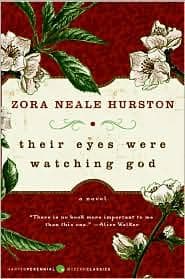
Their Eyes Were Watching God
Zora Neale Hurston·1937·J. B. Lippincott·Literature
Reading level: Ages 14+ (adult) · 8-hour read · Intermediate difficulty.
- Reading time
- 8h
- Difficulty
- Intermediate
- Recommended age
- Ages 14+
- Guide read
- 5min
- Editor's rating
- 4.8 / 5
- zora-neale-hurston
- harlem-renaissance
- black-literature
- american-south
- florida
- dialect
- love
- women
— In one sentence —
Hurston wrote it in seven weeks in Haiti in 1937. Richard Wright called it politically backward. Alice Walker spent a decade finding Hurston's grave. It was the right novel all along.
§ 01 · WHY READ
Why read
Zora Neale Hurston wrote Their Eyes Were Watching God in seven weeks in 1936 while she was in Haiti on a Guggenheim Fellowship, doing fieldwork on Voodoo. She was forty-five years old, in love with a man twenty years her junior, and the love was not going to work. She wrote the novel, she said, to think through the love — to understand it from the outside, through Janie. She sent the manuscript to her publisher in October 1936; it was published in September 1937.
The novel was received poorly by the Black literary establishment of the Harlem Renaissance. Richard Wright wrote the most famous negative review, calling it politically irresponsible — that it lacked a racial protest argument, that its use of Black vernacular dialect pandered to white audiences, that Hurston had written a love story when Black writers needed to write about oppression. The criticism reflected a real disagreement about what Black literature was for.
Hurston's reputation collapsed by the 1950s. She died in 1960 in a welfare home in Fort Pierce, Florida, in an unmarked grave. In 1973, Alice Walker went looking for her — found the town, found people who remembered her, found the cemetery, had a headstone placed. Then Walker wrote the essay "In Search of Zora Neale Hurston" (1975) in Ms. magazine, and the recovery began. Their Eyes Were Watching God is now taught in virtually every serious American literature curriculum and is considered one of the finest American novels of the twentieth century.
What the novel does: Janie Crawford is a Black woman in early-twentieth-century Florida. She has been married twice — first to a man her grandmother chose for her, then to a man who gave her status and took her voice — and is now with Tea Cake, a younger man who sees her. The novel is her telling of these three loves to her friend Pheoby on her return to Eatonville. It is written in third person that moves in and out of dialect, in and out of poetry, in and out of Janie's interior — a prose style that Hurston invented to render a kind of consciousness that had not been rendered before.
§ 02 · CHARACTERS
Characters
Janie Crawford — born to a mother who was the product of rape, raised by a grandmother who survived slavery, desired for her beauty, married twice before she found her own life. She is one of American fiction's great protagonists not because she is extraordinary but because she is fully present: her desires, her compromises, her errors, her final clarity are all visible. She is not perfect; she is real.
Nanny — Janie's grandmother, a formerly enslaved woman who wants safety for Janie above all else. She arranges Janie's first marriage to a farmer with land. Her speech to Janie about what she has endured — what she could not give Janie's mother — is the novel's backstory, and it is devastating.
Joe Starks (Jody) — Janie's second husband, who brings her to Eatonville, becomes its mayor, and then spends twenty years ensuring that Janie is displayed as his possession rather than known as herself. He is not cruel in a simple way; he loves Janie in the way that people love beautiful things. He silences her by protecting her. When she finally speaks — when he is dying and she says the thing she has been holding for twenty years — his response is the novel's most terrible scene.
Tea Cake (Vergible Woods) — the man who sees Janie. He teaches her to play checkers. He is younger, poorer, less respectable, and interested in who she actually is. Their relationship is not uncomplicated — there is violence in it that Hurston renders without apology — but it is the relationship in which Janie is most herself.
Pheoby Watson — Janie's best friend, who listens to the whole story. She is the novel's framing device but also its implicit reader: a woman of Janie's community who will carry the story forward.
§ 03 · HIGHLIGHTS
Three highlights
No. 1 · The pear tree. The opening pages: Janie as a girl lying under a pear tree, watching bees and flowers, understanding for the first time what she wants — not in sexual terms but in terms of connection, of being known, of meeting the world fully. The pear tree is the novel's image for what Janie spends the rest of her life looking for. Hurston returns to it at the end.
No. 2 · Janie's speech to dying Joe. Joe Starks is dying. He has spent twenty years silencing Janie — not letting her speak in public, not seeing her as a full person. She goes to him when he is dying and says, finally, everything she has been holding. He has made her feel old and used up; she wants him to know it. His response — he turns away and shortly dies — is a man who spent his life refusing to hear her, refusing in death too. The scene is one of the most precise accounts of a particular kind of marriage in American literature.
No. 3 · The hurricane. Tea Cake and Janie are in the Everglades when the hurricane hits. The section has the quality of documentary reporting: the storm, the flooding, the flight, the violence of survival. Hurston knew Florida, knew storms, knew the communities she was writing about. The hurricane is not metaphor; it is weather. What it does to the novel's story is the consequence of physical reality, not symbolic design.
§ 04 · EDITIONS
Recommended editions
| Edition | Why pick it |
|---|---|
| HarperCollins (foreword by Mary Helen Washington) | The standard US edition; Washington's foreword is essential context. Read it after. |
| Harper Perennial Modern Classics | Clean text; frequently includes Alice Walker's 1979 essay "Zora Neale Hurston: A Cautionary Tale and a Partisan View," which is worth reading. |
| Audiobook (Ruby Dee) | Dee's reading of the dialect is authoritative and warm; audio is an excellent format for this novel. |
§ 05 · FIT
Who it's for / not for
Read this if you are…
- Anyone building a reading of American literature: this is not optional.
- Readers interested in how prose style can render a specific kind of consciousness — a Black woman's interiority in early-20th-century Florida — that had not been rendered before in American fiction.
- Anyone who wants to understand the Harlem Renaissance literary debate about what Black fiction was for.
- Readers of Beloved or Go Tell It on the Mountain who want to see the tradition's earlier layer.
Skip it if you are…
- Put off by dialect on the page. Hurston's transcription of Eatonville vernacular is the novel's formal achievement, not an obstacle to it — but if dialect prose historically frustrates you, know going in that this is part of the experience.
- Expecting protest fiction. The novel is not about racism in the way Wright's work is about racism. It is about a woman's interior life and her search for full selfhood. The racial context is present; it is not the organizing subject.
§ 06 · TIPS
Reading tips
- The dialect is the literature. Hurston was a trained anthropologist who had spent years studying Black Southern oral culture. The way characters speak is not color; it is the argument. Don't read past it.
- The third person dips in and out of free indirect discourse. Watch for when the narration moves into Janie's own language and thought — these moments are where Hurston is most technically precise.
- Nanny's speech matters. The chapter where Janie's grandmother explains her life — what she survived, what she could not give Janie's mother — is the novel's backstory and should be read as carefully as the central narrative.
- The violence between Janie and Tea Cake is in the novel. Hurston does not apologize for it or explain it away; she includes it as part of the relationship's reality. Readers have debated its meaning for decades.
§ 07 · COMPARE
Read alongside
- James Baldwin — Go Tell It on the Mountain (1953). The male counterpart: Black interiority, the American South and North, the religious tradition. Hurston's Florida and Baldwin's Harlem are different America's, rendered in different prose styles; the comparison is essential.
- Toni Morrison — Beloved (1987). Morrison has said Hurston is an influence; the comparison between Hurston's rendering of Black women's interiority and Morrison's shows how the tradition developed.
- Alice Walker — The Color Purple (1982). Walker's novel is the clearest heir to Hurston in the 20th century: a Black woman's voice, dialect rendered as literature, a love story that is also a story of self-finding.
- Langston Hughes — The Weary Blues (1926). Poetry contemporary with Hurston, from the same Harlem Renaissance; the comparison between Hughes's formal ambitions and Hurston's is useful for understanding the period's debates.
- Zora Neale Hurston — Mules and Men (1935). Hurston's anthropology: her collection of Black Southern folklore, published two years before Their Eyes. Reading the anthropology alongside the novel shows how closely the two projects are related.
§ 08 · DISCUSSION
Discussion questions
- Richard Wright accused Their Eyes Were Watching God of political irresponsibility — of being a love story when Black writers should be writing about racism. Alice Walker said Wright was wrong. Who was right? What is Black literature for?
- Janie's grandmother arranges her first marriage for safety. Is Nanny wrong? What does her speech about what she survived ask you to understand about her choice?
- Joe Starks silences Janie by protecting her — by making her the mayor's wife rather than a speaking member of the community. Is this a kind of love? Does the novel condemn him?
- Hurston transcribes Eatonville dialect with anthropological precision. Some of Hurston's contemporaries saw this as pandering to white audiences; Hurston saw it as literature. How do you read it?
- Tea Cake hits Janie in one scene. Hurston does not moralize about it; she renders it and moves on. How do you read this in a novel that is otherwise about Janie's self-discovery?
- The novel is structured as Janie telling her story to Pheoby. What does the frame do? Why does it matter that the story is told to a friend rather than to a stranger?
- Hurston died in obscurity and was recovered by Alice Walker forty years later. What does this tell us about the literary canon — about which voices get preserved and which get lost?
- The pear tree is the novel's originating image. When it returns at the end, what has Janie found? Has she found what the pear tree promised?
One line to remember
“She had been getting ready for her great journey to the horizons in search of people; it was important to all the world that she should find them and they find her.”— Chapter 1
Appears in collections
Reading lists featuring this book
7 books
Banned Books That Are Actually Great
Seven books banned for ideas that turned out to be exactly the ideas that needed saying.
Open list →
7 books
The Best Book Gifts for Graduation
Seven novels for a reader leaving one chapter and starting another.
Open list →
7 books
The Best Book Gifts for Mother's Day
Seven novels that take mothers seriously as people, not just as mothers.
Open list →
6 books
Books About Being an Outsider
Six novels about people who cannot find a world that will accept them whole.
Open list →
7 books
Books About Identity and Belonging
Seven novels about the self that society refuses, and the self that refuses society.
Open list →
7 books
The Best Books About Motherhood
Seven novels about motherhood handled with full weight — what it costs, what it makes possible, what it cannot prevent.
Open list →
10 books
Books About the American South
Ten books, ten Souths — some in direct contradiction.
Open list →
6 books
Best Books for Ambitious Women
Six novels that take women's serious ambition seriously, without flattering it or apologizing for it.
Open list →
5 books
Books Like Beloved
Five novels for readers who want that combination of historical weight, lyric prose, and the refusal to look away.
Open list →
6 books
Books That Give You Hope
Six books that earn the word hope by refusing to look away from what makes hope hard.
Open list →
6 books
Books to Read After a Breakup
Six books that sit with you in the loss — and quietly help you rebuild.
Open list →
7 books
Books to Read in Your 20s
Seven novels for the decade when you're figuring out who you're going to be.
Open list →
6 books
Books to Understand Race in America
From slavery to the near future — six novels that cover what history textbooks flatten.
Open list →
7 books
Feminist Literature Worth Reading
Seven books across 150 years — each making a different argument through a different form.
Open list →
10 books
Ten Novels to Understand the American South
A literature that carries the full weight of American history — grace and violence together.
Open list →
7 books
Overlooked Masterpieces
Seven novels that belong in the first tier but rarely get there — and why.
Open list →
You might also like
Read next
William Faulkner · 1936
Absalom, Absalom!
Four narrators reconstruct a man who destroyed his family. The story keeps changing. That is the point.
Read · 7 min
Toni Morrison · 1987
Beloved
Toni Morrison said she wrote this novel to give voice to the sixty million. It won the Pulitzer, the Nobel, and is the greatest American novel of the second half of the twentieth century.
Read · 6 min
Leo Tolstoy · 1878
Anna Karenina
Not just a love story. Two parallel lives — Anna's destruction, Levin's salvation — ask the same question: how should a person live?
Read · 6 min