Book list · Editor's pick·Fiction
Books Like Beloved
Five novels for readers who want that combination of historical weight, lyric prose, and the refusal to look away.
- Books
- 5
- toni-morrison
- historical-fiction
- race-in-america
- what-to-read-next
- lyric-fiction
Updated 2026-05-24
— Why read this list —
Morrison doesn't explain the history. She makes you live inside it long enough to understand something that explanation cannot reach.
What Morrison does that is hardest to replicate
The specific quality that makes Beloved irreplaceable is what Morrison called the "rememory" — the way the past is not past, the way traumatic experience persists as something that can be touched and encountered, not just recalled. The novel's structure enacts this: time doesn't move cleanly forward, Beloved herself is impossible to place, and the reader's sense of chronology is deliberately disrupted so that they cannot maintain the comfortable position of looking back at history from safety.
The books on this list approximate this quality in different ways. Butler uses genre (time travel, speculative futures) to remove the protective distance. Hurston uses prose rhythm to make interiority immediate. The Help, included deliberately as a contrast, shows what happens when the mechanism of historical distance is not broken — when the reader is offered a white protagonist as a guide through Black experience, with all the comfort and limitation that implies.
A note on the list's structure
Beloved itself appears at position five, as the last entry, not first. This is deliberate. Most readers coming to this list have already read Beloved and are looking for what to read next. But the final entry is for those who haven't, with a note that they should start there rather than reading the other books first. The Morrison quality is easier to recognize once you've experienced it — the other books on the list will read differently after Beloved than before it.
The 5 books
In publication order
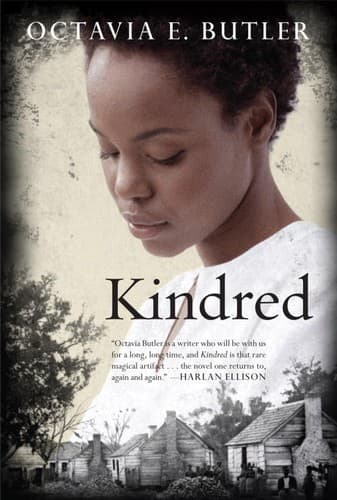
Book 1·The nearest match in method and demand
Kindred
Octavia E. Butler·1979
The nearest book to Beloved in what it actually does: puts a modern reader inside the mechanics of slavery with enough precision that the experience of reading becomes something physically uncomfortable. Butler's Dana is a 1970s Black woman who is repeatedly pulled back in time to antebellum Maryland, where she must navigate the system of slavery to survive and return. The Morrison quality: the refusal to maintain historical distance. Both novels use formal structure (Morrison's fragmentation; Butler's time travel) to ensure that the reader cannot treat this as past tense. Both demand presence.
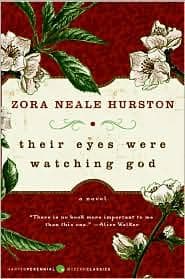
Book 2·Morrison's acknowledged predecessor
Their Eyes Were Watching God
Zora Neale Hurston·1937
Morrison acknowledged Hurston as a major influence, and the connection is in the prose: both writers use vernacular rhythms not as local color but as a primary vehicle for interiority. Where Morrison's prose fragments under the pressure of what it cannot hold, Hurston's flows — it is Janie's own language for her own experience — and the difference makes the two novels complementary. After Beloved's weight, Their Eyes Were Watching God offers something that is just as serious but more fluid, more willing to let beauty be the primary formal register.
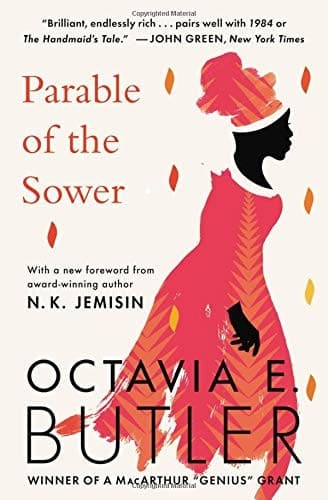
Book 3·Butler's forward-looking answer to the same problem
Parable of the Sower
Octavia E. Butler·1993
Butler appears twice because her range in this territory is unusually wide. Where Kindred looks backward, Parable of the Sower looks forward — but the Morrison quality is the same: it refuses the consolation that things will work out. Lauren Olamina builds something new from collapsing conditions without any guarantee that it will survive. The connection to Beloved is in the unflinching accounting: both Morrison and Butler refuse to protect readers from the full weight of what they are describing, whether the subject is slavery or civilizational collapse.
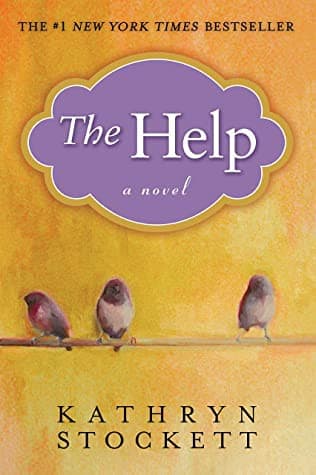
Book 4·The counterexample that clarifies what Morrison does
The Help
Kathryn Stockett·2009
A deliberate inclusion, not an obvious one. The Help is about Black domestic workers in 1960s Mississippi and the white woman who decides to tell their stories — which is exactly the problem the novel has been criticized for: it centers a white protagonist in Black experience. The reason it belongs here: reading it after Beloved makes the comparison visible, which is instructive. Where Morrison inhabits Black experience from inside, Stockett narrates it through a white lens that is present even when trying not to be. Both novels are about the same history. The difference in what they make visible is worth examining.
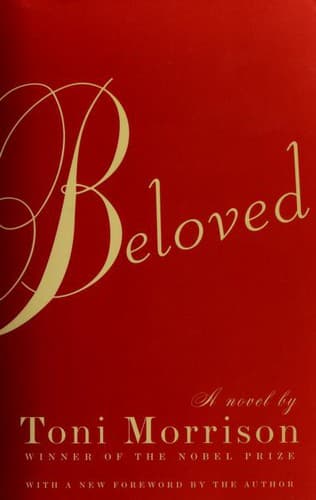
Book 5·The novel itself, for those who haven't read it yet
Beloved
Toni Morrison·1987
If you haven't read Beloved and are reading this list as a guide, start here rather than building up to it. The novel is not difficult in the way that reputation suggests — it is demanding, but the demand is emotional rather than intellectual, and the prose rewards slow reading rather than punishing it. Sethe killed her daughter rather than let her be taken back into slavery. The novel lives with the consequences of that choice across eighteen years. What Morrison does that is hardest to describe: she makes the interior life of the antebellum South — its specific textures, its particular violations — present to the reader as something being experienced rather than recorded.