Book list · Editor's pick·Fiction
The Best Books About Motherhood
Seven novels about motherhood handled with full weight — what it costs, what it makes possible, what it cannot prevent.
- Books
- 7
- motherhood
- mothers
- family
- parenthood
- feminist-fiction
Updated 2026-05-25
— Why read this list —
Serious fiction about motherhood is rarely fiction about being nurturing. It is fiction about the limit of what one person can do for another, and what it does to the person trying.
What this list refuses to do
It refuses to treat motherhood as a feeling rather than a labor. Every book here is interested in what mothering actually requires — time, decisions, presence, the surrender of other possibilities — and in what happens when the conditions that mothering depends on are not present or are taken away. Sethe under slavery, Offred under Gilead, Anna after leaving Karenin, Scarlett during and after the war, Dana pulled back across time: in each case the question is not whether the mother loves the child but what loving the child is permitted to look like under the conditions she has been given.
It also refuses the default move of treating "books about motherhood" as a synonym for "books about women's interior lives in domestic settings." The mothers on this list are political subjects, not domestic ones. What they can do for their children is determined by slavery (Morrison, Butler), by theocracy (Atwood), by social class and inherited trauma (Hurston), by war (Mitchell), by marriage law (Tolstoy), by the slow collapse of a family system (Faulkner). The interior lives matter because the external conditions have made them matter.
How to read in order
Start with Beloved if you can — every other book on this list reads differently after Morrison. Their Eyes Were Watching God and Kindred are the next clearest extensions of what Morrison opens up; both are short enough to read in a week. The Handmaid's Tale is the speculative version, useful as a clarifier of what is at stake in the realistic books. The Sound and the Fury is the entry about the mother's absence rather than her labor — read it for the contrast.
The two longest books on the list — Gone with the Wind and Anna Karenina — are the ones to budget time for. Both are also the ones with the most ambivalent protagonists: women whose mothering is part of a larger life that does not orient itself around being a mother, which is its own honest portrait of the question. Read them when you want a book to live with for a month.
The 7 books
In publication order
Book 1·The absolute reference text
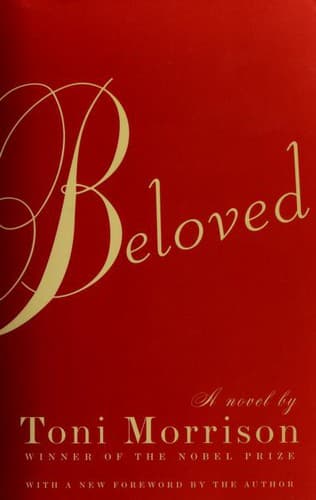
Beloved
Toni Morrison·1987
The reference text on this list and arguably in the language. Sethe killed her daughter rather than let her be returned to slavery, and the novel is the working-out of what that decision was — not whether it was love (Morrison is clear that it was) but what kind of love it was, what kind of world made it the available form of love, and what it does to a mother to have committed it. Beloved is the most uncompromising book ever written about the limits of what motherhood can do under conditions designed to make motherhood impossible. Every other book on this list is in conversation with this one.
Book 2·Inherited protection and its cost to the daughter
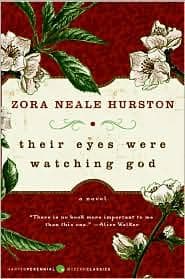
Their Eyes Were Watching God
Zora Neale Hurston·1937
Hurston's interest is intergenerational: Nanny, who raised Janie, has spent her life trying to engineer for Janie the security Nanny herself was denied, and the novel is about the cost of that protective project to the child being protected. Nanny's love for Janie is real and the marriage she arranges is a disaster — not despite the love but because of how Nanny has been forced to define what loving a daughter means. The motherhood question Hurston is asking: what happens to the daughter when the mother-figure can only conceive of safety as a particular kind of constraint? One of the great novels about what mothers pass down without meaning to.
Book 3·Motherhood as state-controlled labor
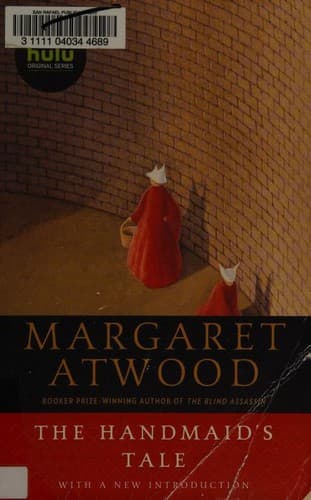
The Handmaid's Tale
Margaret Atwood·1985
The book treats motherhood as a system, not a feeling. Gilead has separated reproduction from mothering — handmaids bear the children, wives raise them, and Offred's missing daughter is the absence around which her entire interior life is organized. Atwood is interested in what happens when a society decides that motherhood is too important to leave to individual women, and what it costs the women whose actual children have been taken from them. The grief in this book is the grief of a mother who knows her daughter is alive somewhere and being raised by someone else. Read for what it says about the political stakes of who is allowed to mother whom.
Book 4·The shape of the absent mother
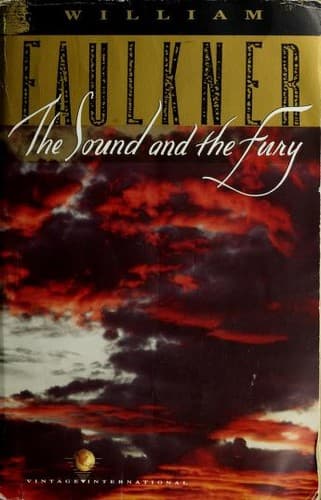
The Sound and the Fury
William Faulkner·1929
Faulkner's portrait of the absent mother — Caroline Compson, who is alive in the house but emotionally unavailable to any of her children — is the version of motherhood this list also has to include. The novel argues, structurally, that the failure of a mother to be present to her children is what produces the disintegration of an entire family across a generation. Caddy becomes the surrogate mother to her brothers because Caroline cannot or will not, and Caddy's eventual departure is what makes the Compson collapse irreversible. A book about the shape of the hole a mother leaves when she is technically there but actually absent.
Book 5·Survival-mothering and what it costs
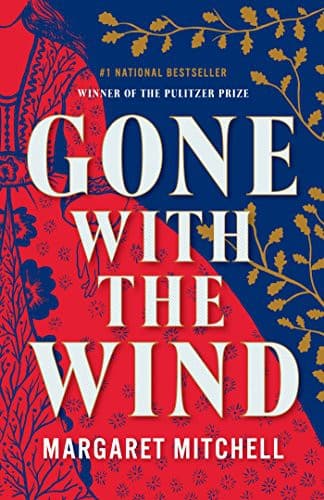
Gone with the Wind
Margaret Mitchell·1936
Included with the standard caveats about the novel's racial politics — Mitchell is writing a Lost Cause novel and a reader has to know that going in. The motherhood thread here is genuine and worth the engagement: Scarlett becomes responsible for keeping a household, a plantation, and eventually two surviving children alive through a war and its aftermath, and the novel is honest about what that responsibility makes her into. The grief is the death of her daughter Bonnie, which is the one loss Scarlett cannot manage her way out of. Mitchell is interested in the woman who can do everything except be the kind of mother her daughter needed her to be.
Book 6·The mother separated from her son
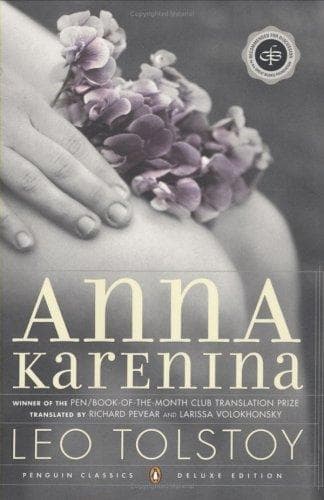
Anna Karenina
Leo Tolstoy·1878
The novel's romantic plot is what gets remembered, but Anna's relationship with her son Seryozha is one of its true centers and the source of much of its grief. When Anna leaves Karenin for Vronsky, she loses access to Seryozha, and Tolstoy is unsparing about what this does to her — the scene where she sneaks into the house on his birthday is among the most painful in any novel. The cost of Anna's choice is not the social cost the salon scenes track; it is the cost of being unable to mother her child. Read alongside her sister-in-law Dolly's exhausted, continuous mothering for the full range of what the book is doing on this theme.
Book 7·Inherited maternal labor and the lineage that survived it
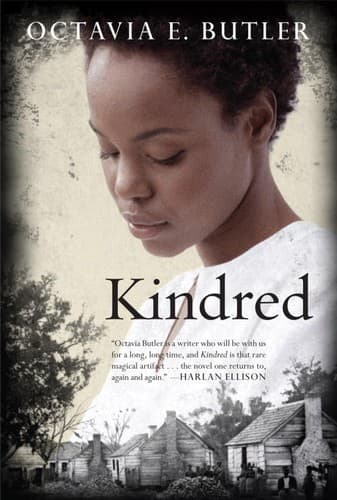
Kindred
Octavia E. Butler·1979
Dana is pulled back through time to the antebellum South, repeatedly, to keep her own ancestor alive long enough for her family line to continue — which means keeping Rufus alive long enough to father the child of an enslaved woman named Alice. Butler is asking a brutal motherhood question through the structure of the novel: what was demanded of the women in your family tree so that you could exist, and what is your relationship now to having demanded it? Kindred treats lineage and motherhood as material realities with material costs paid by specific women. The most direct fictional treatment of inherited maternal labor in American writing.