Book list · Editor's pick·Fiction
Books About Being an Outsider
Six novels about people who cannot find a world that will accept them whole.
- Books
- 6
- identity
- alienation
- literary-fiction
- coming-of-age
- outsider
Updated 2026-05-24
— Why read this list —
The outsider is one of literature's oldest figures — and the least consoling, because the best of these books don't promise that belonging is coming.
What kind of outsider
The books on this list cover at least three distinct versions of being an outsider, which are worth distinguishing because they call for different kinds of reading:
Structural outsiders: people excluded from belonging by their identity — race, disability, gender, class. Janie Crawford (Hurston) and Piggy (Golding) are in this category. The condition is imposed from outside, and the novels are partly about the imposing forces and partly about what the person makes of the imposition.
Existential outsiders: people whose inner life doesn't match the world they live in regardless of whether anyone excludes them. Toru Watanabe (Murakami) and Gregor Samsa (Kafka) belong here. The alienation is interior, sometimes untranslatable, and the novels are about what it feels like from the inside rather than how it looks from the outside.
Chosen outsiders: people who have decided against belonging — who cultivate incompatibility as a way of maintaining something they value. Ignatius J. Reilly (Toole) and Hazel Motes (O'Connor) are extreme versions of this, one comic and one tragic. Both novels are about what happens when the choice becomes its own trap.
A note on consolation
None of these books end with belonging restored. Janie returns to the town but not to her marriage; Toru survives but cannot locate himself; Ignatius escapes New Orleans but into another kind of captivity; Hazel's final condition is beyond ordinary description. The outsider novel, in its most honest form, does not promise that the fit will improve. It promises instead to describe the mismatch exactly, which turns out to be a different kind of comfort.
The 6 books
In publication order

Book 1·The most precise description of becoming invisible
The Metamorphosis
Franz Kafka·1915
Gregor Samsa wakes up one morning transformed into a monstrous vermin, and the novel's brilliant, terrible decision is to treat this as a logistical problem rather than a metaphysical crisis. The family has to figure out how to deal with him. He becomes a burden, then an embarrassment, then something to be cleared away. The outsider reading: Kafka is describing, with absolute precision, what happens when someone's capacity to be economically useful is removed — how quickly 'family member' becomes 'obstacle.' The metaphor is literal, which is what makes it unbearable and exact.
Book 2·The one who is right about everything and dies
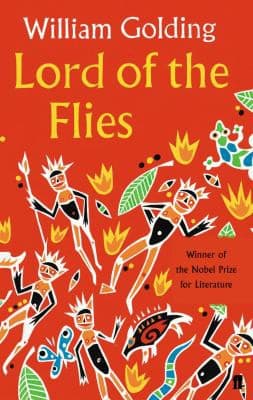
Lord of the Flies
William Golding·1954
Piggy is the outsider here, not Ralph. Piggy is fat, wears glasses, has asthma, uses his brain, and dies for it. The novel is usually read as a pessimist statement about human nature, but the outsider reading is more specific: it is about how group dynamics select for performance of strength and punish difference, and how the person who is right about everything (Piggy's diagnoses of the situation are correct throughout) loses anyway because being right is not the currency that matters. Read with that focus, it is a more disturbing and more useful book.
Book 3·Outsider as subject, not symbol
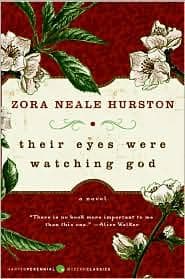
Their Eyes Were Watching God
Zora Neale Hurston·1937
Janie Crawford is an outsider by race, by gender, by the independent life she keeps trying to construct in communities that won't quite allow it. The novel's structure (she is telling her story to a friend after returning from an absence) makes her both insider and outsider to her own narrative: she knows how it ends, she chose to live it anyway, and she is still deciding what it means. The outsider quality here is not isolation but something more specific — the experience of being fully present in a world that only partly sees you.
Book 4·The outsider who chose it
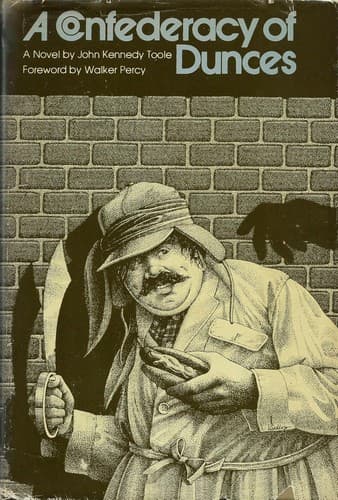
A Confederacy of Dunces
John Kennedy Toole·1980
Ignatius J. Reilly is an outsider who has chosen it — who is aggressively, operatically committed to being incompatible with everything around him. The novel is funny because the incompatibility is total: he finds 1960s New Orleans as degenerate as medieval commerce; he finds work beneath him; he finds other people inadequate. The outsider reading is more complicated than the usual type: Ignatius is not alienated despite himself but by design, and the novel keeps the reader uncertain whether his contempt is genius, pathology, or both.
Book 5·Outsider to both sides
Wise Blood
Flannery O'Connor·1952
Hazel Motes is an outsider in the specific O'Connor sense: a person whose entire identity is organized around refusing something (in his case, Christianity) and who discovers that the refusal has become its own kind of captivity. He preaches the Church Without Christ because he is trying to escape the guilt of belief, and the novel is about what happens when someone meets the world they wanted and finds it doesn't help. The outsider quality here is theological: Motes doesn't fit inside or outside, in belief or disbelief, and the violence at the end is what that irresolution costs.
Book 6·Outsider as interior condition, not circumstance
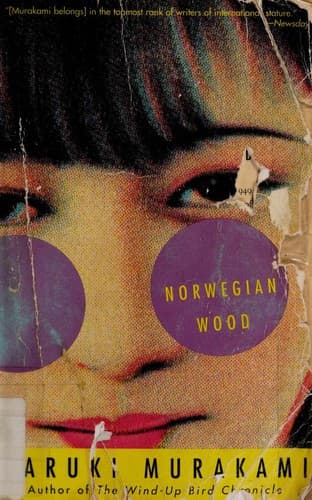
Norwegian Wood
Haruki Murakami·1987
Toru Watanabe is an outsider in the quietest possible way: he is present in his university environment but never quite of it, attracted to women who are also outside (Naoko, who is in a psychiatric facility; Midori, who is aggressively, consciously refusing the scripts available to her). The novel is about the specific 1960s Tokyo experience, but the outsider quality it captures is universal: the feeling of watching your generation participate in something — political activism, social ritual, conventional love — that you cannot quite get all the way inside, not because you are opposed but because the fit is not right.