Book list · Editor's pick·Vol. 001·Fiction
Ten Novels to Understand the American South
A literature that carries the full weight of American history — grace and violence together.
- Books
- 10
- Total reading
- 126h
- Authors
- 10
- Time span
- 1929–2009
- american-south
- southern-gothic
- american-literature
- race
- history
- literary-fiction
- slavery
- civil-war
Updated 2026-05-21
— Why read this list —
The American South produced the richest literary tradition in the country. It also produced the conditions that made that richness necessary.
Why a regional literature matters
The American South produced the richest literary tradition in the United States. This is not a controversial claim among literary historians, though it remains surprising to readers who come to American literature through its canonical twentieth-century entry points — Hemingway, Fitzgerald, Salinger — which are Northern and predominantly white.
The reason for the South's literary density is the reason for its difficulty: this is the region where the central contradiction of American democracy was most visible, most violent, and most contested. A literature that tries to honestly describe that condition — the coexistence of extraordinary grace and extraordinary brutality, the way beauty was used to defend atrocity, the survival of the people whose lives the society was organized to destroy — requires the full resources of the form.
The ten novels on this list cover a century of that literature. Three are by Black writers whose work was ignored, dismissed, or recovered from obscurity (Morrison, Hurston, Toole was white but similarly recovered). Four are by white writers whose work requires critical reading because they are participating in the tradition they're describing (Mitchell, Lee, Stockett, Warren). All ten are indispensable.
On reading across the political divide within these books
Several of the novels on this list have been criticized for centering white perspectives on stories of Black suffering (Lee, Stockett), for romanticizing the Confederacy (Mitchell), or for other forms of complicity with the history they're depicting (O'Connor's Catholicism, Warren's politics). These criticisms are, in most cases, correct.
They are also, in most cases, insufficient as a reason not to read the books. The novels that require critical engagement — that ask you to hold their craft and their failures simultaneously — are often the most useful ones. Mitchell's sympathy for her characters is a formal achievement and a moral problem; both are more useful to you than a novel that makes it easier.
Reading the critics alongside the novels is productive. James Baldwin on Faulkner. Alice Walker on Hurston. The debate over Stockett. These arguments are part of the literature.
On "Southern Gothic"
Several entries here — O'Connor, Faulkner, Toole — are associated with Southern Gothic as a genre. The term describes a specific combination: grotesque characters, decaying social structures, violent or disturbing events rendered with dark comedy, and an underlying preoccupation with sin and grace. O'Connor essentially defined it. Faulkner perfected its formal techniques. Toole used it to make you laugh while something awful is happening.
If you encounter one of these books and find the grotesque unsettling, you're reading it right.
The ten entries follow.
Reading paths
Three orders. Pick one before you start.
Through American history: slavery to civil rights
Beloved → Their Eyes Were Watching God → To Kill a Mockingbird → The Help → All the King's Men. Five novels spanning the post–Civil War period to the early 1960s, each focused on the South's racial history from a different vantage point. Reading in chronological sequence — the events, not the publication dates — gives you the most coherent historical arc.
Book 4›Book 5›Book 2›Book 8›Book 7
The Southern literary tradition in full
The Sound and the Fury → Wise Blood → Gone with the Wind → Cold Mountain → A Confederacy of Dunces. Five novels that define the formal range of Southern literature: Faulkner's modernist fracture, O'Connor's Gothic absurdism, Mitchell's epic realism, Frazier's elegy, Toole's comedy. The full spectrum in one path.
Book 3›Book 9›Book 1›Book 10›Book 6
Start here if you haven't read much Southern literature
To Kill a Mockingbird → Their Eyes Were Watching God → Gone with the Wind → Cold Mountain → Beloved. Five novels in order of accessibility, saving the most formally demanding (Morrison's fragmented narration) for last, when you have enough context to hear what it's doing.
Book 2›Book 5›Book 1›Book 10›Book 4
The 10 books
In publication order
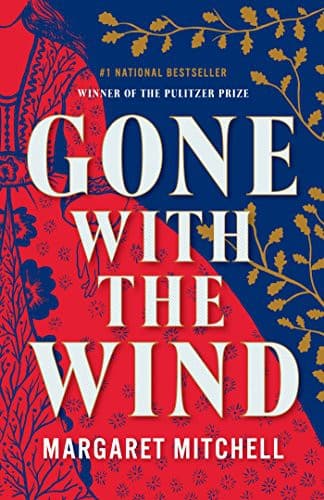
Book 1·The contested monument
Gone with the Wind
Margaret Mitchell·1936
The most widely read and most contested novel on this list. Mitchell spent ten years writing a portrait of antebellum Georgia that is simultaneously a masterwork of social detail and a Lost Cause mythology. Scarlett O'Hara's survival through the Civil War and Reconstruction is built on her refusal to acknowledge what the society she's defending actually was. The novel requires active reading — Mitchell's sympathy for her characters is a craft achievement and a moral problem, and both are more useful to you if you hold them simultaneously rather than resolving one. Every honest conversation about this book eventually addresses the same question: can you love a novel while disagreeing with its politics? Yes, with difficulty, and this is the best test case.
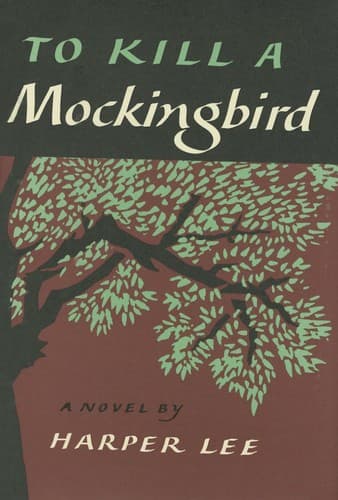
Book 2·The most-assigned novel
To Kill a Mockingbird
Harper Lee·1960
Maycomb, Alabama, 1933. A Black man is falsely accused of raping a white woman; a white lawyer defends him; his daughter Scout narrates. Lee's novel is the most widely taught American novel in history and one of the most argued-about in the twenty-first century — critics have challenged its centering of white moral triumph in a story about Black suffering (the 'white savior' critique), while defenders argue that its strategic use of a child narrator was the precise formal choice that allowed 1960 white readers to confront facts they'd otherwise have denied. Both arguments are right, which is why the novel is still being argued about sixty years later.
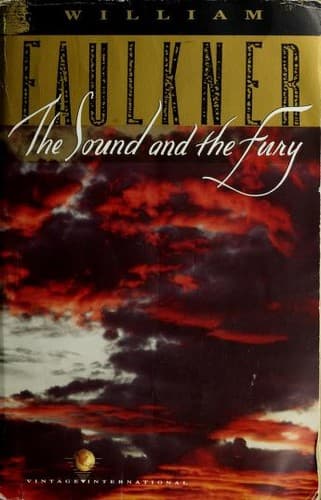
Book 3·The modernist masterpiece
The Sound and the Fury
William Faulkner·1929
The fall of the Compson family, told four times from four perspectives: a man with a cognitive disability whose sense of time is non-linear, his brother who will kill himself that night, his other brother who is poisoned by resentment, and the family's Black cook who is the most functional person in the household. Faulkner's formal innovations — the stream of consciousness, the fractured chronology, the reader's gradual orientation — are in service of a specific argument: the Southern aristocracy destroyed itself from the inside, and the weight of what it had done made clear thinking impossible. The hardest book on this list and the one most worth the difficulty.
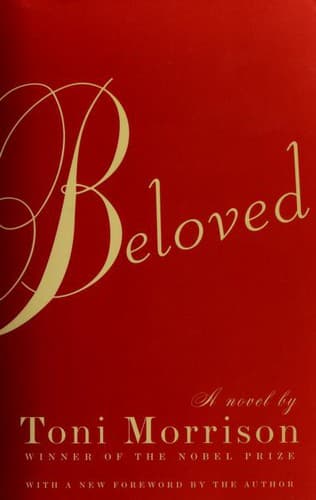
Book 4·The essential novel
Beloved
Toni Morrison·1987
The most important American novel of the second half of the twentieth century. A formerly enslaved woman in post-Civil War Cincinnati is haunted — literally — by the baby girl she killed rather than let be taken back into slavery. Morrison builds a ghost story that is simultaneously a psychological study of trauma, a formal experiment in fragmented memory, and the most complete portrait of what slavery did to the internal lives of the people it enslaved. Morrison said she was writing to reclaim the dead who were not given proper mourning. The novel does this. It also won the Pulitzer, was rejected by the Nobel committee that ultimately gave Morrison the Nobel Prize for Literature, and changed what American literature thought it could do.
Book 5·The recovered classic
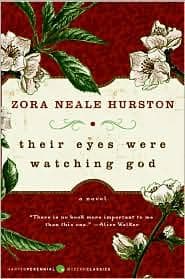
Their Eyes Were Watching God
Zora Neale Hurston·1937
Janie Crawford's story — three marriages, a hurricane, a trial — told in the Black vernacular of early twentieth-century rural Florida. Hurston was an anthropologist who spent years documenting Black Southern culture, and the novel is built from that documentation: the porch-sitting, the storytelling, the communal fabric of Eatonville, the all-Black town where Hurston grew up. Richard Wright criticized it on publication for lacking political militancy; Alice Walker recovered it from obscurity in the 1970s and argued that its form — the affirmation of a culture rather than the documentation of its oppression — was political in a different and necessary way. Both critics were right about different things.
Book 6·The comic masterpiece
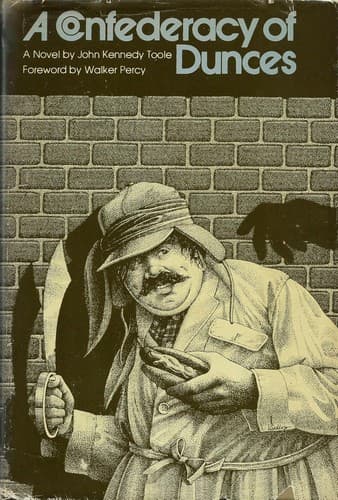
A Confederacy of Dunces
John Kennedy Toole·1980
New Orleans, 1960s. Ignatius J. Reilly — enormous, flatulent, medieval in his worldview, unemployable — lurches through a series of comic disasters while living with his mother and composing a philosophical manifesto in Big Chief notebooks. Toole killed himself in 1969; his mother spent eleven years getting the book published. It won the Pulitzer in 1981. The novel is the funniest book in the Southern literary canon and also a precise portrait of a city and a class at a specific historical moment — the moment before the civil rights movement forced a reckoning. Ignatius's medieval Catholic worldview is the comic mechanism and also the novel's argument: some people respond to history by becoming more elaborate in their refusal to acknowledge it.
Book 7·The political novel
All the King's Men
Robert Penn Warren·1946
Willie Stark rises from rural Louisiana poverty to become a demagogue governor, seen through the eyes of Jack Burden, his aide and the novel's narrator. Warren based Stark on Huey Long, but the novel is not a roman à clef — it's a moral investigation of how good intentions and political power interact and corrupt each other. The narrator's own journey — from cynicism to something harder to name — is the novel's structural spine. Won the Pulitzer in 1947 and remains the definitive American novel about the psychology of political power. More relevant now than it has been at any point since its publication.
Book 8·The popular controversy
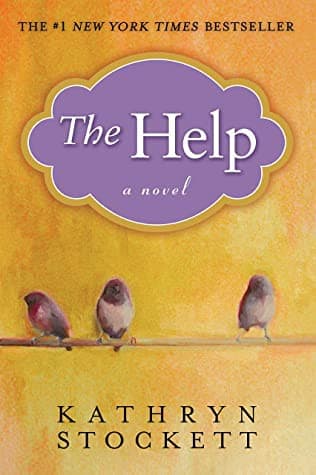
The Help
Kathryn Stockett·2009
Jackson, Mississippi, 1962. A young white woman secretly interviews Black domestic workers about their experiences. Stockett's novel sold 5 million copies, was adapted into an Academy Award–winning film, and has been the target of consistent and largely valid criticism: it centers white perspective on Black stories, and its depiction of the Black characters' voices was written by a white author who grew up with a Black domestic worker. The criticism is correct. The novel is also one of the most widely read depictions of Jim Crow–era Mississippi, and for many readers it was an entry point into a history they didn't know. Both things are true, and engaging with that tension is part of reading it honestly.
Book 9·The Southern Gothic origin
Wise Blood
Flannery O'Connor·1952
Hazel Motes returns from the war determined to found the Church Without Christ and preach that there is no sin because there is no soul. O'Connor was a devout Catholic writing about characters who are almost pathologically anti-religious, and she did it by taking their positions seriously — the grotesque, the violent, the absurd were, for her, the forms grace takes in a world that has rejected it. Southern Gothic as a genre arguably begins here: the combination of theological seriousness with surface-level dark comedy and violence is O'Connor's invention. The most formally strange entry on this list and the one most likely to divide readers.
Book 10·The elegy
Cold Mountain
Charles Frazier·1997
A Confederate soldier, wounded at Petersburg, walks home across the collapsing Confederacy to the woman he loves in the mountains of North Carolina. Frazier's novel is structured as a conscious echo of The Odyssey — Inman's journey home, Ada's transformation in his absence — and achieves the epic register it's aiming for. The Civil War it depicts is neither glorious nor simple: the Confederacy is already disintegrating, the Home Guard murders deserters, and the mountains are full of people trying to survive a war they never wanted. The most beautiful prose on this list, and the most elegiac. Won the National Book Award in 1997.