Book list · Editor's pick·Vol. 001·Fiction
Books About the American South
Ten books, ten Souths — some in direct contradiction.
- Books
- 10
- american-south
- literary-fiction
- historical-fiction
- american-literature
Updated 2026-05-23
— Why read this list —
The American South has produced more great literature per square mile than almost anywhere else, and the books often disagree violently about what happened there.
Ten books in direct tension with each other
This list includes books that contradict each other, and the contradictions are the point.
Gone with the Wind and Beloved describe the same historical period from positions so opposed that reading them in sequence is an education in how mythology forms and what it erases. To Kill a Mockingbird and Their Eyes Were Watching God are both set in roughly the same era (1930s South), but the South Hurston describes — centered on Black interiority, not on white legal institutions — is largely invisible in Lee's novel. The Help and Beloved are about similar subject matter separated by twenty-five years and a fundamental disagreement about whose story this is.
These tensions are not accidents. They reflect real disputes about what happened in the American South, who gets to narrate it, and what the honest account requires.
Reading notes on the difficult entries
Faulkner is the most technically demanding book here. The Sound and the Fury's first section is deliberately difficult — Benjy's narration is non-linear and without conventional cues about time. A reader's guide for the first fifty pages is not cheating; it is practical. The difficulty is not arbitrary; it is the form matching the content.
Gone with the Wind is listed with a note about what it is and is not. This is not a book to avoid — it is a book to read knowing that it was the most widely read American novel of the twentieth century and that its version of the South became the dominant one in the popular imagination for fifty years. That fact is worth understanding.
The 10 books
In publication order
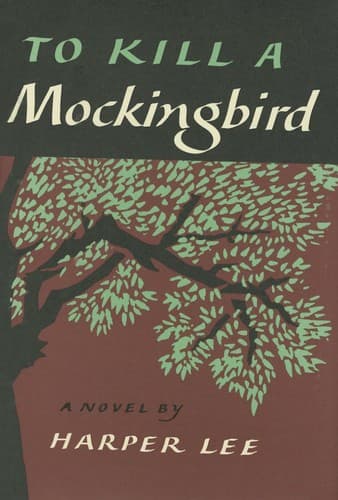
Book 1·Alabama, the false comfort of civility
To Kill a Mockingbird
Harper Lee·1960
Set in Maycomb, Alabama, mid-1930s. Lee's novel renders racial injustice through a child's perspective that is clear-eyed without being naive, and the Alabama it describes — small-town social hierarchies, the performative civility of people who will nonetheless convict an innocent man — is historically grounded and still recognizable. Its reputation as a comfortable text has obscured how precisely it names the mechanisms of institutional racism. Read it as an adult and the comfort is harder to locate.
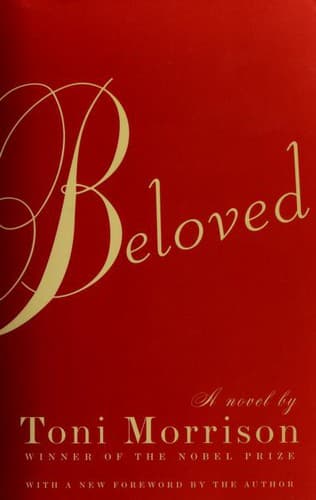
Book 2·What the romance erases
Beloved
Toni Morrison·1987
Set in Cincinnati and the Kentucky plantation its protagonist fled, late 1800s. Morrison's novel is in direct conversation with To Kill a Mockingbird and Gone with the Wind — it renders the interior life of slavery with a specificity that the romantic Southern tradition systematically excluded. The supernatural element is not metaphor; Morrison said Beloved is the physical embodiment of what the slave trade did to Black women's experience of motherhood. The most important book on this list for understanding what the other books leave out.
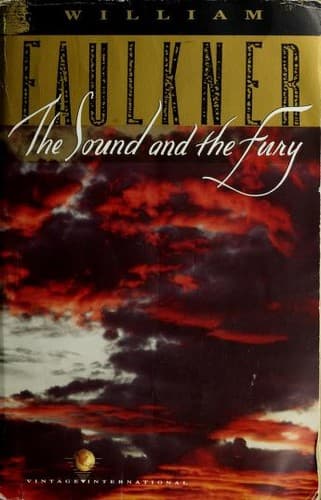
Book 3·Mississippi, the weight of self-delusion
The Sound and the Fury
William Faulkner·1929
Set in fictional Yoknapatawpha County, Mississippi, spanning 1910–1928. Faulkner's novel is technically demanding — four narrators, disjointed chronology, the first section narrated by a character with an intellectual disability — but what it renders is irreplaceable: the experience of a Southern family in the process of collapse, unable to see itself clearly, trapped in a past that is simultaneously real and constructed. Faulkner's South is not the Lost Cause; it is the cost of believing in one.
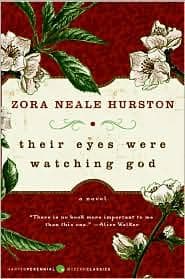
Book 4·Florida, the South with its own center
Their Eyes Were Watching God
Zora Neale Hurston·1937
Set in Eatonville, Florida — an actual all-Black town — and the Everglades muck farms, early twentieth century. Hurston was writing the South from inside the Black community rather than from outside it, and the Florida she describes is not defined primarily by white violence. It is defined by community, vernacular, ambition, and desire. The novel stands apart on this list because the South it describes is largely self-contained and largely alive rather than haunted.
Book 5·Georgia, the grotesque as theology
Wise Blood
Flannery O'Connor·1952
Set in a small Georgia city, early 1950s. O'Connor's Georgia is grotesque, theologically obsessed, and populated by people who are damaged in ways they cannot name. Hazel Motes founds the Church Without Christ while being, despite himself, one of the most spiritual characters in American fiction. O'Connor called her work 'grotesque' as a precision, not a dismissal: the South she describes is Southern Gothic not as atmosphere but as theological argument.

Book 6·Appalachia, the war from the margins
Cold Mountain
Charles Frazier·1997
Set in the Appalachian mountains of western North Carolina, 1864. Frazier's Civil War novel is interested in the landscape and the people who worked it rather than in the war's ideology. The North Carolina mountains here are specific — flora, weather, dialect — and the Civil War arrives as something that interrupts an older, harder life rather than defining it. Cold Mountain depicts the Confederacy's desertion problem more honestly than most Civil War fiction.

Book 7·Louisiana, the reform that becomes the machine
All the King's Men
Robert Penn Warren·1946
Set in Louisiana, 1930s. Warren's novel is about political power in the Deep South — specifically the populist machine politics that Willie Stark (based on Huey Long) represents. The Louisiana here is swampy, hot, and saturated with the kind of politics where genuine reform and genuine corruption are indistinguishable from each other until they are not. The American political novel at its most exact.
Book 8·Georgia, the myth that shaped the memory
Gone with the Wind
Margaret Mitchell·1936
Set in Georgia, 1861–1873. Mitchell's novel is on this list because you cannot understand the mythology of the American South without understanding the text that most powerfully created and distributed it. Gone with the Wind is the Lost Cause in narrative form: the plantation as romance, the Confederacy as tragedy, the Reconstruction as occupation. Read alongside Beloved, it is a document of what a culture chose to tell itself. Not here because it is true, but because it was believed.
Book 9·Mississippi, the white moderate's view
The Help
Kathryn Stockett·2009
Set in Jackson, Mississippi, 1962–1963. Stockett's novel is the contemporary popular entry to this list and the most contested — critics have argued, with some force, that it centers white discomfort rather than Black experience in civil rights-era Mississippi. Read it here in the context of Hurston and Morrison, and the contrast is clarifying rather than damning. As a portrait of white moderate Southern society in the early 1960s — the social rules, the fear, the complicity — it is exact.
Book 10·New Orleans, the South as comedy
A Confederacy of Dunces
John Kennedy Toole·1980
Set in New Orleans, contemporary (written early 1960s). Toole's novel is the one comic entry on this list and earns its place by being genuinely about New Orleans — the neighborhoods, the social strata, the specific ridiculousness of a city that has decided to be itself very loudly. Ignatius Reilly is one of the great comic characters in American fiction, and his New Orleans is rendered with the affectionate precision of someone who was annoyed by it and loved it.