Editor-reviewed
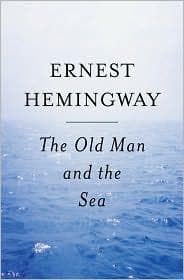
The Old Man and the Sea
Ernest Hemingway·1952·Charles Scribner's Sons·Literature
Reading level: Ages 12+ (YA) · 4-hour read · Beginner difficulty.
- Reading time
- 4h
- Difficulty
- Beginner
- Recommended age
- Ages 12+ (YA)
- Guide read
- 5min
- Editor's rating
- 4.5 / 5
- hemingway
- american-literature
- nobel
- pulitzer
- novella
- cuba
- fishing
- stoicism
- 1950s
— In one sentence —
An old Cuban fisherman catches the largest marlin of his life. Then he loses it. Hemingway called it the best thing he ever wrote.
§ 01 · WHY READ
Why read
Ernest Hemingway wrote The Old Man and the Sea in 1951 in Cuba, where he had lived since 1939. He had been struggling for years — Across the River and into the Trees (1950) had been badly received, and critics were writing him off. He completed this novella in eight weeks. It was published in Life magazine in September 1952, and the entire first printing of 5.3 million copies sold out in two days. It won the Pulitzer Prize in 1953 and was cited by the Nobel Committee when Hemingway received the Nobel Prize in Literature in 1954.
Santiago is an old Cuban fisherman who has gone eighty-four days without catching a fish. His young apprentice, Manolin, has been forbidden by his parents to sail with Santiago anymore — he brings bad luck. On the eighty-fifth day, Santiago sails alone far into the Gulf Stream, hooks the largest marlin he has ever seen, and spends three days alone at sea fighting to bring it in. He wins. Then he loses.
The novella is the purest expression of what critics call the iceberg theory — Hemingway's conviction that the dignity of a story's movement depends on what you leave out, and that what is left out strengthens the story precisely because it is not said. The surface narrative — an old man fighting a fish — is the entire visible structure. Beneath it is a meditation on age, failure, pride, the difference between defeat and destruction, and the specific dignity of sustained effort against an outcome you cannot control.
Hemingway said it was the best thing he ever wrote. He may have been right.
§ 02 · CHARACTERS
Characters
Santiago — the old man. He is sixty-something, lean, scarred from years of handling fishing lines, alone since his wife died years ago. He has two possessions that matter: a picture of the Virgin of Cobre and a photograph of his wife (which he took down because it made him feel too lonely). He thinks in English and Spanish interchangeably; Hemingway is rendering the texture of a bilingual mind without making an issue of it. He is one of the most fully inhabited characters in American fiction despite — or because of — the narration's refusal to explain or editorialize.
Manolin — the boy, probably twelve or thirteen, who has sailed with Santiago since he was five. He has been taken away by his parents but continues to visit, to bring food, to care for the old man's shack. He is the novel's emotional frame: the relationship between them, its tenderness and its practicality, establishes what Santiago is fighting for. He is also the future: if Santiago's example means anything, it means something to someone.
The marlin — present for most of the novel as a force felt through the line. Hemingway gives it interiority through Santiago's imaginings: he wonders what the fish thinks, admires it as an opponent, calls it his brother. The marlin is the largest Santiago has ever seen; it is also, the novel implies, the kind of thing that only comes once in a life.
§ 03 · HIGHLIGHTS
Three highlights
No. 1 · The fight. Three days alone on the Gulf Stream, hands cut to bone by the line, no food, sleeping in snatches with the line over his shoulder so he'll feel if the fish moves. Hemingway renders this with a precision that is both technical (the mechanics of deep-sea fishing are exact) and interior (Santiago's thoughts cycle through memory, self-encouragement, admiration for the fish). The extended fight is the novel, and it is not boring because Hemingway understands that sustained effort at its extreme is inherently interesting if rendered honestly.
No. 2 · "But man is not made for defeat." The sentence appears when Santiago's hands have been bleeding for hours and the fish is still fighting. It is not motivational-poster comfort; in context, it is a precise statement about the distinction between destruction and defeat. Santiago can be physically destroyed — he is being physically destroyed, slowly, by the line and the sun and the time. He cannot be defeated in the sense he means: he will not give up because giving up would be a different kind of thing. Hemingway never elaborates. He doesn't need to.
No. 3 · The return. Santiago brings the marlin in, lashes it to the side of the boat — it is too large to fit inside — and begins the long sail back to Havana. The sharks come. He fights them through the night with a harpoon, then a knife tied to an oar, then the oar itself. By dawn, the marlin is gone — only the skeleton remains. Santiago brings the skeleton home. He has caught the largest fish he has ever seen and brought back only its bones. The novel's last image — a tourist looking at the skeleton and asking what it is, misidentifying it as a shark — is Hemingway's statement about what the world understands of private struggle.
§ 04 · EDITIONS
Recommended editions
| Edition | Why pick it |
|---|---|
| Scribner (standard paperback) | The canonical US edition; the text is unchanged from the first printing. |
| Scribner (illustrated, with Hemingway photos) | Includes photographs; the Cuba context is helpful. |
| Audiobook (Donald Sutherland) | Sutherland's gravelly, aged reading is exactly right for Santiago's register. |
The novella is short enough to read in a single sitting; four hours is generous. It rewards re-reading: the iceberg elements that you couldn't identify on first read become visible once you know the structure.
§ 05 · FIT
Who it's for / not for
Read this if you are…
- Anyone who has worked at something for a long time and is reckoning with what it means to do it well and still not have it come out right.
- Readers interested in Hemingway's prose style: this is its purest form, and the novella format contains it without the longueurs of his longer novels.
- Anyone who has been written off and is deciding what to do about it.
- Readers interested in how a simple surface narrative can carry complex weight.
Skip it if you are…
- Looking for emotional complexity rendered explicitly. Hemingway trusts the reader to do work; if you want the interiority explained, this is the wrong book.
- In the market for plot. The novella has a premise and a conclusion and very little in between except sustained effort.
§ 06 · TIPS
Reading tips
- Read the whole thing in one sitting if you can. The accumulation — the repetition of Santiago's physical state, the cycling thoughts, the growing closeness to the marlin — depends on sustained immersion. Breaking it up breaks the rhythm.
- The iceberg is real. Hemingway is not telling you everything. When he says Santiago slept for a moment, or that his hands hurt, he means more than the sentence contains. Read for what isn't said.
- Manolin is the frame, not an afterthought. The opening and closing scenes with the boy are the novel's emotional container. What Santiago is fighting to demonstrate — to himself, to Manolin, to some idea of what a man is — only makes sense in relation to the boy.
- "A man can be destroyed but not defeated." This sentence is often quoted in isolation as inspiration. In context, Santiago is in the third day of bleeding and pain and has no guarantee the fish will come in. The distinction he's drawing is precise and costs him something. Read it as a statement about what he's actually doing, not about what he wishes were true.
§ 07 · COMPARE
Read alongside
- John Steinbeck — Of Mice and Men (1937). The American novella comparison: simple prose, minimal structure, an ending prepared from the first page. What each author does with brevity is different and illuminating.
- Ernest Hemingway — A Farewell to Arms (1929). The longer companion: the same style, more plot, and the ending that comes before everything else he wrote. Reading both together shows what Hemingway could expand into and what he chose to compress to.
- Herman Melville — Moby-Dick (1851). The American predecessor: an old man and the sea and a fish that becomes everything. Melville is the opposite of Hemingway in prose style; the comparison clarifies what each style does. The Ahab-Santiago contrast — obsession versus acceptance — is the clearest thematic parallel.
- Santiago Ramón y Cajal — Advice for a Young Investigator (1897). Not obviously connected, but: a book about the dignity of sustained intellectual effort, about continuing to work when the results are uncertain, by a Spanish scientist who understood the same problem from a very different angle.
- Albert Camus — The Myth of Sisyphus (1942). The philosophical companion: the man who must roll his stone up the hill every day and watch it roll back down. Camus says we must imagine Sisyphus happy. Santiago is happier than Camus's formulation would suggest, which is Hemingway's answer to the same problem.
§ 08 · DISCUSSION
Discussion questions
- Santiago says "a man can be destroyed but not defeated." What is the distinction? Does the novel finally validate it — is Santiago defeated?
- Hemingway's iceberg theory says the dignity of a story depends on what is left out. What is left out of this story? Can you identify specific things Hemingway is not saying?
- Santiago's relationship with the marlin — calling it his brother, admiring it — changes the nature of the fight. What is he doing when he anthropomorphizes his opponent?
- The sharks destroy the marlin before Santiago can bring it home. A tourist mistakes the skeleton for a shark. What does this ending argue about how private struggle is understood by the world?
- Manolin has been taken away by his parents but continues to care for Santiago. What does the boy represent? What would the novel lose without him?
- Hemingway was writing this after Across the River and into the Trees had failed badly. Does knowing the biography change how you read the novel's themes of failure, recovery, and being written off?
- The novella has been criticized for its treatment of the Cuban setting — an American writer's romanticization of a Cuban fisherman — and defended as universalist. Where do you land?
- Hemingway called this the best thing he ever wrote. Based on what you know of his other work, or just on the internal evidence of this novella, do you agree?
One line to remember
“But man is not made for defeat. A man can be destroyed but not defeated.”— Santiago — Part 1
Appears in collections
Reading lists featuring this book
7 books
The Best Book Gifts for Christmas
Seven novels that survive being unwrapped in front of an audience.
Open list →
7 books
The Best Book Gifts for Father's Day
Seven books that take fathers, fatherhood, and decision-making seriously.
Open list →
7 books
The Best Books for 12-Year-Olds
The bridge year — old enough for hard books, not yet ready for adult themes.
Open list →
7 books
The Best Books for People Who Don't Read
Seven short books that earn the first hour and reward the next two.
Open list →
5 books
Books About Addiction and Recovery
Five books that name what compulsion actually feels like from inside it.
Open list →
7 books
The Best Books About Fatherhood and Loss
Seven novels about fathers and sons, fathers who fail, fathers who carry the boy on the road — the grief specific to fatherhood.
Open list →
7 books
Books About Starting Over in Life
Seven novels about second acts, leaving the wreckage of the first life, and building from nothing.
Open list →
6 books
The Best Books About Survival
Six novels about people who have to keep going when everything says they shouldn't.
Open list →
6 books
The Best Books About War and Its Cost
Six novels about what war actually does — not to nations, but to people.
Open list →
5 books
Books for People Who Stopped Reading
Five books under 200 pages. No prerequisites. No homework.
Open list →
6 books
Books That Give You Hope
Six books that earn the word hope by refusing to look away from what makes hope hard.
Open list →
8 books
Books You Can Read in One Sitting
Sorted by length — from two hours to a full afternoon. Each one built for continuous reading.
Open list →
6 books
Books to Read When You Feel Lost in Life
Protagonists with no map who keep moving anyway — each one a different kind of lost.
Open list →
5 books
Classics That Are Actually Readable
Five books that carry their age well.
Open list →
8 books
Nobel Prize Winning Novels Worth Reading
Eight novels by Nobel laureates in Literature — chosen not because the prize certifies them, but because they are the ones a first-time reader of Nobel fiction can actually get inside.
Open list →
6 books
Best Pulitzer Prize Novels Worth Reading Now
Six winners that held up — and one whose controversy is part of the point.
Open list →
7 books
Short Classics High Schoolers Actually Finish
Short, gripping, English-class acceptable — for the student who will not finish a four-hundred-page novel.
Open list →
10 books
Short and Devastating: Ten Classics You Can Read in a Weekend
The most efficient literature ever written. None longer than 200 pages. All of them permanent.
Open list →
You might also like
Read next
Ernest Hemingway · 1940
For Whom the Bell Tolls
Three days behind enemy lines during the Spanish Civil War. Hemingway's most emotionally complete novel.
Read · 6 min
Ernest Hemingway · 1926
The Sun Also Rises
Paris, then Pamplona. The bullfights and the drinking and the people who cannot say what they mean. Hemingway's iceberg theory in its first full novel-length application.
Read · 5 min
William Faulkner · 1936
Absalom, Absalom!
Four narrators reconstruct a man who destroyed his family. The story keeps changing. That is the point.
Read · 7 min