Book list · Editor's pick·Fiction
Short Classics High Schoolers Actually Finish
Short, gripping, English-class acceptable — for the student who will not finish a four-hundred-page novel.
- Books
- 7
- short-reads
- classics
- high-school
- reluctant-readers
Updated 2026-05-24
— Why read this list —
Every English teacher knows the student: smart, capable, would rather do almost anything than read a long book. These seven novels are short enough to finish in a weekend and serious enough that finishing them counts.
How to use this list
The premise of the list is honest: a student who will not read Crime and Punishment will read Of Mice and Men, and the experience of finishing Of Mice and Men is far more useful than the experience of not finishing Crime and Punishment. None of these books is a compromise. They are short because their authors chose to make them short — Steinbeck, Hemingway, Orwell, and Kafka all wrote shorter books in the service of saying something more cleanly, not less.
For a teacher or parent placing the books in a student's hands, the order matters less than the threshold: get them to finish one. Of Mice and Men and The Metamorphosis are the two most likely to convert a reluctant reader, for opposite reasons — Steinbeck because the emotional stakes are immediate, Kafka because the strangeness of the premise is its own engine. Animal Farm is the next move, because once a student has finished one short serious book they are usually willing to try another, and Orwell rewards that willingness with the experience of having understood a real argument about how power works.
The longest book here is Catcher in the Rye at seven hours, which means even the long one is shorter than most assigned reading. Save it for last; by then the student has finished six classics and is allowed to feel that they have done something.
On length as a feature
The cultural assumption that serious literature must be long is wrong, and these seven books are the proof. The total reading time for all seven is twenty-three hours — less than a single Russian novel, less than the last Harry Potter book, less than many of the books a high-school student is asked to read in a semester.
Length is one variable. Density is another. Hemingway is short and dense; Tolstoy is long and dense; Stephen King is long and not dense. A reluctant reader is usually not opposed to density — they are opposed to length, which feels like an unreasonable demand on their time. Once a student has read Hemingway and Kafka and discovered that two hundred pages can contain as much as eight hundred, the entire shape of what reading asks of them changes. The point of this list is to engineer that change.
The 7 books
In publication order
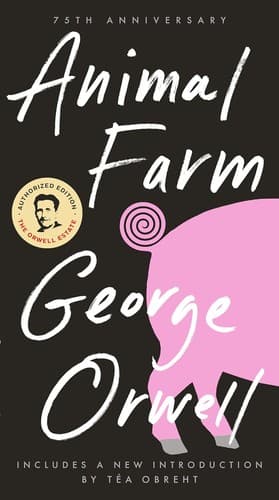
Book 1·The three-hour political education
Animal Farm
George Orwell·1945
Three hours. The farm animals overthrow the farmer and gradually reconstruct the system they overthrew. Orwell wrote a fable that is short enough to read in a single sitting and serious enough that a high-school student who finishes it has actually engaged with political fiction. The brilliance of the book for a reluctant reader is that it does not ask the reader to do interpretive work to understand what it is about — the allegory is clear without being obvious, and the ending is the kind of ending a teenage reader will think about for days. Pair with 1984 (a longer book) only after a student has read Animal Farm and asked for more.
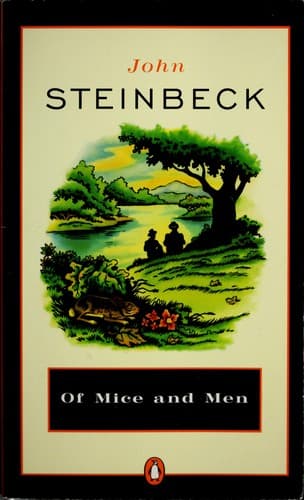
Book 2·The novella that won't let you off
Of Mice and Men
John Steinbeck·1937
Three hours. Two migrant farm workers — one of whom is mentally disabled and depends on the other — try to save enough money to buy a small farm. Steinbeck wrote this with the specific intent that it be readable by the working people he was writing about; the sentences are short, the dialogue does the work, and the ending lands hard regardless of how prepared you are for it. For a high-school student who has decided they don't like literary fiction, Of Mice and Men is the book most likely to change that assessment. The novella has been challenged in school districts for decades, which is itself a useful conversation starter.
Book 3·The Nobel Prize in four hours
The Old Man and the Sea
Ernest Hemingway·1952
Four hours. An old fisherman, alone in a small boat, hooks a marlin too big for him to bring in. Hemingway built his style for exactly this kind of reader: every sentence is short, every word is chosen, and nothing is in the book that the book does not need. A reluctant high-school reader will find that the prose is the opposite of intimidating — there are no long descriptions, no philosophical digressions, no Russian patronymics. And yet the experience of reading it is unmistakably the experience of reading serious literature. Hemingway was given the Nobel Prize partly on the strength of this book, which is a useful fact to mention to a student who is dismissive of it as 'just' a fishing story.
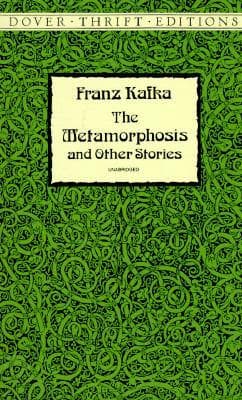
Book 4·The most famous opening in modern literature
The Metamorphosis
Franz Kafka·1915
Two hours. Gregor Samsa wakes up one morning transformed into a giant insect. Kafka's opening sentence is the most famous opening in twentieth-century European literature, and the novella does not waste a page after it. For a reluctant high-school student, the appeal of The Metamorphosis is that the premise is genuinely strange — there is no gentle introduction, no realist scene-setting, just the situation, dealt with as if it were a problem of household management. The book is also the most accessible introduction to Kafka, who is otherwise a writer high-schoolers tend to encounter in adult life and find permanently intimidating. Two hours now saves a lifetime of avoidance.
Book 5·The classic that surprises them
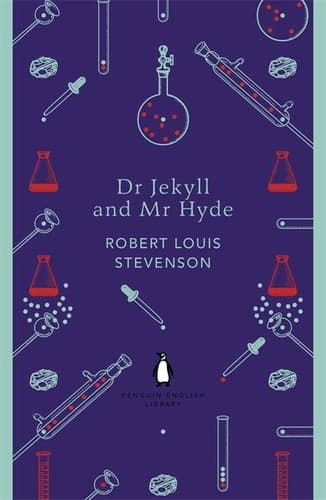
The Strange Case of Dr Jekyll and Mr Hyde
Robert Louis Stevenson·1886
Two hours. Most high-school students know the premise from a hundred secondhand references — the respectable doctor with the monstrous alter ego — without having read the book. Stevenson structured it as a mystery rather than a horror story, which is a surprise to readers who come in expecting straight gothic: a London lawyer is trying to figure out why his friend Dr Jekyll has made a strange will leaving everything to a violent stranger named Hyde. The reveal in the last chapters lands harder when the reader has not been told the ending in advance. The prose is late-Victorian and asks for some patience; the payoff is worth two hours.
Book 6·The two-hour tragedy
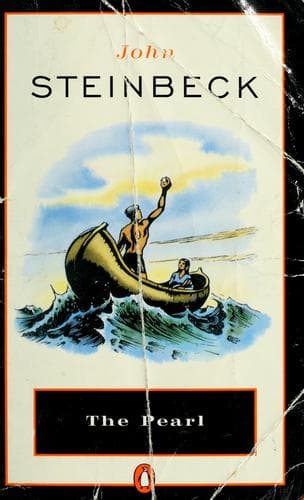
The Pearl
John Steinbeck·1947
Two hours. A poor pearl diver finds a pearl large enough to change his family's circumstances, and his community responds. Steinbeck wrote The Pearl as a parable — short, sharp, almost folkloric — and it functions for a reluctant high-school reader the way a short story functions: a single situation, followed to its conclusion, no room to lose interest. The second Steinbeck on this list because his accessibility was a deliberate political choice and that choice is exactly what this collection is built around. Pairs naturally with Of Mice and Men; reading both gives a student a fair sense of Steinbeck's range without committing to East of Eden or Grapes of Wrath.
Book 7·The voice that pulls them through
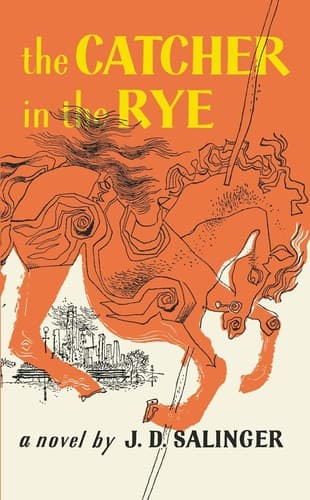
The Catcher in the Rye
J.D. Salinger·1951
Seven hours, the longest book on this list and the only one that is told in a voice closer to how a high-schooler actually thinks than how their teachers talk. Holden Caulfield has been expelled from his fourth boarding school and spends three days in New York City failing to figure out what he wants. The novel is the book a reluctant reader is most likely to read past the assigned chapters of, simply because Holden's voice does not let go. Catcher has slipped off many school reading lists in the last decade, which means a high-school student who reads it now is reading it on their own terms rather than as homework — which is the better way to encounter it anyway.