Book list · Editor's pick·Fiction
The Best Books for People Who Don't Read
Seven short books that earn the first hour and reward the next two.
- Books
- 7
- reluctant-readers
- short-reads
- gift-ideas
- page-turners
Updated 2026-05-25
— Why read this list —
People who say they don't read have usually been given the wrong books. Six hundred pages is not a starter. These seven are.
Who this gift is for
The person who says they don't read is almost never someone who can't read. They are usually a person who reads constantly — emails, news, texts, articles, screenplays at work — but who has built up a quiet conviction that novels are slow, indulgent, or homework. That conviction was usually formed in high school by being assigned a long book they were not ready for. The way to disprove it is not to argue with the person but to give them a short book that they will finish before they remember they are not a reader. Six of the seven books on this list are under two hundred pages. All seven can be finished in a single weekend.
How to pick from the list
Match the book to what the recipient already enjoys. If they follow politics, Animal Farm. If they watch a lot of film and television, Of Mice and Men or Dr Jekyll and Mr Hyde. If they like science fiction premises but do not read fiction, The Metamorphosis or Never Let Me Go. If they have a serious-minded streak and would be insulted by being given anything described as easy, The Old Man and the Sea — it is the book that most signals respect for the reader. The Pearl is the right pick for a reader who likes a clear moral shape. Always start with the shortest plausible match. Once they have finished one of these, the next gift can be longer. Never start with the longer book.
The 7 books
In publication order
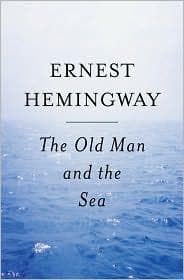
Book 1·The starter Hemingway
The Old Man and the Sea
Ernest Hemingway·1952
The book to give the person who has not finished a novel since school. Hemingway's sentences are short, the chapters are short, the cast is one man and a fish, and the whole thing can be done in a long evening. It also won the Nobel, which gives the reluctant reader some cover — they are not starting with a children's book, they are starting with a serious one that happens to be short. Almost no one who finishes it regrets having read it, which is the test that matters for a starter book.
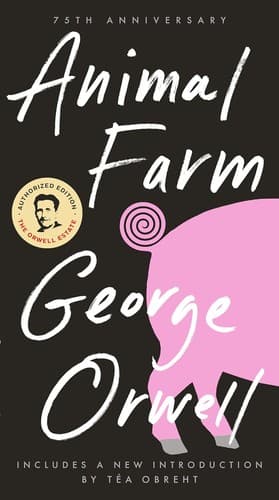
Book 2·For the political news reader
Animal Farm
George Orwell·1945
Three hours, talking pigs, and an argument about political power that is sharper than most non-fiction makes in twice the length. Animal Farm is the book to give the reluctant reader who follows the news and likes to argue about politics — Orwell rewards exactly that kind of attention. It also reads more like a folk tale than a novel, which is friendlier to readers who associate fiction with school assignments. The ending is the kind of payoff that makes a non-reader text you the next day asking what to read next.
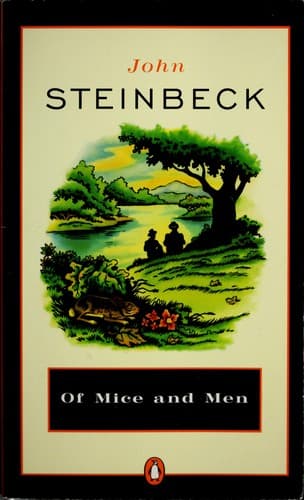
Book 3·For the film-lover who avoids books
Of Mice and Men
John Steinbeck·1937
Steinbeck wrote this as a short novel that could be performed almost verbatim as a play, which means it moves like a film: scenes, dialogue, almost no interior monologue. A reluctant reader who has avoided fiction because they expect long descriptive passages will find none here. The friendship between George and Lennie is one of the most rendered male friendships in American writing, and the ending hits hard enough to convert people. Give it to a reader who likes character-driven films but claims books are too slow.
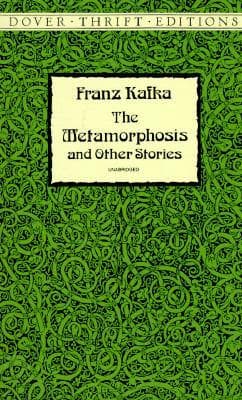
Book 4·The shortest entry
The Metamorphosis
Franz Kafka·1915
Two hours. The opening sentence — a salesman wakes up as a giant insect — does ninety percent of the work of pulling the reader in. From there Kafka writes about something the reluctant reader already knows, which is the experience of becoming useless to your family and your job and watching them quietly adjust around your absence. It is the book to give the reader who suspects literature has nothing to say to them about their actual life. Two hours later they will have changed their mind.
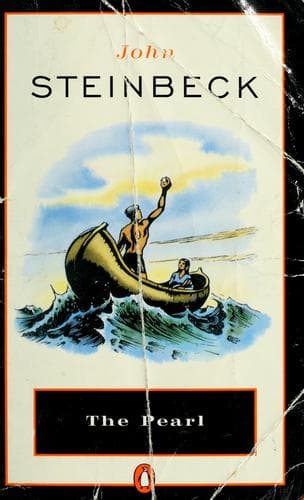
Book 5·For the parable-minded reader
The Pearl
John Steinbeck·1947
The second Steinbeck on this list, and the shorter one. A poor pearl diver finds a pearl large enough to change his family's life, and the book is the slow account of what happens to his life because of it. It moves like a parable, which is forgiving to readers who do not yet have the patience for novelistic indirection. Give it to a reluctant reader who likes stories with a clear moral shape — the lesson of The Pearl is not subtle, but it is delivered with enough force to be felt rather than just understood.
Book 6·For the mystery-show watcher
The Strange Case of Dr Jekyll and Mr Hyde
Robert Louis Stevenson·1886
Two hours, a famous premise, and a structure that moves like a mystery novel — a lawyer investigating his client's strange will, slowly piecing together what is happening. The reluctant reader gets the satisfaction of unraveling a story they already think they know, and Stevenson is too good a writer to coast on the famous twist. Give it to the reader who watches detective shows and thinks of classics as homework. It is the gateway book for nineteenth-century fiction.
Book 7·When the starter books worked
Never Let Me Go
Kazuo Ishiguro·2005
The longest book on this list, included for the reluctant reader who has actually finished one or two of the others and is ready for a real novel. Ishiguro writes in the voice of a narrator who is slowly figuring out the truth of her own life, and the reader figures it out alongside her — which makes the pages turn without any of the usual tricks. It is also the book most likely to be the one the recipient brings up months later, which is the long-term test of whether a starter book has worked.