Book list · Editor's pick·Fiction
Nobel Prize Winning Novels Worth Reading
Eight novels by Nobel laureates in Literature — chosen not because the prize certifies them, but because they are the ones a first-time reader of Nobel fiction can actually get inside.
- Books
- 8
- nobel-prize
- literary-fiction
- classics
- world-literature
- fiction
Updated 2026-05-28
— Why read this list —
The Nobel in Literature is awarded to a writer, not a book. These are the eight where the prize-winning achievement is most legible from a single novel.
You searched "Nobel Prize winning novels" and got a list of names
That is the problem with the Nobel: it is awarded to a writer for a body of work, not to a book, so a search for "Nobel Prize winning novels" returns laureates, not titles — Hemingway, Morrison, Mann — and leaves you to guess which of their books is the one to actually read. Some laureates wrote forty volumes. Some wrote in languages whose translations vary wildly in quality. Some won for poetry or drama and have no obvious novel to hand you at all. The medal certifies the author; it tells you nothing about where to start.
This collection answers the question the prize doesn't. Every book here is by a Nobel laureate in Literature, and every one was chosen because the laureate's prize-winning achievement is legible from this single novel — you can read one book and understand exactly what the Swedish Academy was rewarding. They are ordered by demand on the reader, from a four-hour Hemingway novella to a thirty-five-hour Thomas Mann education, so you can enter wherever your time and appetite allow and climb as far as you want.
Why these eight
A list of Nobel laureates would run to over a hundred names, many of them poets, playwrights, and writers whose best work is untranslated or out of print. The filter here is strict and deliberate: a single novel, available in a strong English translation or written in English, that a first-time reader of serious literary fiction can finish and feel rewarded by — not dutiful, rewarded.
That filter spans the prize's whole century and most of the world it claims to represent: Mann's 1929 Germany, Hemingway's 1954 America, Golding's 1983 England, García Márquez's 1982 Colombia, Morrison's 1993 — the first Black woman to win — Pamuk's 2006 Turkey, Ishiguro's 2017, and Han Kang's 2024 Korea, the most recent laureate and proof the prize still tracks living literature. Read in order, the collection is also a quiet argument about what the Nobel has meant: it began rewarding "idealistic" grandeur (Mann), narrowed toward stylistic precision (Hemingway), and widened again toward the clash and crossing of cultures (Pamuk, Han Kang). No single book does what the set does — show you the prize's range, its drift, and its standard — but each one, on its own, is a complete reason the laureate won.
The 8 books
In publication order
Book 1·The shortest way into a laureate
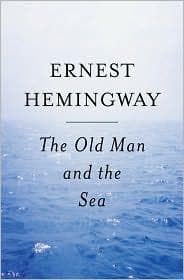
The Old Man and the Sea
Ernest Hemingway·1952
Start here, because this is the shortest path into a Nobel laureate's mind. The Swedish Academy cited this novella by name when it gave Hemingway the prize in 1954, and it is the clearest distillation of the style that changed twentieth-century prose: short declarative sentences, nothing wasted, enormous feeling held just under the surface. You can read it in an afternoon and understand exactly what the committee was rewarding.
Book 2·The newest laureate, contemporary and short
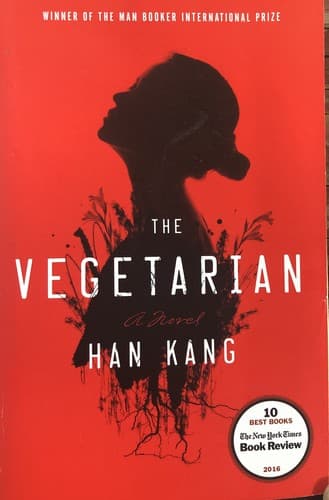
The Vegetarian
Han Kang·2007
The most recent laureate on this list — Han Kang won in 2024, the first Korean and first Asian woman to do so — and the best argument that the Nobel still tracks living literature rather than only canonizing the dead. Three novellas circle a woman who stops eating meat, told entirely by people who refuse to understand her. If you want to know what contemporary prize-winning fiction looks like, this is the front door, and it is short.
Book 3·Accessible literary fiction, devastating quietly
Never Let Me Go
Kazuo Ishiguro·2005
Ishiguro won in 2017 for novels that, in the Academy's phrase, uncovered 'the abyss beneath our illusory sense of connection with the world,' and no single book demonstrates that better than this one. It reads like a quiet English boarding-school memoir until you slowly grasp what the school is for. The restraint is the point — and it is the same restraint the prize rewarded. The most accessible literary-fiction entry here for a reader who normally avoids 'difficult' books.
Book 4·The one you think you've read
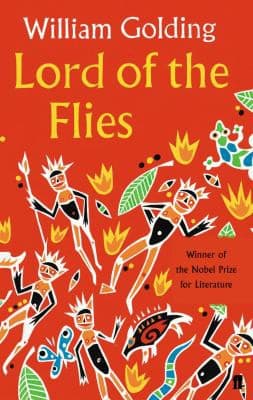
Lord of the Flies
William Golding·1954
Probably the Nobel novel most readers already half-know from school, which is exactly why it belongs here: reread as an adult, Golding's 1983 prize makes sense in a way it never did at fifteen. The argument about what children do without adults is not a parable about kids — it is a claim about human nature that the twentieth century kept testing. Short, propulsive, and far darker than the classroom version suggests.
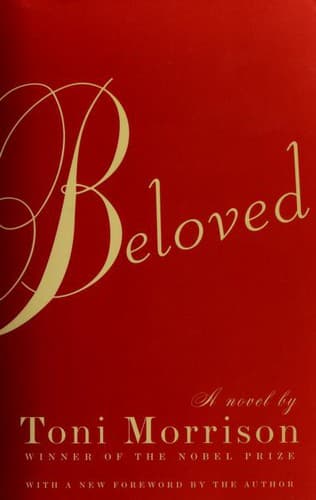
Book 5·The Pulitzer-and-Nobel center of gravity
Beloved
Toni Morrison·1987
The rare book that holds both the Pulitzer and the Nobel — Morrison won the Nobel in 1993, the first Black woman to do so — and the one most readers name when asked for the great American novel of the century's second half. It is harder than the four books above it, structured to disorient before it coheres, but it pays the difficulty back completely. This is the center of the collection: the laureate whose whole achievement is legible in one novel.
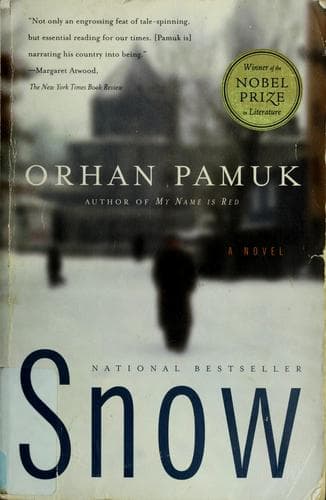
Book 6·The Nobel's border-crossing mandate, made literal
Snow
Orhan Pamuk·2002
Pamuk won in 2006 as the first Turkish laureate, cited for finding 'new symbols for the clash and interlacing of cultures,' and Snow is where that clash is most concrete: a poet returns to a remote Turkish town and walks straight into the collision between secular and religious, Europe and Asia, the state and the faithful. Read it when you want the Nobel's stated mission — literature that travels across borders — in its most literal form.
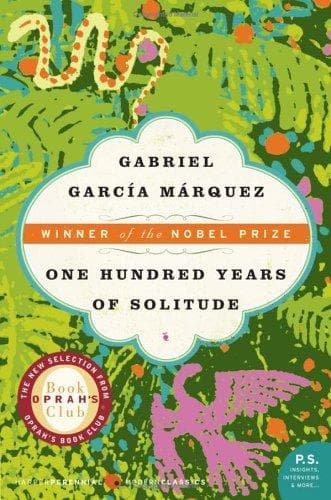
Book 7·The novel that defined a global mode
One Hundred Years of Solitude
Gabriel García Márquez·1967
The monument. García Márquez won in 1982 and this is the novel that made magical realism a global literary mode rather than a regional curiosity. A century of one family in one invented village, told in prose so densely accumulating that readers finish it remembering it as a single long afternoon. Save it for when you have the hours — but if you read only one Nobel novel to understand why the prize exists, the committee would point you here.
Book 8·The summit — longest, deepest, last
The Magic Mountain
Thomas Mann·1924
The deepest and the longest, and the right place to end. Mann won in 1929 with this novel central to the citation, and it is the most complete example of what the Nobel once meant by 'idealistic' literature: a young man visits a Swiss sanatorium for three weeks and stays seven years while pre-war Europe argues itself toward catastrophe in the rooms around him. Thirty-five hours that ask everything of a reader and pay it back as a complete intellectual education. The summit of the list, in every sense.