Book list · Editor's pick·Vol. 001·Fiction
Short and Devastating: Ten Classics You Can Read in a Weekend
The most efficient literature ever written. None longer than 200 pages. All of them permanent.
- Books
- 10
- Total reading
- 33h
- Authors
- 9
- Time span
- 1886–1952
- short-books
- classics
- weekend-read
- novellas
- literary-fiction
- under-200-pages
Updated 2026-05-21
— Why read this list —
Brevity isn't a limitation. For these ten books, it's the technique.
On the ethics of brevity
There is a persistent assumption that length signals seriousness — that a novel requires more time, more pages, more investment to be great. The ten books on this list are an argument against that assumption.
Kafka said everything he had to say about alienation in 70 pages. Orwell's political argument has proven more durable at 112 pages than most book-length political theory. Steinbeck's compression in Of Mice and Men is a technique, not a limitation: the play-novel hybrid form strips away everything that isn't load-bearing, so what remains carries more weight per page than most longer novels manage.
Brevity, in these books, is the discipline that makes the argument work. The Old Man and the Sea is exactly as long as it needs to be: the third day of the fight earns the ending, and the ending only holds because of the compressed certainty of the prose. Add 100 pages and you have a different, worse book.
This is not a list of books that happen to be short. It's a list of books where the length is integral to how they work.
Before you start: a note on re-reads
Several of these books are widely assigned in secondary school (Gatsby, Of Mice and Men, Animal Farm, Jekyll and Hyde) and widely unread as adults because the curriculum experience felt like an obligation rather than a discovery. If you read any of them under those conditions and remember them as dull, this is an invitation to re-read.
Curriculum framing — the essay questions, the thematic prompts, the 'identify three symbols' assignments — tends to make texts feel like puzzles with predetermined answers. These books are not puzzles. They are formal achievements in which every element has been calibrated to produce a specific experience. That experience is more available when you read for pleasure than when you read for a grade.
Fitzgerald especially is underread as an adult: the sentences are different when you're not looking for the green light symbolism.
Reading time note
The times listed are for the text at a moderate pace. Most of these books were written for oral culture and read well slightly slower than your fastest pace — giving the sentences time to land. Kafka at 2 hours of rushing is less useful than Kafka at 2.5 hours of attention. The weekend path above builds in time for this.
The ten entries follow.
Reading paths
Three orders. Pick one before you start.
The American short-form tradition
Of Mice and Men → Great Gatsby → Ethan Frome → Old Man and the Sea → The Pearl. Five American novellas spanning 1899-1952, showing how American writers used compression as a form of moral precision. Read in publication order and you're watching a tradition develop.
Book 2›Book 3›Book 8›Book 6›Book 9
The European dark tradition
Heart of Darkness → Metamorphosis → Animal Farm → Jekyll and Hyde → Turn of the Screw. Five European novellas about systems that dehumanize, selves that fracture, and situations that refuse resolution. Each one is formally inventive in a different way.
Book 5›Book 1›Book 4›Book 7›Book 10
A complete weekend of essential short fiction
Metamorphosis (Saturday morning, 2h) → Great Gatsby (Saturday afternoon, 5h) → Animal Farm (Sunday morning, 3h) → Old Man and the Sea (Sunday afternoon, 4h). 14 hours, a full weekend, four of the most important short works in Western literature. Finish by Sunday evening.
Book 1›Book 3›Book 4›Book 6
The 10 books
In publication order
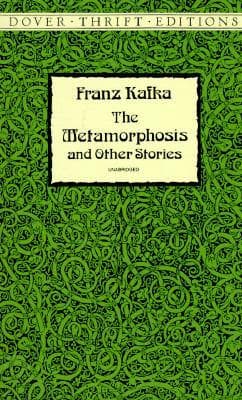
Book 1·The original
The Metamorphosis
Franz Kafka·1915·trans. Susan Bernofsky ()
Gregor Samsa wakes up transformed into a monstrous insect. His family's response — shock, then practical adjustment, then resentment — is described with complete deadpan normality. Kafka is not writing surrealism; he's writing realism about the experience of suddenly becoming a burden to the people who claimed to love you. The text is 70 pages. It has been interpreted as a story about disability, about alienated labor, about depression, about immigrant experience, about the family as a unit of conditional love. All interpretations are correct because Kafka didn't write an allegory — he wrote a situation precise enough to hold all of them. Read the Susan Bernofsky translation.
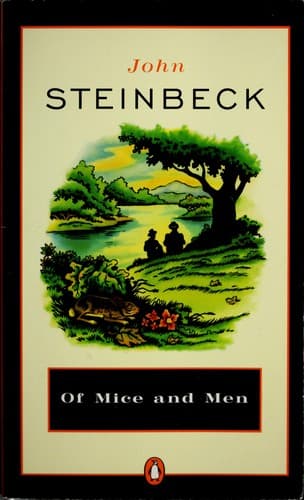
Book 2·The American fable
Of Mice and Men
John Steinbeck·1937
Two migrant farmworkers — one clever and restless, one enormous and gentle and cognitively disabled — travel together and plan for a small farm of their own. Steinbeck wrote it as a play first; the novel's structure shows it, in the best way. Every scene is staged, every line of dialogue is load-bearing, every character is given exactly the detail they need and no more. The ending is one of the most argued-about in American literature: whether it is merciful or tragic depends on a moral position Steinbeck doesn't take for you. Reads in three hours and stays considerably longer.
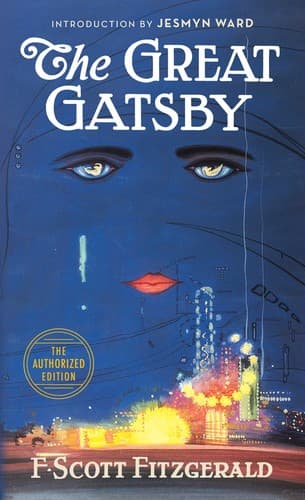
Book 3·The American myth
The Great Gatsby
F. Scott Fitzgerald·1925
Overassigned in high school and underread as an adult. Fitzgerald wrote the most economical prose of any American writer in the twentieth century — every sentence in Gatsby is doing at least two things. The novel is simultaneously: a 1920s New York party novel, an argument about class mobility in America, a character study of self-invention, and a meditation on how the past relates to desire. Nick Carraway is one of the most unreliable narrators in American literature, and Fitzgerald never points this out. The final paragraph is six sentences that contain everything the novel said. Re-reading it in adulthood, without the curriculum framing, is a different experience.
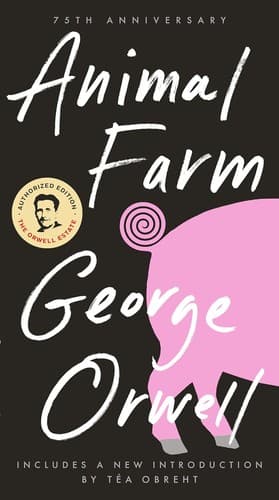
Book 4·The allegory that works
Animal Farm
George Orwell·1945
Animals overthrow their human farmer and attempt to run the farm themselves. The allegory is Soviet Russia; it works perfectly and you don't need to know the history to feel it work. Orwell originally couldn't find a publisher — too politically inconvenient in 1945, when the Soviet Union was a British ally. The novel's 112 pages demonstrate that allegory, when it fits perfectly, is more durable than argument: the image of the pigs walking on two legs has outlasted every direct critique of Soviet communism written in the same decade. The most efficient political argument in English fiction.
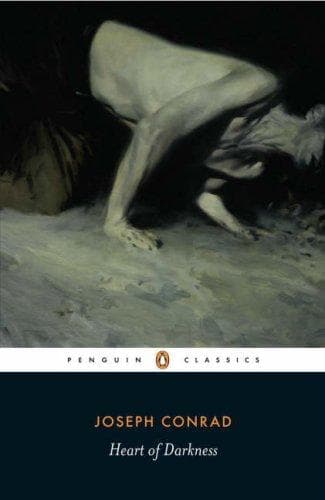
Book 5·The contested one
Heart of Darkness
Joseph Conrad·1899
A riverboat captain travels up the Congo to find an ivory trader named Kurtz who has 'gone native' and established himself as a god. Conrad's novella is a colonial-era text that describes the violence of European imperialism in Africa with more honesty than most of its contemporaries — and reproduces some of its era's attitudes toward Africans in ways that Chinua Achebe, in a famous 1975 essay, argued were racist enough to disqualify it from the canon. Both things are true. This is the canonical case for how to read a historically important text that is also morally compromised. The argument about it is as important as the text itself.
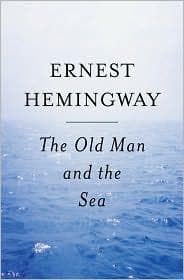
Book 6·The Hemingway argument
The Old Man and the Sea
Ernest Hemingway·1952
An old Cuban fisherman goes out alone and hooks a marlin larger than his boat. The fight lasts three days. Hemingway wrote it as proof — to himself and his critics — that he still had it after *Across the River and Into the Trees* was savaged. He succeeded: this book won him the Pulitzer and was cited in his Nobel. The prose is at its maximum compression — Hemingway's iceberg theory applied at full discipline. What the story is 'about' depends entirely on what you bring to it: endurance, masculinity, defeat, dignity, the relationship between effort and result. It is short enough to read in an afternoon and does not resolve cleanly.
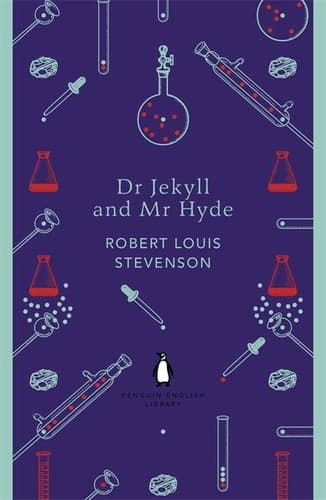
Book 7·The genre classic worth re-reading
Strange Case of Dr Jekyll and Mr Hyde
Robert Louis Stevenson·1886
Everyone knows the ending. Read it anyway: the text is 70 pages, Stevenson is a better prose stylist than his reputation as a 'genre' writer suggests, and the formal choice — telling the story as a mystery before revealing the truth — makes the ending hit differently than you expect even when you know it's coming. The novel is a Victorian argument about the suppression of desire: what happens when a highly respectable man separates his respectable self from his unspeakable impulses and lets each run free. The Hyde who emerges is not glamorously evil; he is small, stunted, and vicious — the form repression takes on what it hides.
Book 8·The New England tragedy
Ethan Frome
Edith Wharton·1911
A New England farmer is trapped between an ailing wife and a growing love for her young cousin who lives with them. Wharton is writing about imprisonment — the kind built not from locked doors but from obligation, poverty, and the steady accumulation of reasons not to act. The framing device (a narrator piecing together the story from fragments years later) is Wharton's formal argument: some disasters are understood only in retrospect, when it is too late to be useful. The novel's ending is one of the most formally precise pieces of irony in American fiction. Wharton considered it one of her worst novels; critics have consistently disagreed.
Book 9·The parable
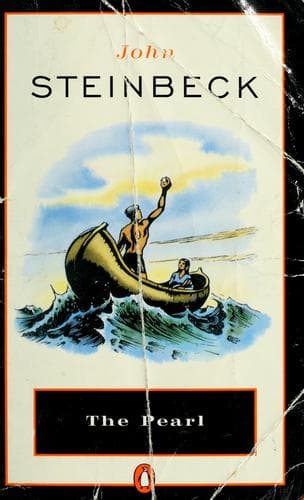
The Pearl
John Steinbeck·1947
A Mexican pearl diver finds a pearl of extraordinary value, which he believes will transform his family's life. It transforms it, but not in the direction he imagined. Steinbeck explicitly structured the book as a parable — he says so in the introduction — which makes it the most formally honest entry on this list about its own genre. The prose has the rhythm of oral storytelling, the plot has the logic of myth, and the argument (that the systems built to keep the poor poor will convert good fortune into another instrument of dispossession) is made with the efficiency that parable allows. 90 pages. More durable than most novels ten times its length.
Book 10·The ambiguity argument
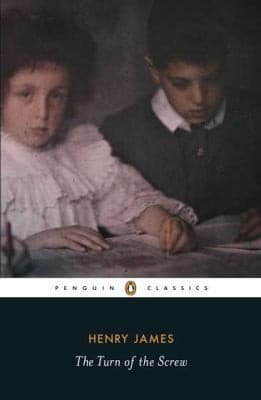
The Turn of the Screw
Henry James·1898
A governess arrives at a remote country house and becomes convinced that the two children in her care are under the influence of the ghosts of two dead servants. James's novella has generated more critical argument than almost any work of comparable length: are the ghosts real, or is the governess mentally ill and the children normal? James designed the text to support both readings with equal plausibility, and refused in interviews to settle it. The formal ambiguity is the argument: the story is about what we do when we can't determine what's real, which is a different kind of horror story than the one that shows you the monster.