Book list · Editor's pick·Vol. 001·mixed
Books for People Who Stopped Reading
Five books under 200 pages. No prerequisites. No homework.
- Books
- 5
- short-reads
- accessible
- classic
- re-entry
Updated 2026-05-23
— Why read this list —
The reason most people stop reading isn't that they dislike reading. It's that they picked the wrong book at the wrong moment.
Why people stop reading
Usually it's not a conscious decision. It's a book they didn't finish left face-down on a nightstand, and then another one, and then the habit broke and something else filled the time. The books that cause this most reliably are books assigned by someone else (too much obligation), books chosen because they seemed impressive (too much work), or books that are genuinely good but wrong for the moment (the wrong kind of demand).
The books on this list avoid all three failure modes. They are all short enough to finish before the motivation fades — three to five hours each, which means one or two evenings. They don't require prior knowledge, cultural context, or patience with slow beginnings. And they are all rewarding in the reading rather than merely in the having read, which is the distinction that matters most for someone re-building the habit.
On format and pacing
Notice that one entry here is a short story collection — Chiang's book. The advantage of a short story collection for someone returning to reading is that there is no commitment to a sustained narrative. You finish a story and you're done; the next one is its own world. If the collection sits on your bedside table for two weeks between stories, that's fine. It accumulates anyway.
The others are novels, but all the kind that are paced like stories rather than like novels — Orwell moves scene to scene without delay, Hemingway has no transitions he doesn't need, Steinbeck has the momentum of a play. These are not books that ask you to trust them for a hundred pages before they deliver. They earn your attention in the first five pages or they don't earn it at all. These books earn it.
The 5 books
In publication order
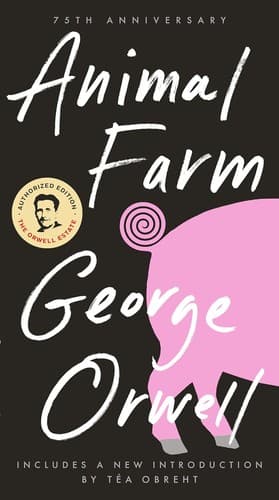
Book 1·The perfect first book back
Animal Farm
George Orwell·1945
Three hours. A farm of animals overthrows their human farmer and tries to run things themselves. Orwell's allegory about revolution and betrayal is the easiest entry point in this list — it reads at the pace of a story you'd tell out loud, and you don't need to know anything about Soviet history for it to land. The ideas hit you before you realize they're ideas. If you haven't read a book in a year, start here.
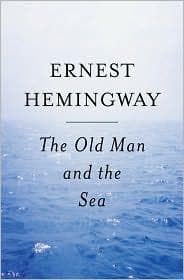
Book 2·Prose stripped to essentials
The Old Man and the Sea
Ernest Hemingway·1952
Four hours. An old fisherman goes out alone and hooks the largest fish of his life. That's the whole plot, and it's enough. Hemingway's method — say only what's necessary, let the rest be understood — means this is a short book that feels complete rather than condensed. You don't need to have read Hemingway before; this is the book that makes sense of why people read him. No knowledge required, no sequel needed.
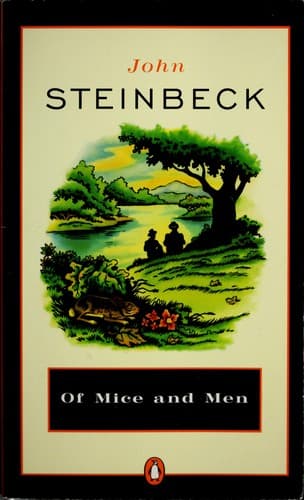
Book 3·The gut punch in three hours
Of Mice and Men
John Steinbeck·1937
Three hours. Two migrant workers in Depression-era California — one quick, one gentle and large — move from ranch to ranch with a shared dream of owning land. Steinbeck's shortest novel is also his most formally controlled; it reads almost like a play, in clear scenes with dialogue that carries everything. It has been assigned in schools for decades, which has given it an undeserved reputation for being dutiful. It is not dutiful. It will hit you.
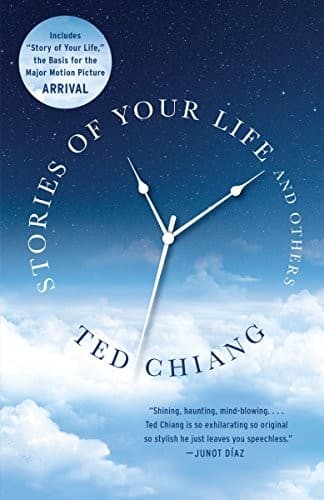
Book 4·One story at a time
Story of Your Life and Others
Ted Chiang·2002
A short story collection — which means you can read one story (thirty minutes), set the book down, and come back. The title story became the film Arrival; starting there gives you a familiar anchor. Ted Chiang writes speculative fiction with the precision of someone who actually understands physics, linguistics, and philosophy, and he does it in a format that requires nothing of you beyond the time for one story. The format is the point: this is reading without commitment.
Book 5·Pure readerly delight
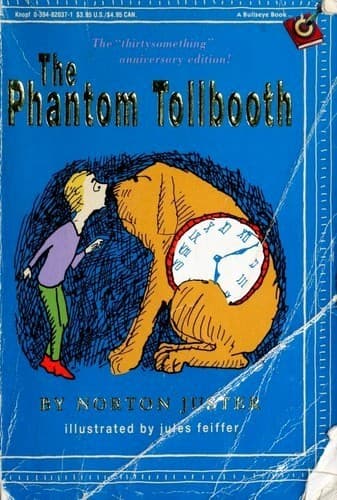
The Phantom Tollbooth
Norton Juster·1961
Technically a children's book; actually a book for anyone who used to like reading and stopped. Milo drives a toy car through a tollbooth in his bedroom and ends up in a world where every bad pun is a place and mathematics and language are kingdoms at war. The delight is the thing — Juster is playing, and the reading experience is genuinely pleasurable in a way that literary fiction often isn't. If you read nothing else on this list, read this and remember what it felt like to want to see what's on the next page.