Book list · Editor's pick·Fiction
The Best Books About Fatherhood and Loss
Seven novels about fathers and sons, fathers who fail, fathers who carry the boy on the road — the grief specific to fatherhood.
- Books
- 7
- fatherhood
- grief
- fathers-and-sons
- family
- parenthood
Updated 2026-05-25
— Why read this list —
Fatherhood in serious fiction is rarely the sentimental version. It is the man who has to decide what to do for the child when the world has stopped helping.
What this list is not
This is not a list of warm books about fathers reading to their children. There is no Atticus Finch here, no idealized paternal role model. The books on this list are interested in fatherhood at the point where it stops being a feeling and starts being a series of decisions made under pressure — what to do for the child when the world has stopped helping, what to leave him with when you know you will not be here, how to face the fact that loving him has not protected him from anything you hoped it would.
The other thing this list is not: a list about being a father in the abstract. Every one of these books locates the question in a specific son or substitute son — McCarthy's boy, Adam Trask's twins, George's Lennie, the boy Manolin, Jack Burden's investigation, Fern's pig, Inman's not-yet-existent child with Ada. Fatherhood is what happens in the relationship, not what happens in the man.
How to read in order
The Road and Of Mice and Men are the shortest entries and the most immediately devastating — start with either if you want to see what the list is doing. East of Eden is the long version, the one that takes a full generation to work through its inheritance question; read it when you have the time. The Old Man and the Sea and Charlotte's Web are the warmer books on the list, and they are warmer for the same reason: they are about caregiving extended to someone the caregiver did not have to take responsibility for, but chose to. All the King's Men is the political and philosophical entry, and Cold Mountain is the book about whether a man can still become a father after what he has done to survive long enough to try.
The grief specific to fatherhood that the title points to is not one grief but several: anticipatory grief, inheritance grief, the grief of having failed without intending to, the grief of having succeeded at the wrong things. These books are honest about which kind they are working on.
The 7 books
In publication order
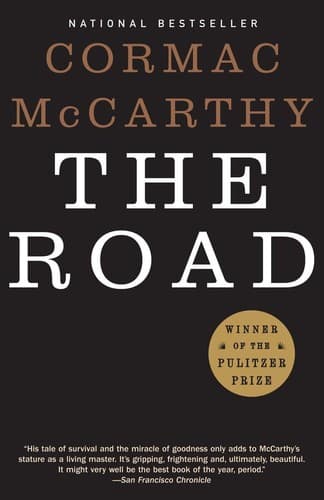
Book 1·Father carrying son through the ending world
The Road
Cormac McCarthy·2006
The literal version of the fatherhood question this list keeps returning to: what does a father do for his son when the world has ended? McCarthy's man has no resources except his own body, his own decisions, and a revolver with two bullets. The grief here is anticipatory — he knows he will not survive long enough to finish raising the boy, and the entire novel is the work of preparing a child to continue without him. The father-son dialogue is stripped to its essentials because everything else has been stripped away. No book on this list states the fatherhood question more nakedly: I will not be here, what do I leave him with.
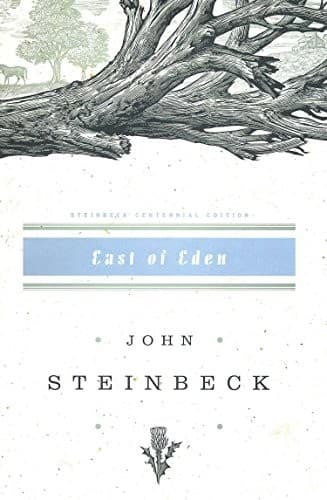
Book 2·The central father-son inheritance
East of Eden
John Steinbeck·1952
Steinbeck's deliberate retelling of Cain and Abel is structured around two generations of fathers — Cyrus Trask and then Adam Trask — who fail their sons in different ways and for different reasons. The novel's central question, packed into the Hebrew word timshel (thou mayest), is whether a son is condemned by his father's love or lack of it, or whether he chooses what to do with it. Adam's failure with his twins — preferring one without realizing it, withholding from the other without meaning to — is one of literature's most patient and painful portraits of a father who means well and damages his children anyway. The biblical father-son drama at full length.
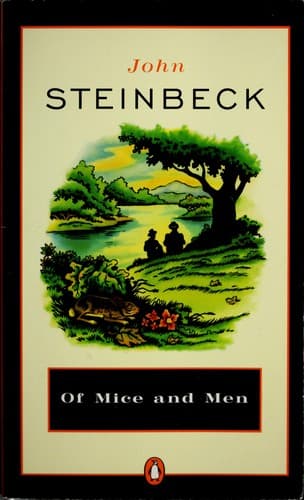
Book 3·Substitute fatherhood and its final cost
Of Mice and Men
John Steinbeck·1937
Not a biological father but an inherited responsibility: George has promised to look after Lennie, and the entire novel is the working-out of what that promise costs and what it eventually requires. Steinbeck's interest is in the substitute fatherhood that develops between men with no one else, and in the specific kind of grief that comes from having to decide what is best for someone who cannot decide for himself. The final scene is one of the most quietly devastating in American fiction precisely because George is doing what a father might be asked to do: protect the one he cares for from a worse ending. Read it in an afternoon.
Book 4·The aging father-figure and the boy
The Old Man and the Sea
Ernest Hemingway·1952
Santiago has no son, but he has the boy Manolin, and the relationship between them is the warmest thing Hemingway ever wrote. The grief here is the grief of an aging father-figure who can no longer offer the boy what the boy's biological parents demand he be offered — a successful teacher, a man whose luck has not run out. Hemingway is writing about the moment when a child outgrows the version of the father he once needed, and about what the older man owes the younger one anyway. Short, and the most affectionate book on this list. Read for the relationship as much as the fish.
Book 5·Discovering the father after the fact
All the King's Men
Robert Penn Warren·1946
The fatherhood question Warren keeps circling is paternity itself — who is whose father, what does that knowledge change, what does the discovery of one's actual father do to the story one has been telling about oneself? Jack Burden's investigation into Judge Irwin's past is also an investigation into his own origins, and the revelation, when it comes, reorders everything Jack thought he understood about loyalty, inheritance, and the man he believed had raised him. The grief here is the grief of finding out who your father actually was, after it is too late to ask him anything. The most morally complex father-son book on this list.
Book 6·The caregiving question, for children
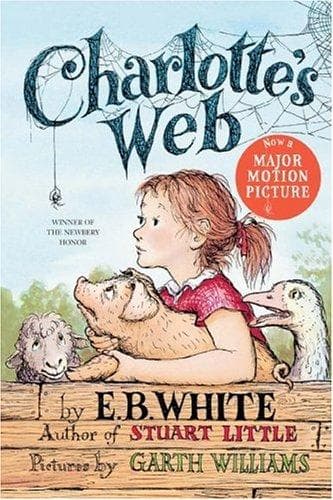
Charlotte's Web
E.B. White·1952
Included as a deliberate contrast: this is the children's-book version of the caregiving question the rest of this list takes up in adult terms. Fern saves the runt, then Charlotte takes over the work of keeping Wilbur alive, and the book's quiet argument is that caregiving is what extends life and grief is what ends it well. White is writing for children about death without flinching, and the final chapters do what the best fatherhood books also do: insist that loving something does not save it, but it changes what its life amounts to. A useful palate-clearer between the heavier books here, and a serious book in its own right.
Book 7·The walk home toward possible fatherhood
Cold Mountain
Charles Frazier·1997
Inman is not a father yet when the novel begins, but the entire arc is his walk back to the possibility of becoming one. Frazier is interested in what a man has to do to survive a war and a long road home, and in whether what he has become along the way can still be the man Ada is waiting for — the man who could raise a child with her. The grief here is potential: the future fatherhood that the war and the walk may have already cost him. Read alongside The Road for the bookend version of the question — McCarthy's man at the end of fatherhood, Frazier's at its uncertain beginning.