Book list · Editor's pick·Fiction
The Best Books for 12-Year-Olds
The bridge year — old enough for hard books, not yet ready for adult themes.
- Books
- 7
- young-adult
- ages-12
- middle-school
- gift-ideas
Updated 2026-05-24
— Why read this list —
Twelve is the year a child finishes the last Harry Potter book and asks what's next. The honest answer is: not the books their parents are reading yet — but no longer the books they read at ten.
How to pick from this list
Twelve is the bridge year. A twelve-year-old can finish almost any book on this list — but the books vary in what they ask of the reader emotionally, and that is the dimension that matters at this age.
The easiest entries — meaning the most enjoyable on a sentence-by-sentence level and the least heavy thematically — are Harry Potter 7, The Old Man and the Sea, and The Strange Case of Dr Jekyll and Mr Hyde. Start a twelve-year-old here if they are new to longer or more serious books. The middle of the difficulty range is Animal Farm and The Pearl: both short, both quick to finish, both genuinely sad or unsettling at the end. A twelve-year-old who reads these has had the experience of a book that does not give them the ending they wanted, which is a developmental milestone.
The hardest entries are To Kill a Mockingbird and The Adventures of Huckleberry Finn. Both deal seriously with racism in American history, both contain language a reader needs context for, and both are best read with a parent or teacher who can talk about the book before, during, and after. These are not books to drop on a child and walk away from.
On reading them in order
The seven are listed roughly from easiest to most demanding, but the better order depends on the reader. A twelve-year-old who has just finished the Harry Potter series should obviously start with Deathly Hallows if they have not already. A twelve-year-old in a school class that has assigned Mockingbird or Huck Finn should read the assigned book first — and then read Animal Farm on the side, because Orwell's fable is the kind of thing a twelve-year-old reads on their own that ends up being the book they remember.
The two shortest books here — The Pearl and Jekyll and Hyde — together come to four hours, the length of a long afternoon. A twelve-year-old who reads both in a weekend has crossed a real threshold: they can no longer credibly tell themselves they don't have time to read a classic. The whole list is fifty-seven hours, which is one serious book a month for a school year. A twelve-year-old who reads all seven is reading at a level most adults aspire to.
The 7 books
In publication order
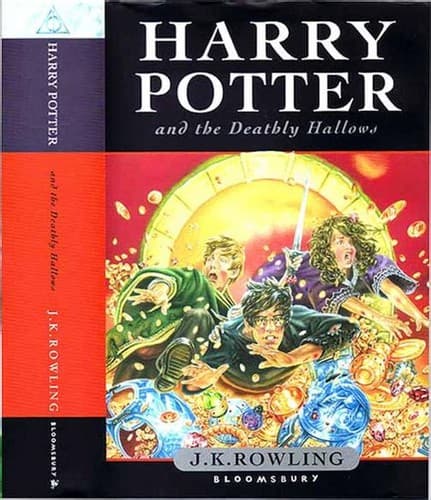
Book 1·The series finale they're ready for
Harry Potter and the Deathly Hallows
J.K. Rowling·2007
The last Harry Potter book is the longest, the darkest, and emotionally the hardest — characters the reader has known since age eight or nine do not survive it. Twelve is the age the seventh book was written for. It contains torture, war, and the kind of moral choices that are presented as choices rather than as obvious correct answers. A twelve-year-old who has been reading the series with a parent across the previous four years will probably want to finish this one alone, and that is the right instinct. The book is also Rowling's longest meditation on the question that runs through the series — what is the difference between using power and being used by it — and a twelve-year-old is finally old enough to engage with that question seriously.
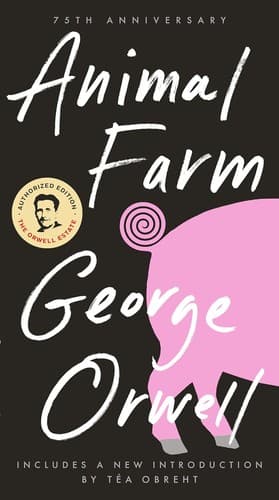
Book 2·Their first political book
Animal Farm
George Orwell·1945
Orwell's fable about a farm in which the animals overthrow the farmer and gradually re-create the system they overthrew is short, gripping, and the right first introduction to political fiction. Twelve is the age a child becomes capable of thinking about systems — about how good intentions get corrupted, about how power consolidates, about why the same patterns keep repeating in different costumes. The book is also short enough to finish in a weekend, which matters: a twelve-year-old who reads Animal Farm has had the experience of reading a serious book by a serious writer about real things, and that experience changes what they're willing to attempt next.
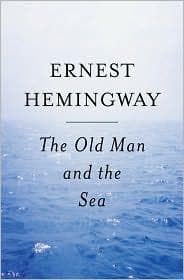
Book 3·The accessible Hemingway
The Old Man and the Sea
Ernest Hemingway·1952
An old fisherman, alone in a small boat, hooks a marlin too big for him to bring in. Hemingway wrote this with the deliberate intent that it be readable by readers at every level, and it is — every sentence is short, every word is chosen, no decoration anywhere. Twelve-year-olds who are intimidated by the idea of literary fiction will find that Hemingway is the opposite of intimidating: the book asks no special knowledge, the plot is simple, and yet the experience of reading it is unmistakably the experience of reading literature. Four hours. The Nobel Prize committee cited this book specifically when they gave Hemingway the prize in 1954.
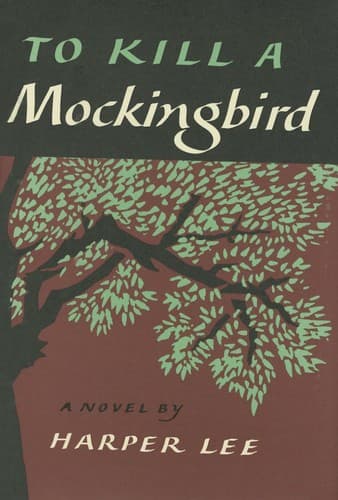
Book 4·The American coming-of-age
To Kill a Mockingbird
Harper Lee·1960
Scout Finch is six when the book begins and nine when it ends — younger than the reader, which is the right gap for a coming-of-age novel at this age. Harper Lee wrote a book that is simultaneously about a child's gradual realization of how the adult world actually works and about a specific case of racial injustice in 1930s Alabama. Twelve is roughly the youngest age at which a reader can hold both halves of the book at once. The novel has its limits — it is told from a white perspective and the Black characters do not get the same interiority as the white ones — and a twelve-year-old reader is also old enough to begin noticing those limits. Read it with a parent who can talk about them.
Book 5·The honest American classic
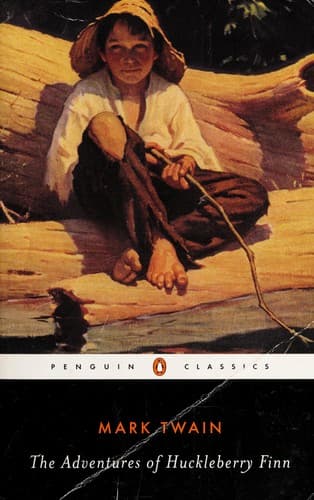
The Adventures of Huckleberry Finn
Mark Twain·1884
Huck Finn and Jim, an enslaved man, escape down the Mississippi River on a raft. Twain wrote what is probably the most argued-over book in American literature — about race, about how it depicts race, about whether it should be taught — and a twelve-year-old is finally old enough to enter the argument rather than be protected from it. The book contains language (specifically the repeated use of a racial slur) that a parent should discuss with the reader before they start. The reason it is on this list anyway is that Twain wrote one of the great friendship stories in American fiction and the moral education of Huck — who slowly comes to see Jim as a person — is among the formative reading experiences in the canon.
Book 6·The short tragedy
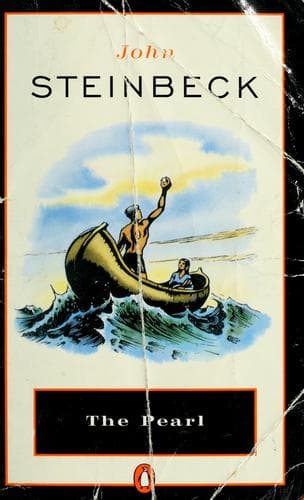
The Pearl
John Steinbeck·1947
A poor pearl diver finds a pearl large enough to change his family's circumstances. Steinbeck wrote a parable — short, sharp, almost folkloric — about what happens to people when a windfall arrives in a community that is not equipped to let them keep it. Two hours. For a twelve-year-old who has not yet read a book that ends badly, this is the right introduction to the fact that some serious novels are tragedies — and that a tragedy is a different thing from a sad story. Pairs well with The Old Man and the Sea: both short, both about working people, both written by Nobel laureates at the height of their powers.
Book 7·The classic that's actually short
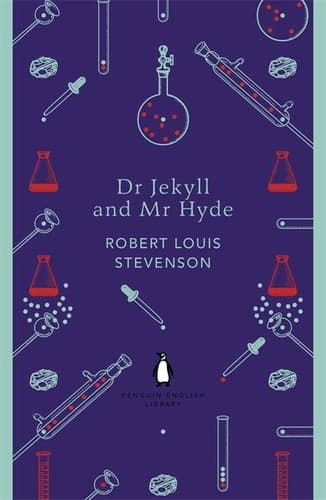
The Strange Case of Dr Jekyll and Mr Hyde
Robert Louis Stevenson·1886
Most twelve-year-olds know the premise — the respectable doctor with the monstrous alter ego — without ever having read the book. Stevenson's novella is shorter than its reputation suggests (two hours) and structured as a mystery rather than a horror story: a London lawyer is trying to figure out why his friend Dr Jekyll has made a strange will leaving everything to a violent stranger. The reveal in the last chapters lands harder when you have not been told the ending in advance. The book is also a precise piece of late-Victorian prose, which gives a twelve-year-old reader experience with a more formal register without asking them to commit to a long book.