Book list · Editor's pick·Vol. 001·mixed
Books About Addiction and Recovery
Five books that name what compulsion actually feels like from inside it.
- Books
- 5
- addiction
- recovery
- psychology
- literary-fiction
Updated 2026-05-23
— Why read this list —
The literature of addiction is not about weakness — it is about the human capacity to want something that is destroying you and be unable to stop.
Why these five together
This list works because it covers addiction from five different angles without any two of them saying the same thing.
Infinite Jest is the immersive experience — 50 hours inside the environment of dependence. The Power of Habit is the mechanism — the neurological loop that makes behavior compulsive rather than chosen. Norwegian Wood is the emotional logic — why grief, like substance dependence, can become a thing a person returns to even when the returning is harmful. The Old Man and the Sea is the edge case — obsessive pursuit that is simultaneously admirable and self-destructive, where the line between vocation and compulsion is genuinely unclear. Jekyll and Hyde is the archetype — the oldest story about a person divided against themselves and unable to integrate the division safely.
The anchor and the entry points
Infinite Jest is the anchor. It is the book this list is organized around because no other novel in English engages with substance addiction at this level of detail and duration. The length — 50 hours — is itself an argument: Wallace is making you inhabit the timescale of addiction, not just observe it. It is not the starting point.
The starting points are the two shortest books: Jekyll and Hyde (2 hours) and The Old Man and the Sea (4 hours). Both establish the core question — the relationship between desire, compulsion, and identity — without the commitment that Infinite Jest requires.
The Power of Habit pairs best with Infinite Jest: read it before or after, and it provides the analytical vocabulary for what Wallace is rendering experientially. Duhigg explains why the halfway house residents' routines are structured the way they are; Wallace shows what it feels like to be inside them.
The 5 books
In publication order
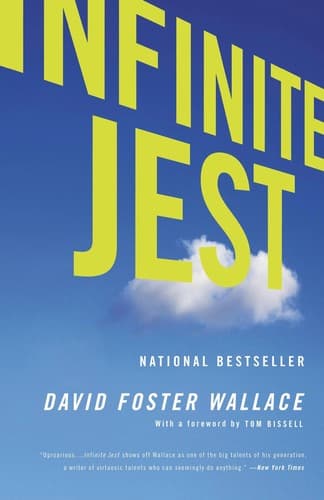
Book 1·The full-scale immersion in dependence
Infinite Jest
David Foster Wallace·1996
The most comprehensive treatment of substance addiction in American literature, and the longest commitment on this list. Wallace was writing from proximity — the Boston halfway house sections are documentary in their detail, the grammar of twelve-step meetings rendered with precision that no outsider could fake. The addiction here is not a metaphor for alienation; it is a rigorous account of the cognitive and social mechanics of dependence. The length is the argument: addiction is not a discrete event but a total environment, and the novel's scale mirrors that.
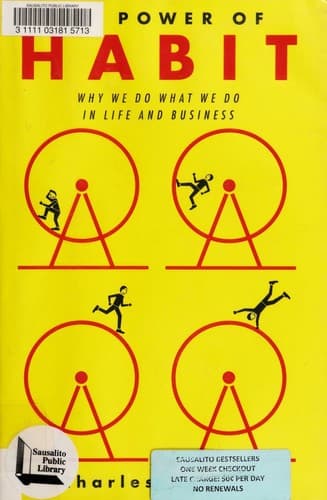
Book 2·The neurological mechanism
The Power of Habit
Charles Duhigg·2012
Duhigg provides the mechanistic account that complements Wallace's experiential one: the habit loop — cue, routine, reward — is the neurological architecture underlying compulsive behavior. The section on addiction specifically explains why willpower-based interventions fail (they address the routine without addressing the cue or the reward), and what interventions do work. This is the analytical tool for understanding the structure that Infinite Jest describes from inside.

Book 3·Grief as compulsive return
Norwegian Wood
Haruki Murakami·1987
Norwegian Wood is not a book about substance addiction — it is a book about grief-as-self-destruction, which Murakami renders as a form of compulsion that operates by the same logic. Watanabe does not drink or use drugs; he returns to Naoko because the returning is the only thing that makes the grief manageable, even as it prevents any resolution. The sanatorium scenes are among the most honest depictions of the pull between recovery and the attachment to suffering in contemporary fiction.
Book 4·Obsessive pursuit as identity
The Old Man and the Sea
Ernest Hemingway·1952
Santiago's relationship to the sea and to fishing is not addiction in the clinical sense, but it is compulsive pursuit at the cost of everything else — his body, his social standing in the village, his physical survival. Hemingway renders obsessive purpose as both ennobling and self-destructive without resolving the tension: Santiago's great catch both affirms his identity and destroys the evidence of it. The four hours function as a compressed argument about the relationship between purpose, obsession, and loss.
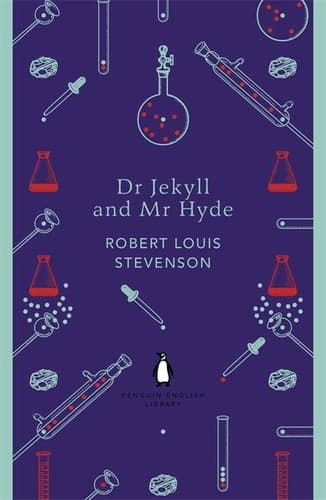
Book 5·The Victorian addiction metaphor
Strange Case of Dr Jekyll and Mr Hyde
Robert Louis Stevenson·1886
Stevenson's novella is the Victorian metaphor for addiction, and it is more precise than the metaphor label suggests. Jekyll's relationship to Hyde follows the addiction sequence exactly: initial curiosity, voluntary experimentation, gradual loss of control, inability to stop even when the consequences are catastrophic, and final loss of agency. The language of dual nature ('the other one') maps directly onto the dissociation that addicts commonly describe. Two hours, and the metaphor has been earning its interpretation for a reason.