Book list · Editor's pick·Fiction
Books About Starting Over in Life
Seven novels about second acts, leaving the wreckage of the first life, and building from nothing.
- Books
- 7
- second-chances
- renewal
- transitions
- starting-over
bibliotecas editorial
Updated 2026-05-25
— Why read this list —
Starting over is the experience our culture talks about most and depicts honestly least. These books refuse the easy version.
Two kinds of starting over
The books here split into two camps and the split is worth naming, because picking the right one for your situation matters more than the surface differences in plot.
The first kind is starting over from circumstances that ended without your consent. The Road, Station Eleven, Parable of the Sower — the old life was taken. The work is figuring out what new life is even available. These books are most useful when the wreckage was not your fault and the question is purely what to do next.
The second kind is starting over from circumstances you helped create. Siddhartha leaves four different lives by choice. Ged starts over from his own mistake. Inman walks away from a war he enlisted in. Santiago goes out again after eighty-four days of his own decisions producing nothing. These books are most useful when the wreckage is at least partly yours, because they take seriously that you are bringing the person who made the wreckage to the new attempt.
What honest starting-over literature refuses
The novels here all refuse the same thing: the version of starting over where the new life arrives intact, the past is sealed off, and the person doing the starting over is rebuilt without continuity to the person who needed to. Real starting over is slower, messier, and continuous with what came before in ways that take years to integrate. Hesse's man by the river has done the integration. So has Mandel's Symphony, twenty years after the flu. So has Lauren by the end of Sower. The integration is the work, and these books are honest enough to show it taking the time it takes.
The 7 books
In publication order
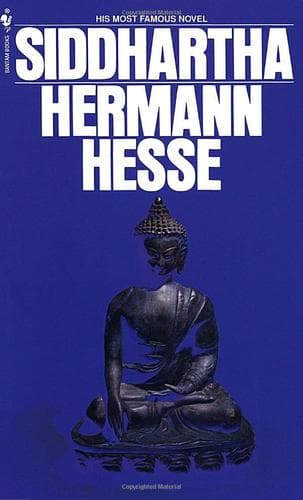
Book 1·Starting over as a sequence, not an event
Siddhartha
Hermann Hesse·1922
Start here. Hesse's novel is built around a man who starts over four times — leaves the Brahmins, leaves the Samanas, leaves the courtesan and the merchant, leaves his son — and each abandonment costs him more than he expected. The starting-over question Hesse poses precisely: each new life requires you to lose something real, and the things you lose accumulate. The book is short enough to read in one sitting and clear enough that the clarity itself is the lesson. The man who has started over four times ends up sitting by a river listening to it. There is no shortcut to that.
Book 2·Starting over after many failures
The Old Man and the Sea
Ernest Hemingway·1952
Santiago has gone eighty-four days without catching a fish. The starting-over question for an old man is not whether the next attempt will succeed — Hemingway is honest about the limits of that — but whether you can keep showing up after the previous attempts have failed. The novel is the answer. Santiago rigs his line, rows out further than the other fishermen, and goes again. Read this when starting over feels less like fresh possibility and more like getting back in the boat one more time. It is the version of starting over that the inspirational books leave out.
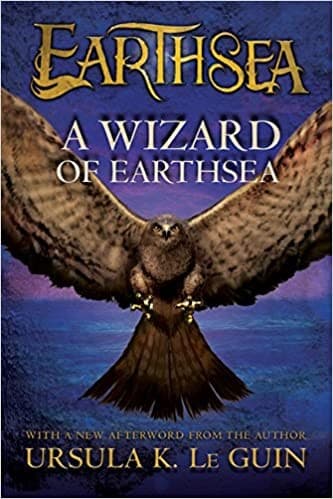
Book 3·Starting over from your own mistake
A Wizard of Earthsea
Ursula K. Le Guin·1968
Ged makes a catastrophic mistake as a young wizard and spends the rest of the book trying to start over while the shadow of the mistake follows him. The starting-over insight Le Guin contributes: you cannot leave the thing you did behind. You can only learn to face it, to name it, eventually to integrate it. The geography of the book — Ged sailing from island to island — is a literal map of the psychological work. Read it when the thing you want to start over from is something you did to yourself.
Book 4·Starting over while being changed by the journey
Cold Mountain
Charles Frazier·1997
Inman walks away from the Civil War and toward the woman he loves, hoping to start over as a farmer in the North Carolina mountains. Frazier is honest about what gets in the way: the journey changes him, the killing accumulates, and Ada at home is also being remade by the work of keeping a farm alive. The starting-over question the novel asks is whether the people doing the starting over are still the same people who imagined the life they were going to start. Sometimes yes. Sometimes no. The novel does not soften either answer.
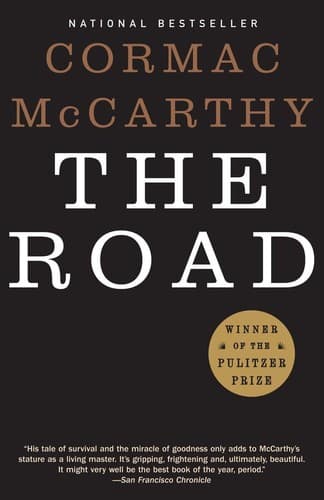
Book 5·Starting over when there is nothing to start over toward
The Road
Cormac McCarthy·2006
An extreme case but a clarifying one: a father and son in a world where everything they had has been removed. There is no old life to return to and no obvious new life to build toward. The starting-over insight McCarthy isolates: when you cannot start over toward a new life, you can still start over toward a stance — 'we carry fire,' 'we are the good guys.' What you start over toward can be a way of being rather than a destination. Read this when the wreckage of the first life is total and the question is what you can salvage of yourself.
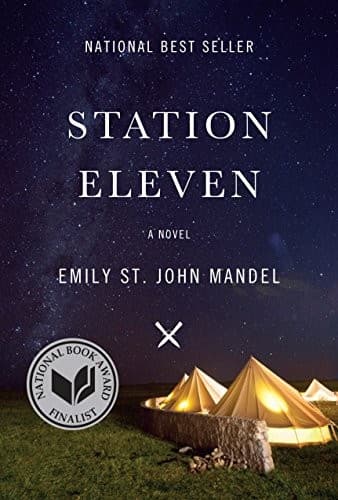
Book 6·Starting over with what you carry forward
Station Eleven
Emily St. John Mandel·2014
After a flu pandemic kills most of humanity, a Shakespeare company travels between settlements in the Great Lakes region. The novel is structured around the question of what gets carried forward when the first life ends — and Mandel's answer is the most generous on this list: art, friendship, the specific people you happen to love, the work you choose to do because it is worth doing. The starting-over insight here is that the new life is not built from nothing. It is built from what mattered enough that you brought it with you.
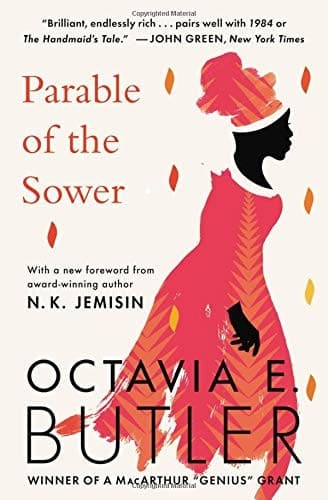
Book 7·Starting over as deliberate construction
Parable of the Sower
Octavia E. Butler·1993
End with Butler because Butler is the most useful. Lauren Olamina is fifteen when the walls of her community fail and California finishes failing around her. She starts over not by waiting for circumstances to clarify but by building a philosophy (Earthseed) and a community deliberately, from the journal up. The starting-over insight: you have to write down what you actually believe and then organize a life around it, and no one is going to do that work for you. Read it when the first life has ended and the question is what to construct next.