Book list · Editor's pick·Vol. 001·Sci-Fi & Fantasy
The Gateway: Fantasy for Young Readers Ages 8–12
The books that made readers. A curated path into fantasy for children who are ready for a real story.
- Books
- 10
- Total reading
- 76h
- Authors
- 9
- Time span
- 1911–2003
- children
- middle-grade
- fantasy
- young-readers
- ages-8-12
- reading-aloud
- gateway-fantasy
- series
Updated 2026-05-21
— Why read this list —
The best children's fantasy isn't simpler than adult fantasy. It's more honest about what growing up costs.
What great children's fantasy does
The best children's fantasy doesn't condescend. It doesn't simplify the world into good versus evil (the Harry Potter series famously abandons this in Book 3). It doesn't protect young readers from loss (Charlotte's Web is explicit about death in a way many adult novels aren't). It doesn't resolve its central conflicts without cost.
What children's fantasy does — at its best — is give young readers a frame large enough to contain the emotional experiences they're already having but haven't yet found language for: the feeling of not belonging until you find your people (Harry Potter), the discovery that courage is something you do despite fear rather than in its absence (The Hobbit), the confrontation with authority that claims to protect you but is actually harming you (His Dark Materials).
The ten books on this list are here because they do this work with craft — with language and structure that doesn't talk down to readers. They are not simplified; they are calibrated. The simplification is in what the books choose to focus on, not in how they describe it.
A note on age ranges
The 8–12 label is a guide, not a prescription. Several of these books — Charlotte's Web, The Lion, the Witch and the Wardrobe, The Phantom Tollbooth — can be read aloud to children as young as 5-6 with a parent. Several others — The Golden Compass, Inkheart, A Wizard of Earthsea — are better saved for 10-12, not because they contain inappropriate content but because their arguments are more available to readers who've had more experience of the world.
Harry Potter deserves separate discussion: the first book is appropriate for 7-8 year olds; the fifth, sixth, and seventh books contain death, torture, and wartime trauma that are managed but not minimized. Parents who start young readers on the series should be prepared to read alongside for the later books.
On reading aloud
Three of the ten books on this list are exceptionally well-suited for reading aloud with a child: Charlotte's Web, The Phantom Tollbooth, and The Hobbit. Tolkien in particular wrote songs and verse into The Hobbit that are meant to be spoken; reading them silently is a partial experience.
Reading aloud extends the useful age range of these books in both directions — younger children can access the story before they have the reading stamina for it, and older readers who already know the book often find it richer in shared reading than they remembered from reading alone.
The ten entries follow.
Reading paths
Three orders. Pick one before you start.
The classic path: where most readers begin
Harry Potter (Book 1) → The Hobbit → The Lion, the Witch and the Wardrobe. Three entry points in the canonical order: a living contemporary world, a more traditional fairy-tale quest, and a shorter allegorical adventure. Each builds confidence and appetite for what comes next.
Book 1›Book 4›Book 2
For children who read beyond their age
A Wizard of Earthsea → The Golden Compass → A Wrinkle in Time → Inkheart. Four books that ask more of the reader: Le Guin's philosophical precision, Pullman's theological argument, L'Engle's mathematics and emotion, Funke's metafiction. Best for 10-12 year olds who have already read widely.
Book 6›Book 5›Book 3›Book 9
Best for reading aloud with an adult
Charlotte's Web → The Phantom Tollbooth → The Hobbit. Three books whose language performs well aloud: White's elegiac clarity, Juster's wordplay that rewards shared laughter, Tolkien's narrative warmth and the songs that work better spoken than read silently.
Book 10›Book 7›Book 4
The 10 books
In publication order
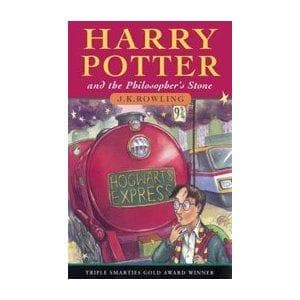
Book 1·The entry point
Harry Potter and the Philosopher's Stone
J. K. Rowling·1997
The entry point for a generation of readers, and still the best single introduction to what fantasy can do for a young reader. Rowling builds a world that is genuinely imaginative — the rules of magic have internal logic, the secondary characters have lives outside their scenes, the mystery is actually solvable if you pay attention. More than the world: Harry is an 11-year-old who is treated cruelly, discovers that he matters, and finds friendship and belonging he'd been denied. This is the emotional truth that makes it the most read children's book of the last century. The first book is age-appropriate for 7-8 year olds; the series grows with the reader, and Books 5-7 are genuinely dark.
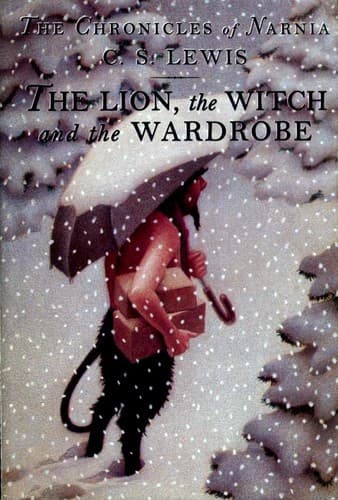
Book 2·The classic allegory
The Lion, the Witch and the Wardrobe
C. S. Lewis·1950
Four children evacuated from wartime London discover a magical world through a wardrobe. Lewis wrote Narnia as Christian allegory, which is present if you look for it and invisible if you don't. What's present regardless is: a world with real stakes, a villain (the White Witch) who is genuinely frightening, and a framework for courage that doesn't pretend to be costless. The death and resurrection of Aslan is among the most affecting sequences in children's literature for readers who don't know its source, and more affecting for readers who do. Shortest entry point in the series and the most self-contained.
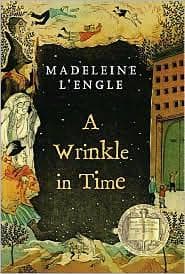
Book 3·The science-fantasy bridge
A Wrinkle in Time
Madeleine L'Engle·1962
Meg Murry — socially awkward, mathematically gifted, profoundly frustrated by being unable to conform — travels through space-time with her brother and a friend to rescue her father from a world governed by forced uniformity. L'Engle was rejected by twenty-six publishers before this book found a home; the publishers felt it was too complex for children and too childish for adults. It was both those things. It won the Newbery Medal in 1963 and has remained in print since. The novel is unusual in the canon for centering a female protagonist whose primary characteristic is intelligence, and for refusing to resolve her social awkwardness as a character flaw that needed correction.
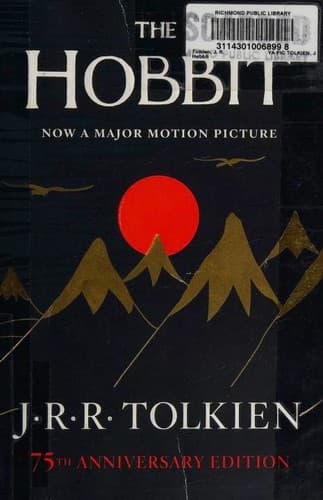
Book 4·The read-aloud classic
The Hobbit
J. R. R. Tolkien·1937
Tolkien wrote this for his children and it shows in the best way: the narrative voice is warm and conspiratorial, the adventure is episodic enough for young attention spans, and the central character's arc — a comfortable homebody who discovers unexpected courage — is one of the most satisfying in the canon. Read-aloud potential is extremely high. Unlike The Lord of the Rings (which follows), The Hobbit has a lighter tone throughout and resolves with genuine emotional warmth. The dwarves' dinner at Bilbo's house, the riddle contest with Gollum, Smaug's conversation with Bilbo: three of the best scenes in children's fantasy.
Book 5·The ambitious alternative
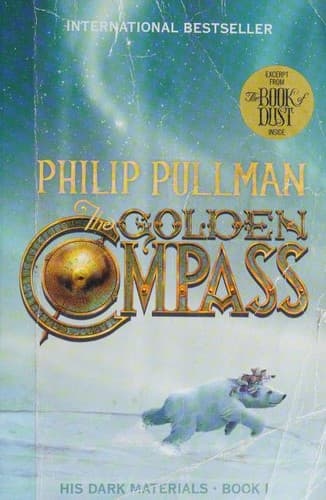
The Golden Compass
Philip Pullman·1995
A parallel world in which every human has an animal companion (their dæmon) that is the externalized form of their soul. Lyra Belacqua, twelve years old, leaves Oxford on a journey that becomes a confrontation with a totalitarian religious authority that has been performing surgery on children's souls. Pullman wrote His Dark Materials as a conscious response to C. S. Lewis — an argument against the Christian cosmology of Narnia in favor of individual autonomy and the intrinsic value of human experience. The most intellectually ambitious children's fantasy series of the last thirty years. The first book is also the most accessible.
Book 6·The philosophical alternative
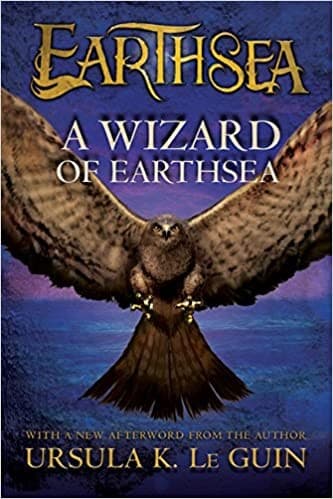
A Wizard of Earthsea
Ursula K. Le Guin·1968
A young boy from a poor island village is discovered to have great magical talent and is sent to a school for wizards on a distant island. Le Guin wrote this in deliberate contrast to the 'white, western, and male' defaults of fantasy — Ged is brown-skinned, from an archipelago culture based on Pacific Island societies, and the magic system is built on the principle that knowing the true name of a thing gives you power over it. The novel follows Ged's fatal mistake in school and the long pursuit of what he unleashed. Quieter and more philosophically careful than most children's fantasy; the target reader is a child who is already a reader.
Book 7·The wordplay novel
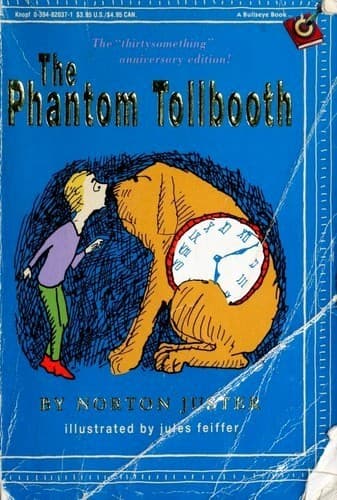
The Phantom Tollbooth
Norton Juster·1961
A bored boy drives through a mysterious tollbooth and arrives in a land where words and numbers are at war and the kingdom has been drained of color and sound because Rhyme and Reason have been banished. Juster's novel is pure language play — puns, paradoxes, concepts personified — in the tradition of Carroll, but with a specifically mid-century American sensibility. The Watchdog Tock, the Whether Man, the Mathemagician: the supporting characters are philosophical concepts wearing character costumes, and the story is an argument that paying attention is the antidote to boredom. Best for children who are already readers; rewards re-reading as an adult considerably more than most books on this list.
Book 8·The quiet transformation
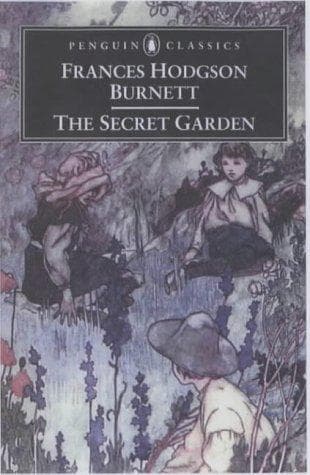
The Secret Garden
Frances Hodgson Burnett·1911
A spoiled, sickly girl is sent to live with her reclusive uncle in his mansion on the Yorkshire moors after her parents die in India. She discovers a locked garden. Frances Hodgson Burnett wrote what is technically a realistic novel — no magic, no alternate worlds — that functions emotionally as fantasy because the garden is clearly a metaphor for the inner life being reclaimed. One of the few children's classics that centres the restoration of health (mental and physical) rather than adventure or quest. Dated in some of its colonial attitudes; invaluable in its portrait of a difficult child who is not asked to be likable before she is allowed to change.
Book 9·The book about loving books
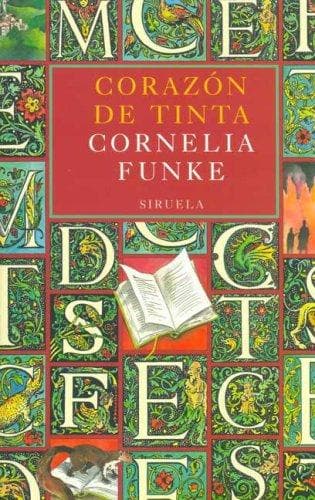
Inkheart
Cornelia Funke·2003·trans. Anthea Bell (2003)
A girl discovers that her father has the power to read characters out of books — literally, onto the physical plane — at the cost of someone from the physical plane being pulled into the book. Funke's novel is the most self-aware entry on this list about what books do to readers and readers do to books. It is, at heart, a book about the experience of being consumed by reading — the way a story can feel more real than the room you're in. The longest and most complex entry here; best for confident readers at the older end of the range (10-12).
Book 10·The essential
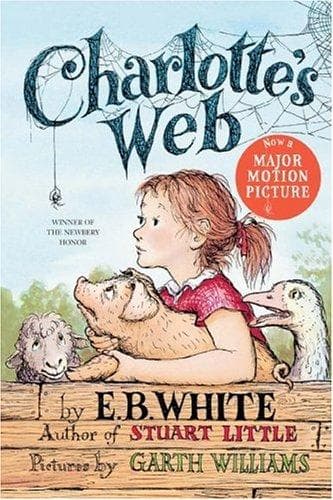
Charlotte's Web
E. B. White·1952
A pig named Wilbur is saved from slaughter by a spider named Charlotte, who weaves words into her web to convince the farmer that Wilbur is too extraordinary to kill. White's novel has been described as a book about friendship, about death, about the nature of love. It is all of these things, and the ending — which White reportedly couldn't read aloud without crying — is among the most honestly written deaths in children's literature. No euphemism, no consolation that isn't hard-won. A 184-page argument that children can handle more truth than adults usually offer them.