Editor-reviewed
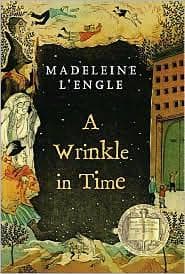
A Wrinkle in Time
Madeleine L'Engle·1962·Farrar, Straus and Giroux·Sci-Fi & Fantasy
Reading level: Ages 10–12 (middle grade) · 6-hour read · Beginner difficulty.
- Reading time
- 6h
- Difficulty
- Beginner
- Recommended age
- Ages 10–12
- Guide read
- 4min
- Editor's rating
- 4.5 / 5
- madeleine-lengle
- time-fantasy
- newbery
- childrens-fiction
- science
- family
- love
- series
— In one sentence —
Rejected 26 times before publication. Won the Newbery Medal. Challenged by parents who thought it was too Christian and by parents who thought it was not Christian enough. Still the right book for children who feel like they don't fit.
§ 01 · WHY READ
Why read
Madeleine L'Engle began writing A Wrinkle in Time in 1959. She completed it in 1960 and began sending it to publishers. It was rejected twenty-six times over two years — publishers said it was too complex for children, too simple for adults, too Christian, too science-fictional, too strange. It was finally accepted by John Farrar of Farrar, Straus and Giroux on the recommendation of his children, who had read the manuscript. It won the Newbery Medal in 1963.
The premise: Meg Murry is an awkward, angry thirteen-year-old whose father, a physicist, has been missing for two years. One night, three strange beings — Mrs. Whatsit, Mrs. Who, and Mrs. Which — arrive and tell Meg, her younger brother Charles Wallace, and her friend Calvin that her father is imprisoned on a planet under the control of a force called the Black Thing. They travel there via a tesseract — a wrinkle in time, a fifth-dimensional shortcut through space — to rescue him.
What the book is actually about: L'Engle was a Christian who was also a scientist and a physicist's wife. She wanted to write a children's book that held both — that was not afraid of mathematics, theoretical physics, and also not afraid of the spiritual. The Black Thing, which covers planets and is described as evil and darkness, is the novel's central image: something that can be named and opposed, that is real without being limited to the supernatural.
The hero is Meg, who is not brave, not pretty, not popular, not exceptional in any way adults value — and who saves her brother through the one thing she has that the enemy doesn't: love. L'Engle's argument is not sentiment. It is that love, as a specific thing with a specific nature, cannot be replicated or counterfeited by a force that operates through control.
§ 02 · CHARACTERS
Characters
Meg Murry — angry, nearsighted, socially awkward, fiercely loyal. She is the right protagonist for the argument: someone who has no resources except love and stubbornness, and for whom that is exactly enough.
Charles Wallace Murry — Meg's five-year-old brother, who is telepathic and the most intellectually formidable person in the family. His certainty that he can reason with IT becomes the plot's central crisis: he underestimates what the enemy actually is.
Calvin O'Keefe — the popular boy who joins them; he is sensitive and perceptive in ways his social status doesn't reveal. His presence in the group is L'Engle's argument that the outsider's perceptions are not wrong, just different.
Mrs. Whatsit, Mrs. Who, Mrs. Which — three beings of uncertain nature (they are eventually revealed to be something like angels or ancient powers) who guide the children. Mrs. Who communicates only in quotations from literature and scripture; Mrs. Which is powerful but imprecise in her materializations.
IT — the disembodied brain on the planet Camazotz that controls the planet's inhabitants through a mechanical uniformity: everyone bouncing balls at the same time, children coming home from school at the same time, complete synchronization. IT is the novel's image of conformity as control.
§ 03 · HIGHLIGHTS
Three highlights
No. 1 · Camazotz. The planet under the control of IT is organized around perfect uniformity: children bouncing balls in perfect sync, houses identical, rhythms metronomic. The uniformity is disturbing before IT is revealed, because Camazotz looks like an extremely orderly suburb. L'Engle's argument — that perfect conformity is a form of evil — arrived in 1962 during the height of postwar American conformist culture. It remains one of children's fiction's most precisely political images.
No. 2 · Charles Wallace and IT. Charles Wallace believes his intelligence will protect him from IT. He walks into the danger voluntarily, certain he can reason with what he encounters. He is wrong: IT absorbs his intelligence and uses it against him, because IT can replicate intelligence but not love. This is L'Engle's theological argument: that what resists evil is not cleverness but love, and that the two are different in kind, not just degree.
No. 3 · Meg's rescue. Meg cannot fight IT with her mind. She has to fight it with love — specific love, love of Charles Wallace specifically, love that is not a general feeling but a directed force. The rescue works because love of a specific person cannot be counterfeited by a force that operates through abstraction and control. L'Engle is making a Christological argument and a psychological one simultaneously.
§ 04 · EDITIONS
Recommended editions
| Edition | Why pick it |
|---|---|
| Square Fish / FSG (current standard) | The standard US edition; the text L'Engle authorized. |
| Time Quintet (boxed set) | All five books in the series; A Wind in the Door (1973) and A Swiftly Tilting Planet (1978) are the direct sequels. |
| Audiobook (various) | The unabridged Listening Library production (read by Alexandra O'Karma) is the standard audio version. |
A Wind in the Door (1973) continues the story with cellular biology as its SF framework; A Swiftly Tilting Planet (1978) involves time travel and genetics. The three together form a coherent argument.
§ 05 · FIT
Who it's for / not for
Read this if you are…
- A child or parent who has a child who feels like they don't fit — who is smart and awkward and doesn't know where they belong.
- Anyone interested in children's fiction that takes science seriously without leaving faith behind.
- Readers curious about L'Engle's synthesis of Christianity and physics: it is unusual and not found elsewhere in children's fiction.
Skip it if you are…
- Looking for hard SF: the science is handwavy by adult standards. L'Engle uses physics as metaphor; the tesseract is a story device, not a rigorous concept.
- Troubled by the Christian allegory: L'Engle's faith is embedded throughout, and more explicitly so than in Narnia.
§ 06 · TIPS
Reading tips
- Camazotz is the argument. When you reach the planet of perfect conformity, read slowly. L'Engle is doing something politically specific.
- Charles Wallace's failure is the lesson. His intelligence is not enough, and his certainty that it is enough is exactly what makes him vulnerable. This is an unusual lesson for children's fiction to teach.
- Meg's love for Charles Wallace is specific. L'Engle distinguishes between love as a general principle and love as a specific directed attachment. The distinction is the rescue's mechanism.
§ 07 · COMPARE
Read alongside
- C. S. Lewis — The Lion, the Witch and the Wardrobe (1950). The Christian allegory comparison: Lewis's faith and L'Engle's are different, and their approaches to embedding theology in children's fantasy are different. Reading both together clarifies the distinction.
- Ursula K. Le Guin — A Wizard of Earthsea (1968). The non-Christian comparison: a secondary world fantasy of similar ambition but built on Taoist rather than Christian premises.
- Edwin Abbott Abbott — Flatland (1884). The dimensional-mathematics comparison: Abbott's satirical novella uses the concept of dimensions to explore perception. L'Engle's tesseract is in the same tradition.
§ 08 · DISCUSSION
Discussion questions
- Camazotz is organized around perfect conformity — everyone moving in sync, no deviation. L'Engle presents this as evil. Is perfect order necessarily evil? What is missing from Camazotz?
- Charles Wallace's intelligence is exactly what makes him vulnerable to IT. Why does IT need his intelligence? What does it do with it?
- Meg's rescue of Charles Wallace works through love rather than cleverness. Is L'Engle's argument that love and intelligence are different in kind, or just that love is stronger?
- The three Mrs. W's are guides who cannot fight the battle for Meg — they give her tools and then she must act. Why can't they do it for her? What is L'Engle arguing about how children grow?
- The novel was rejected 26 times because publishers couldn't categorize it. What makes it hard to categorize? Is it children's fiction, SF, fantasy, religious allegory?
- L'Engle was a Christian writing SF. How does her faith shape the novel's argument about good and evil? Does the argument work for non-Christian readers?
One line to remember
“We do not know what things look like — we know what things are.”— Mrs Who — Chapter 5
Appears in collections
Reading lists featuring this book
7 books
The Best Books for 10-Year-Olds
Seven books for the year a child stops needing books to be easy.
Open list →
12 books
Best Children's Books by Age
A parent-friendly reading list from baby read-alouds and picture books to early readers, first chapter books, middle grade, and teen crossover.
Open list →
10 books
The Gateway: Fantasy for Young Readers Ages 8–12
The books that made readers. A curated path into fantasy for children who are ready for a real story.
Open list →
You might also like
Read next
Ted Chiang · 2002
Stories of Your Life and Others
Ted Chiang writes 30-page stories that take longer to think about than most novels. He has won more awards per word than any writer alive.
Read · 5 min
Cixin Liu · 2008
The Dark Forest
Fan + author consensus pick for the best book in the trilogy. Two simple axioms derive the silence of the universe. After this one, you don't look at the night sky the same way.
Read · 5 min
Octavia E. Butler · 1979
Kindred
Octavia Butler sends a Black woman from 1976 Los Angeles back to antebellum Maryland. The time travel is a device. The horror is real.
Read · 5 min