Book list · Editor's pick·Vol. 001·Fiction
Books That Earn Every Hour: Ten Essential Long Reads
Not long because they couldn't be shorter. Long because the size is the point.
- Books
- 10
- Total reading
- 484h
- Authors
- 10
- Time span
- 1605–2010
- epic-reads
- long-books
- literary-fiction
- doorstoppers
- immersive-reading
- worth-it
Updated 2026-05-21
— Why read this list —
Some books need length the way some arguments need time. These ten earn every page.
Why some books need to be long
There is a category of book that is long not because the author failed to cut but because the length is part of the argument.
War and Peace needs to be 1,200 pages because Tolstoy is writing about how lives actually unfold — in their ordinary accumulation of parties, campaigns, illnesses, marriages, disappointments, and unlikely moments of grace. The characters need time to change in the way people actually change: slowly, inconsistently, in ways they don't fully recognize until later. You cannot do this in 300 pages any more than you can summarize a decade of someone's life and call it the same as living it.
The same is true across this list. Proust needs hundreds of pages because the experience of remembering is not its content but its texture — and texture takes time. Dumas needs 1,300 pages because the plot machinery of the revenge requires an elaborate mechanism, and elaborate mechanisms need many moving parts. Harry Potter needs seven books because a character growing from eleven to seventeen needs the space that seven years actually takes.
The ten books on this list were chosen because they earn their length. They are not long because the author needed more time or couldn't make decisions. They are long because the size is the point — because what they are doing requires the time they take.
Before you start: how to commit
Long books have an activation energy problem. The decision to start War and Peace is not like the decision to start a 280-page novel; it carries the weight of an implicit commitment to weeks of reading. This is the reason most people who own long books have not read them.
Three practical suggestions:
Read at home, not in transit. Long books reward the kind of sustained attention that's hard to sustain on a commute. The books on this list — particularly Proust, Wallace, and Tolstoy — are not optimized for ten-minute reading windows. They're optimized for an hour with a lamp and nothing urgent.
Don't rush past the slow parts. The books on this list that are most often abandoned — Infinite Jest, Proust, Don Quixote — have slow beginnings by design. Wallace is building the world you'll need for page 800. Proust is building the argument about memory before he demonstrates it. Cervantes is establishing the gap between romance and reality before he tests it. The slow parts are load-bearing.
Commit to a pace, not a deadline. 'I'll finish this in two weeks' is a way of turning a reading experience into a task. Pick a number of pages per day you can sustain — 30, 50, 75 — and stick to it. Les Misérables at 50 pages a day takes 26 days. War and Peace at 50 pages a day takes 24 days. Both feel manageable and both feel like something when they're done.
The 484 hours
The ten books together are 484 hours of reading at a moderate pace. That's a year of reading at an hour a day — if you read only these ten books.
You are not supposed to read them all at once, or in any particular order, or in any particular year. The list is a menu. The reading paths above suggest sequences for different readers with different goals; the sequence that matters most is the one that begins with whichever entry you're most curious about.
Start there. The rest will follow.
The ten entries are below, in recommended-for-most-readers order.
Reading paths
Three orders. Pick one before you start.
If you want to live inside a world for weeks
Harry Potter (all 7) → Three-Body Trilogy → Gone with the Wind. Three sustained world-immersions. HP builds a world from scratch and populates it with people; Liu builds a universe and tests it to destruction; Mitchell builds a society and watches it collapse. By the end of the three, you will have spent 202 hours inside three different historical and imagined worlds.
Book 2›Book 3›Book 1
The canonical long reads, for readers who want the tradition
Don Quixote → War and Peace → Middlemarch → Les Misérables. Four novels that are on every 'greatest novels' list for reasons that become clear once you've read them. Reading them in this order is reading the novel as a form from its invention through its nineteenth-century peak.
Book 10›Book 4›Book 5›Book 6
For readers who want to be changed
Infinite Jest → Proust Vol. 1 → Three-Body Trilogy. Three books that require something of the reader and return something that other books can't. None of them are easy. All of them are worth it for the specific reader they're for.
Book 7›Book 9›Book 3
The 10 books
In publication order
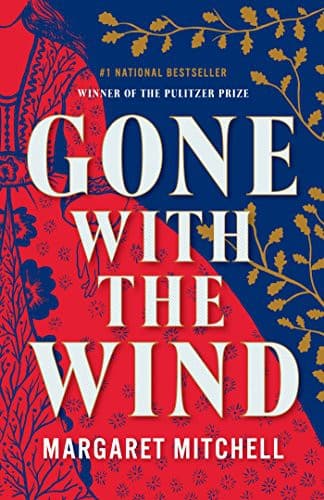
Book 1·The American epic
Gone with the Wind
Margaret Mitchell·1936
The book everyone has an opinion about and fewer people have actually read. Mitchell spent ten years writing it, and the length shows: the four-year span of the Civil War and Reconstruction is rendered with the kind of physical and social specificity that only accumulation achieves. Scarlett O'Hara is the most contradictory protagonist in American popular fiction — capable of extraordinary will and extraordinary selfishness, often simultaneously — and it takes all 1,000 pages to understand why she can't let herself be loved. The plantation-era politics are real and they require engagement, not avoidance. This is not a book that lets you off the hook, for the history or for Scarlett.
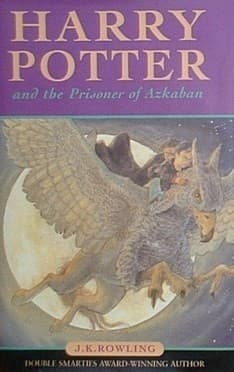
Book 2·The world you move into
The Harry Potter Series
J. K. Rowling·1997
All seven books. Not a single one — the argument for reading the complete series is that it grows with you: the first book is a children's novel, the last is a war narrative with a body count and an argument about sacrifice that Rowling earns because she spent six books building it. The series is 116 hours of reading at median pace; it spent years at the top of 'longest time spent reading' surveys because readers refused to stop. What the series proves is that immersive length, when it works, is not about pages but about a world that becomes real enough to stay in. Read it in publication order. Do not skip the slow parts of Book 5.
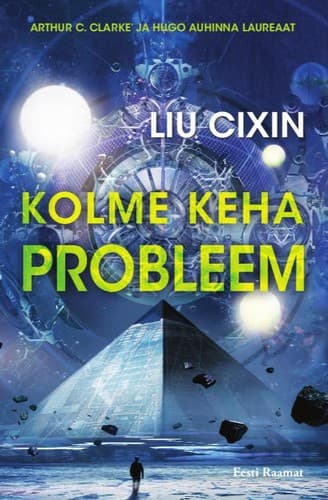
Book 3·The cosmic scale
The Three-Body Problem Trilogy
Cixin Liu·2008·trans. Ken Liu / Joel Martinsen (2014)
49 hours spread across three books. The length is structural: Liu is writing a trilogy where each book expands the scope by an order of magnitude. Book 1 covers decades. Book 2 covers centuries. Book 3 covers 22 billion years. This kind of temporal scale requires length to work — you need to feel the accumulation of time in the reading in order to feel it in the story. Readers who pace themselves and allow a break between books report a different experience than those who binge; the trilogy is designed for the slower approach. Liu said in interviews that the ending is the only one the story could have. He's right, but you have to earn the ending by getting through the beginning.
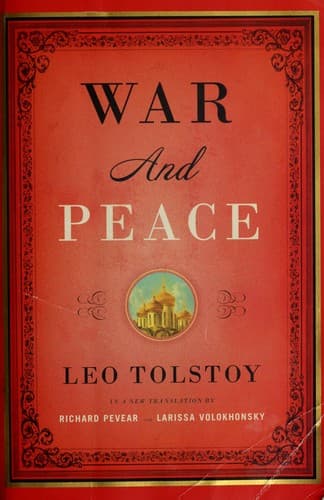
Book 4·The one that changes what you think 'long' means
War and Peace
Leo Tolstoy·1869·trans. Richard Pevear & Larissa Volokhonsky ()
The canonical long book that most people have never read and most readers who have read it say was shorter than they expected. The reputation as difficult is largely unearned: War and Peace is a novel about five aristocratic families during Napoleon's invasion of Russia, and most of it reads like a very long nineteenth-century novel with excellent parties, a genuine battle sequence (Borodino) that was the most technically accurate military writing of its era, and four or five of the deepest character arcs in European fiction. Natasha Rostova and Pierre Bezukhov are not historical figures you study — they are people you follow for 1,200 pages and grieve a little at the end. Read Pevear and Volokhonsky.
Book 5·The provincial epic
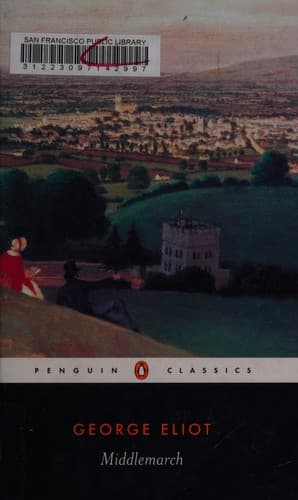
Middlemarch
George Eliot·1872
Virginia Woolf called it 'one of the few English novels written for grown-up people,' which is what you say about a novel that takes seriously the complexity of ordinary disappointment. Middlemarch is a novel about several people in a provincial English town whose ambitions exceed what their world allows. The heroine wants to do something important with her life and marries the wrong man; the doctor wants to reform medicine and is undermined by local politics; the banker is revealed as a hypocrite whose hypocrisy is complicated by genuine feeling. Eliot's narrator is the most sophisticated in Victorian fiction — constantly aware of the multiple valid ways to read any moral situation. The length is the novel's argument: lives are longer and more complicated than their summary.
Book 6·The digression as argument
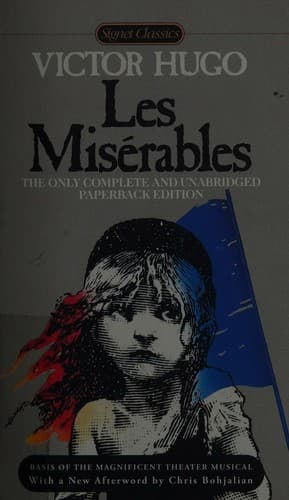
Les Misérables
Victor Hugo·1862·trans. Julie Rose ()
Most readers know the musical's outline: an ex-convict pursued for nineteen years by a detective, a revolution in Paris, a woman who dies too young, a child raised in poverty. The novel contains all of this and also sixty pages on the Battle of Waterloo, forty pages on the Paris sewer system, and a complete history of French monasticism. Hugo considered these digressions essential. He was right: they are the novel's technique, not its flaw. The moral universe of Les Misérables requires a large world to be convincing — Jean Valjean's transformation from convict to mayor to revolutionary needs a France behind it, not a stage. The Julie Rose translation is the most readable. Clear the six weeks.
Book 7·The difficult one
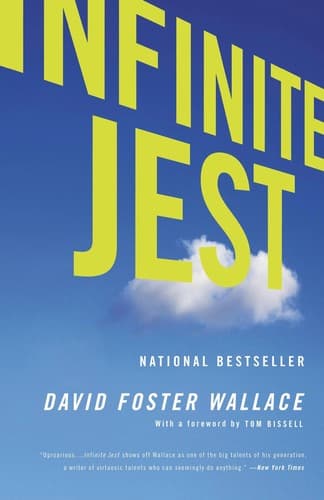
Infinite Jest
David Foster Wallace·1996
The most argued-about American novel of the last thirty years and the one most often started and not finished. Its reputation for difficulty is earned but also overstated: the actual experience of reading it is less like solving a puzzle and more like spending time inside a consciousness that notices everything and forgives nothing, including itself. The novel is about addiction, entertainment, competitive tennis, and what happens to a culture that optimizes for the wrong things. The endnotes are not optional. The chronology is deliberately fractured. The payoff — if you're the reader this book is for — is that by page 800, Wallace has done something to you structurally that you'll only understand when you think about the ending. One of the longest and one of the most argued-about books on this list for reasons that are the same reason.
Book 8·The page-turner at scale
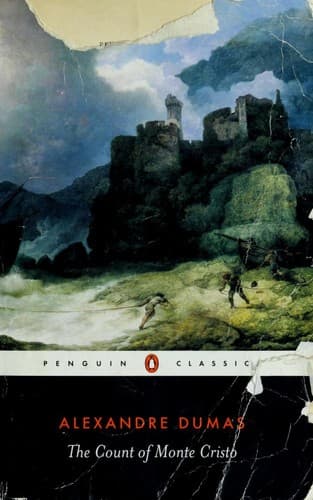
The Count of Monte Cristo
Alexandre Dumas·1844·trans. Robin Buss ()
The most purely enjoyable book on this list, which makes it easy to underestimate. Dumas is writing entertainment — a wrongly imprisoned man escapes, acquires a fortune, and systematically destroys the three men who betrayed him — and does it with a plot machinery so well-engineered that 1,300 pages feels like not enough. The revenge is elaborate, the characters multiply, the coincidences are preposterous and satisfying, and the moral of the novel — that revenge leaves no one happy, including the revenger — arrives late enough and hard enough that it doesn't feel like a lesson. Dumas was paid by the word and made every word work. Read the Robin Buss Penguin translation.
Book 9·The meditation on time
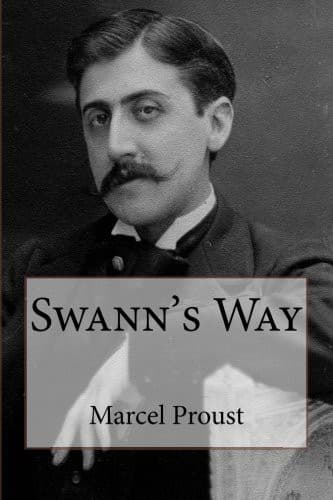
In Search of Lost Time (Vol. 1: Swann's Way)
Marcel Proust·1913·trans. Lydia Davis ()
The complete Proust is 4,300 pages and not on this list, because that would require a different guide entirely. But Volume 1 — Swann's Way — is here because it is the most complete single argument the series makes in its most accessible form: memory is not storage but reconstruction, and the reconstruction is the life. The famous madeleine scene is on page 60 of 450. What comes before and after it is Proust's attempt to write down what it actually feels like to remember — not as story summary but as the way a childhood place smells, or the quality of afternoon light in a specific room in a specific year. It takes 450 pages because 450 pages is how long it takes to make the argument convincingly. If you finish Volume 1 and want more, the guide to the full series is worth finding.
Book 10·The first one
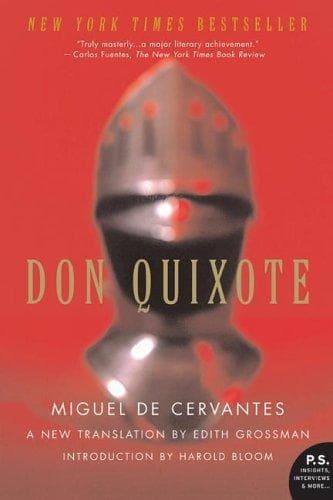
Don Quixote
Miguel de Cervantes·1605·trans. Edith Grossman ()
The first novel. Not 'an early novel' — the first novel in the modern sense, written in 1605 and still not surpassed for the quality of its central formal discovery: what happens when a character becomes aware that he is a character. Don Quixote reads too many chivalric romances and loses his mind; he wanders the roads of La Mancha with a peasant companion, attacking windmills and trying to impose the stories he's read onto a reality that refuses to be shaped by them. Cervantes is making an argument about fiction and selfhood that the novel as a form has been unpacking for four hundred years. The Edith Grossman translation preserves the humor without sacrificing the sadness.