Editor-reviewed
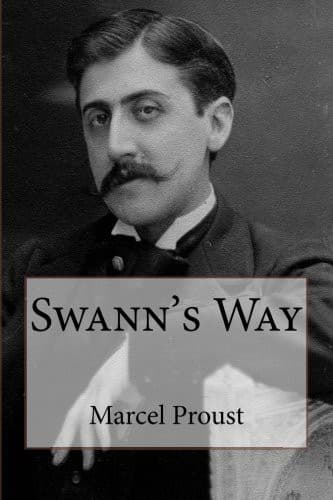
In Search of Lost Time, Vol. 1: Swann's Way
Marcel Proust·1913·Various (public domain)·Literature
Reading level: Ages 18+ (adult) · 15-hour read · Advanced difficulty.
- Reading time
- 15h
- Difficulty
- Advanced
- Recommended age
- Ages 18+
- Guide read
- 5min
- Editor's rating
- 4.9 / 5
- marcel-proust
- french-literature
- memory
- time
- consciousness
- modernism
- canonical
- in-search-of-lost-time
— In one sentence —
The opening volume of the longest and most celebrated novel in French literature. Time, memory, and the sensation of being alive — rendered at a scale and with a precision no other writer has achieved.
§ 01 · WHY READ
Why read
Marcel Proust published Du côté de chez Swann (Swann's Way) in 1913 at his own expense, having been rejected by several publishers. He spent the rest of his life — he died in 1922 — writing and revising the remaining six volumes of À la recherche du temps perdu (In Search of Lost Time). The complete work runs to approximately 4,300 pages in English translation and is considered by many critics the greatest novel of the twentieth century.
Swann's Way is the first volume and can be read independently, though it is richer in the context of the complete work. It divides into three sections: "Combray," a long account of the narrator's childhood memories of a small French town; "Swann in Love," a novella-length account of the character Charles Swann's obsessive love for the courtesan Odette; and "Place-Names: The Name," a meditation on how names generate expectations that reality always disappoints.
What Proust is doing: Proust's project is the recovery of lost time — not the historical past but the living texture of past experience, which ordinary memory (voluntary memory) cannot reach. Involuntary memory — triggered by a sensation (a taste, a smell, a sound) rather than a deliberate act of recollection — can recover the past whole. The most famous instance: the narrator tastes a madeleine dipped in tea, and the entire world of his childhood in Combray is recovered. This is not nostalgia; it is a philosophical claim about the nature of time and consciousness.
Why it matters: No other novelist has described the way consciousness actually works — the way attention moves, how we perceive other people, how time transforms our understanding of events — with anything approaching Proust's precision. The sentences are long; they need to be.
§ 02 · KEY CONCEPTS
Key concepts
Involuntary memory — the sensation-triggered recovery of past experience that bypasses voluntary recollection. The madeleine is the prototype; the entire novel is built around this mechanism.
Time — Proust's subject is not the past but the experience of time itself: how the same event means different things at different moments, how people change beyond recognition, how the mind preserves what it never knew it was preserving.
Jealousy and love — the "Swann in Love" section is a clinical study of obsessive jealousy; Swann's love for Odette is mostly jealousy. The same analysis will recur throughout the complete work with the narrator's love for Albertine.
§ 03 · HIGHLIGHTS
Three highlights
No. 1 · The madeleine. The narrator dips a small cake (une petite madeleine) in a cup of tea, and the sensation recovers the whole world of his childhood in Combray. The passage is only a few pages long and among the most famous in twentieth-century fiction. It is worth reading slowly and in isolation before continuing.
No. 2 · Swann in Love. The middle section of the volume is essentially a standalone novella: Swann, a man of taste and intelligence, becomes obsessed with Odette, a woman he knows is not worthy of him, and is destroyed by jealousy. The account of jealousy — its irrationality, its perverse relationship to love, its ability to manufacture evidence — is the most precise description of the experience ever written. It is also the section least obviously about memory and most immediately readable.
No. 3 · Combray. The long opening section renders a childhood world — the town of Combray, the family house, the church, the two "ways" (paths) that organize the narrator's experience — not as historical reconstruction but as recovered experience. The details are exact; the significance of each detail is revealed slowly. The section establishes Proust's method: patient, associative, discovering meaning in what seemed merely descriptive.
§ 04 · EDITIONS
Recommended editions
Translation determines everything for Proust in English.
| Translation | Why pick it |
|---|---|
| Lydia Davis (Penguin, 2003) | The best translation of Volume 1; Davis is a master stylist who respects Proust's sentences without being enslaved to them. Start here. |
| C.K. Scott Moncrieff / Terence Kilmartin / D.J. Enright (Modern Library) | The classic multi-volume translation; revised twice; slightly old-fashioned but complete and respected. Use if reading the complete work. |
| James Grieve (ANU, 2002) | Australian academic translation of Volume 1; excellent for Combray specifically. |
For the complete seven-volume work, the Penguin Modern Classics edition (different translators for different volumes, all quality) is the current standard.
§ 05 · FIT
Who it's for / not for
Read this if you are…
- Readers ready for a novel that will change how you notice and remember your own experience. Many readers describe Proust as the writer who taught them to pay attention.
- Anyone interested in modernist fiction and what it was trying to do.
- Readers of philosophy who want the phenomenology of consciousness rendered in fiction rather than argument.
Skip it if you are…
- Looking for plot. Proust's novel is not without event, but the events are secondary to the consciousness surrounding them.
- Not prepared to read long sentences. Proust's sentences require tracking through multiple subordinate clauses; this is not difficulty — it is the form of the thinking.
- Short on time. Volume 1 alone is 15 hours; the complete work is 100+. Begin only if you intend to continue.
§ 06 · TIPS
Reading tips
- Read "Combray" slowly. The pace of Proust's prose is the pace of recollection; reading quickly fights the form.
- "Swann in Love" can be read independently. Many readers begin here rather than with "Combray"; it is more immediately engaging and introduces the novel's analysis of jealousy, which runs through the complete work.
- The long sentences are not obstacles. Proust's sentences are long because consciousness is long; each clause qualifies what preceded it. Read them to the end.
- Volume 1 is the entry point. Many readers read only Swann's Way; many come back for the rest. Both are legitimate.
§ 07 · COMPARE
Read alongside
- Virginia Woolf — To the Lighthouse (1927). The English modernist exploration of consciousness and time; shorter, more concentrated, and pursuing related questions through different formal means.
- Walter Benjamin — Berlin Childhood around 1900 (written 1930s, pub. 1950). Benjamin's memory-essays, directly influenced by Proust; a philosopher attempting what Proust attempted in prose.
- Samuel Beckett — Proust (1931). Beckett's early critical essay on Proust; one of the best guides to what the novel is doing, written by someone who understood it as deeply as anyone.
§ 08 · DISCUSSION
Discussion questions
- The madeleine passage recovers the world of Combray through involuntary memory — a sensation rather than a deliberate act of recollection. Have you experienced this? What does Proust's claim that this kind of memory is more "real" than ordinary recollection mean?
- "Swann in Love" is a study in jealousy. Swann knows Odette is not worthy of him; he loves her anyway, obsessively. Is this love? What is the relationship between jealousy and love?
- Proust's sentences are long and qualified. What do the qualifications do? What would be lost if the sentences were shorter?
- The "two ways" (Swann's way and the Guermantes' way) organize the narrator's childhood geography and symbolize different social worlds. How does Proust use physical place to carry social meaning?
- Proust argues that time cannot be recovered through voluntary memory — only through sensation-triggered involuntary memory. Is this true? Does your own experience match or contradict it?
- Many readers describe reading Proust as changing how they pay attention to their own lives. Can a novel do this? Has any novel done it for you?
One line to remember
“The real voyage of discovery consists not in seeking new landscapes, but in having new eyes.”— Marcel Proust
Appears in collections
Reading lists featuring this book
5 books
Books Like Infinite Jest
For readers who finished Wallace and want more — long, demanding, formally ambitious novels with footnotes and the kitchen sink.
Open list →
10 books
Books That Earn Every Hour: Ten Essential Long Reads
Not long because they couldn't be shorter. Long because the size is the point.
Open list →
6 books
Most Immersive Books
Six books that require full surrender — and pay for it.
Open list →
You might also like
Read next
William Faulkner · 1936
Absalom, Absalom!
Four narrators reconstruct a man who destroyed his family. The story keeps changing. That is the point.
Read · 7 min
Toni Morrison · 1987
Beloved
Toni Morrison said she wrote this novel to give voice to the sixty million. It won the Pulitzer, the Nobel, and is the greatest American novel of the second half of the twentieth century.
Read · 6 min
Leo Tolstoy · 1878
Anna Karenina
Not just a love story. Two parallel lives — Anna's destruction, Levin's salvation — ask the same question: how should a person live?
Read · 6 min