Book list · Editor's pick·Vol. 001·non-fiction
Ten Books Every Programmer Should Read That Have Nothing to Do With Code
The books that change how you think, not what you type.
- Books
- 10
- Total reading
- 97h
- Authors
- 11
- Time span
- 500 BCE–2013
- programmers
- developers
- non-technical
- thinking
- systems
- career
- reading-list
Updated 2026-05-21
— Why read this list —
The gap between a good programmer and a great one is usually filled by things they've read that aren't about programming.
Why non-technical reading matters for technical people
The single most common failure mode for programmers who plateau is not a technical gap. It's a thinking gap: the inability to reason clearly about users, organizations, systems at scale, and the compounding consequences of decisions made under uncertainty.
None of these failures are addressed by learning another framework or language. They're addressed by developing the kind of broad, analogical reasoning that comes from reading broadly — from encountering problems in domains far enough from software to produce genuine insight when the parallels appear.
The ten books on this list were not chosen because they contain programming wisdom repackaged in non-programming language. They were chosen because they describe real things about how systems, humans, and organizations actually work, and that description turns out to be directly applicable to the problems programmers face every day.
Kahneman describes the machinery of human cognition: directly relevant to user behavior. Christensen describes how incumbent advantage becomes incumbent weakness: directly relevant to any programmer choosing to join a large company versus a startup. Kuhn describes how communities of practice change their foundational assumptions: directly relevant to anyone who has watched a technology paradigm shift. Liu describes what it means to work inside a problem that is provably unsolvable: directly relevant to distributed systems.
A note on what's not here
This list deliberately excludes books about programming philosophy (The Pragmatic Programmer, Clean Code, Designing Data-Intensive Applications) and books about programmer psychology (Deep Work, The Productive Programmer). Those are good books and they belong on a different list. This list is specifically for the reading that happens outside the field — the kind of reading that produces the non-obvious cross-domain insight that is extremely hard to acquire any other way.
It also excludes books that are commonly found on 'programmer reading lists' but that primarily serve signaling functions — books programmers recommend to seem broadly educated without the actual work of being broadly educated. The Art of War is borderline; it's included because the text is two hours and the argument is genuine, not because it's impressive to cite.
How to pick where to start
The reading paths above offer three entry points based on career stage and current questions. If none of them fit, pick the book whose pitch surprised you most — that's usually the most productive signal.
The ten entries follow.
Reading paths
Three orders. Pick one before you start.
For programmers in the first five years
Thinking Fast and Slow → The Lean Startup → The Phoenix Project. Three books that directly improve how you understand users, validate ideas, and navigate technical organizations. The most immediately applicable path for early-career developers who want to think beyond the code.
Book 1›Book 9›Book 4
For programmers thinking about architecture and competition
Structure of Scientific Revolutions → The Innovator's Dilemma → Antifragile → Three-Body Problem. Four books about how systems change, fail, and sometimes strengthen under pressure. Best for senior engineers and architects making decisions with long time horizons.
Book 2›Book 3›Book 6›Book 5
For programmers building products used by people
Thinking Fast and Slow → Power of Habit → Never Let Me Go → Lean Startup. The human side of what programmers build: how users think, how behavior forms, what it means to build something people didn't choose, and how to validate that what you're building is what they need.
Book 1›Book 7›Book 10›Book 9
The 10 books
In publication order
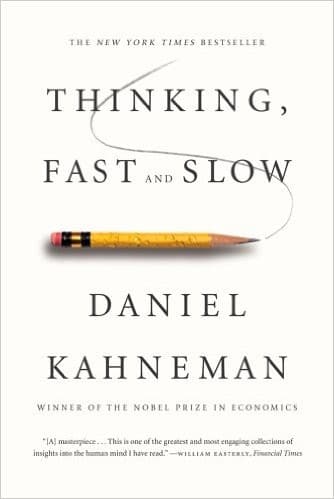
Book 1·The user behavior manual
Thinking, Fast and Slow
Daniel Kahneman·2011
The most directly useful book on this list for anyone who writes software for other people. Kahneman, who won the Nobel Prize in Economics, describes two systems of thinking: System 1 (fast, intuitive, error-prone) and System 2 (slow, deliberate, accurate). The relevance to programming is everywhere — why users do what they do instead of what you'd expect, why your own code review catches less than you think, why estimates are always optimistic. The section on cognitive biases is a catalog of things your team does in sprint planning. Understanding the machinery of how humans think is the most durable upgrade a programmer can install.
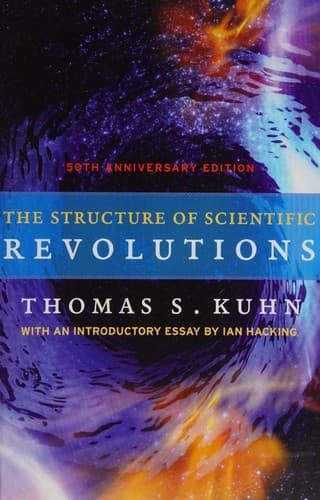
Book 2·The technology cycle explanation
The Structure of Scientific Revolutions
Thomas Kuhn·1962
Kuhn invented the concept of the 'paradigm shift' and this book is why the phrase exists. His argument: science doesn't advance by accumulation of facts but by occasional violent restructurings of the entire framework — and during those restructurings, the old guard and the new guard cannot understand each other because they are using the same words to describe incompatible worlds. The programming relevance is direct: every major platform shift (mainframe → PC → web → mobile → cloud → LLM) follows this pattern. The book explains why the people who built the previous paradigm are usually not the ones who succeed in the next one, and why that's not a failure of intelligence.
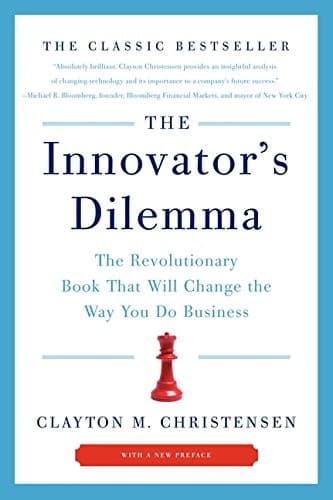
Book 3·The disruption argument
The Innovator's Dilemma
Clayton Christensen·1997
The single most-cited book by Silicon Valley people who haven't read it. Christensen's argument, carefully documented across multiple industries: large established companies fail not because they make bad decisions but because they make good ones — they serve their existing customers well, invest in profitable improvements, and rationally ignore small new markets that seem unattractive. New entrants start in those ignored markets, improve along a different dimension, and eventually take over. Every programmer working at a large company or considering a startup should understand this pattern. The argument is twenty-seven years old and has not aged.
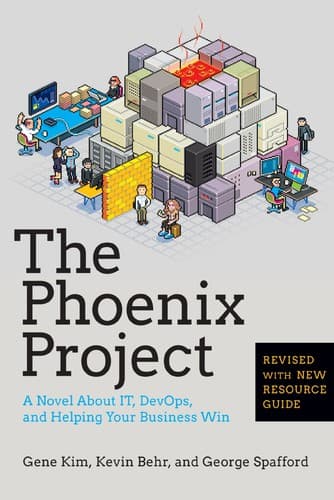
Book 4·The systems-thinking parable
The Phoenix Project
Gene Kim, Kevin Behr & George Spafford·2013
A novel about DevOps, which sounds unpromising and reads like a thriller if you've ever worked at a company whose IT department is on fire. The protagonist inherits a failing IT operation and has 90 days to fix it before the company collapses. The book is thinly fictionalized consulting experience, and it works because the specific failures it describes — unplanned work consuming all capacity, deployment bottlenecks caused by one person, changes that break things that weren't supposed to be related — are recognizable to anyone who has worked in tech. More people have changed how they run teams after reading this book than after reading any actual management text.

Book 5·The undecidability argument in fiction
The Three-Body Problem
Cixin Liu·2008·trans. Ken Liu (2014)
A Chinese physicist discovers that the three-body gravitational problem — predicting the orbital motion of three mutually attracted bodies — is provably unsolvable. This is real mathematics, and Liu builds a novel out of it: what does it mean to live in a universe where some problems are not hard but genuinely undecidable? Programmers who work on distributed systems, NP-hard optimization, or any system with irreducible complexity will find Liu's physics unusually resonant. The opening chapters are set during China's Cultural Revolution and describe what happens when a political ideology attempts to override scientific epistemology — which is a familiar pattern in technology organizations, presented here at its most extreme.
Book 6·The resilience frame
Antifragile
Nassim Nicholas Taleb·2012
Taleb's argument: there is a category of systems that are not just robust (survive stress) but actually improve under stress. He calls these antifragile. The internet is antifragile — it was designed to route around damage. Evolution is antifragile — it requires adversity to select. Most corporations and most codebases are fragile — they work well under expected conditions and fail catastrophically under unexpected ones. The relevance to software architecture is direct: microservices vs. monoliths, chaos engineering, progressive delivery, fault injection — these are all attempts to build antifragile systems. Taleb is a difficult personality and this book is padded, but the central idea is one of the most useful frames for thinking about system design.
Book 7·The user behavior loop
The Power of Habit
Charles Duhigg·2012
A book about habit formation that is secretly a book about system design at the human level. Duhigg describes habits as cue-routine-reward loops that once established run below conscious awareness — which is exactly the description of a well-designed UX pattern and a well-designed notification system and a well-designed addiction mechanism. The cases include Febreze (a product failure turned into a market success by understanding habit insertion) and Target's purchasing prediction algorithm (which inferred pregnancy from shopping patterns well enough to tell families before the woman had told them). For programmers building products that involve user behavior, this book is a design document.
Book 8·The shortest one
The Art of War
Sun Tzu·500·trans. Thomas Cleary ()
The shortest book on this list and the one most often cited in business contexts by people who have not read it. The actual text — rather than the aphorism-collections extracted from it — is a 2-hour read that argues for the relationship between information, position, and timing in conflict. The direct programming relevance: the concept of knowing your terrain before engaging, not fighting battles you cannot win, and winning before fighting (through preparation rather than force) maps cleanly onto competitive strategy, negotiation, and technical architecture decisions. Read it once before a significant platform decision and once before a negotiation.
Book 9·The build-measure-learn argument
The Lean Startup
Eric Ries·2011
Overused in Silicon Valley to the point where many programmers have stopped reading it. Read it anyway — the original argument is stronger than its reputation. Ries's core claim: most startup failures are not engineering failures but failures to validate whether anyone wants what you're building. The build-measure-learn loop, minimum viable product, and pivot are concepts that have been diluted into slogans; in context, they're a coherent epistemology about how to test assumptions in conditions of genuine uncertainty. The book is most useful for programmers who have ever built something for six months that nobody used. It explains why that happened and how to prevent it.

Book 10·The ethical question
Never Let Me Go
Kazuo Ishiguro·2005
The most important book on this list for anyone working in AI, and the one you'd least expect. Ishiguro's novel is about people who were created for a purpose — their bodies are a resource — and who grow up, form friendships, fall in love, and then accept what they were made for. The science-fictional premise is left unexplained; what Ishiguro is interested in is how people who know their purpose accommodate themselves to it, and whether that accommodation is tragic or a form of grace. For anyone building systems that affect what humans can do or choose, this is the ethical question underneath the work — and it's more useful to have thought about it in fiction first than to encounter it as a product decision.