Book list · Editor's pick·non-fiction
Best Books for Entrepreneurs
What to read before, during, and after starting a company.
- Books
- 8
- Total reading
- 74h
- entrepreneurs
- startups
- business
- founders
- strategy
- leadership
Updated 2026-05-23
— Why read this list —
Most startup advice is noise. These books are signal — the ones that actually change how founders think.
Why founders need to read differently
The canonical startup library is a trap. Most of it is narrative — founder memoirs that mistake survivorship for insight, case studies that work backward from success, advice that was contingent on the specific conditions of one person at one moment. Reading widely in that genre produces a false sense of having learned something while actually learning only the vocabulary of entrepreneurship.
The books on this list are different. They are attempts at theory — arguments about how systems work, why markets behave as they do, how humans actually make decisions. They were mostly not written for founders. They work for founders because they describe real things about the environment founders operate in.
The three questions every founder needs answered
The most common founder failures cluster around three questions: Does anyone want this? Can I build an organization that delivers it? And can I win against the competition?
Ries answers the first question with a methodology. Kahneman answers it with a corrective — your intuition about what users want is a cognitive bias. Duhigg answers it with mechanics. Christensen and Sun Tzu answer the third question. Kim and Taleb answer the second.
Kuhn is the meta-text: it explains when the rules change entirely, which is the moment that produces the best opportunities and destroys the most incumbents.
How to read this list
If you're pre-company, read Ries first, then Christensen. If you're post-product, read Kahneman, then Duhigg. If you're at the organizational inflection point — more than ten people, things starting to slow down — read Kim. If you're in a market that feels like it's changing in a fundamental way, read Kuhn and then re-read everything else.
The 8 books
In publication order
Book 1·The methodology
The Lean Startup
Eric Ries·2011
The foundational text of modern startup methodology, and still the best single argument for why most startups fail not because of engineering problems but because they build things nobody wants. Ries's build-measure-learn loop is now standard vocabulary, but reading it in full context — with the failed MVPs, the pivot stories, the honest accounting of waste — is different from knowing the buzzwords. Every first-time founder should read this before writing a line of code.
Book 2·The competitive frame
The Innovator's Dilemma
Clayton Christensen·1997
The book that explains why large incumbents almost never win against well-positioned startups — and why that's a structural feature of markets rather than a failure of management. Christensen documents how established companies rationally serve their best customers and rationally ignore emerging markets, right up until the moment a startup that started in the ignored market takes everything. Required reading for any entrepreneur deciding which market to enter and how.
Book 3·The strategy text
The Art of War
Sun Tzu·500
Two hours that contain more strategic insight per page than most business books manage in three hundred. The passages on knowing your terrain, choosing battles you can win, and winning through preparation rather than force map directly onto founder decisions: which market to enter, when to compete head-on versus flank, how to conserve resources. Read it once when you're planning, once when you're struggling.

Book 4·The risk frame
Antifragile
Nassim Nicholas Taleb·2012
Taleb's argument that some systems benefit from volatility and uncertainty — they are not just robust but antifragile — is the most useful frame for thinking about startup risk that exists. Startups are antifragile organisms operating in fragile markets. The section on optionality is directly applicable to how founders should structure decisions: keep your options open, make small bets with large upsides, avoid large commitments with capped returns.
Book 5·The cognitive biases manual
Thinking, Fast and Slow
Daniel Kahneman·2011
The book that explains why founders consistently overestimate their odds of success — and why that overconfidence is probably a feature rather than a bug of entrepreneurial psychology. More practically: the chapters on how customers actually make decisions (not how founders assume they do) are a direct corrective to the most common product mistake, which is building for a rational user who does not exist.
Book 6·The product-market-habit fit
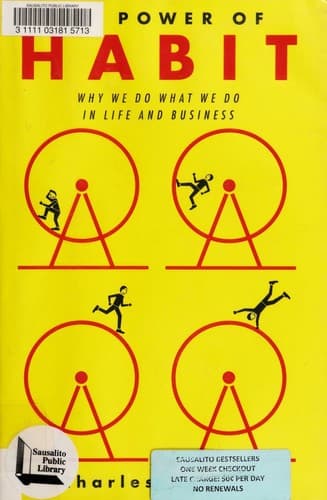
The Power of Habit
Charles Duhigg·2012
The cue-routine-reward framework Duhigg describes is the mechanism behind every successful consumer product. Founders building anything that requires users to change behavior — or to adopt a new one — need to understand how habit loops form and how products insert themselves into existing ones. The Febreze case study alone is worth the price of the book: a product that failed until its creators understood they were trying to start a habit rather than sell a solution.

Book 7·The paradigm shift detector
The Structure of Scientific Revolutions
Thomas Kuhn·1962
Kuhn's framework for paradigm shifts applies directly to the market moments that produce generational companies. The entrepreneurs who built the web understood it as a paradigm shift and positioned accordingly; the ones who framed it as a better version of print did not. The book trains you to see when a genuine paradigm shift is happening versus when you're inside a technology cycle that will consolidate rather than disrupt.
Book 8·The operations argument
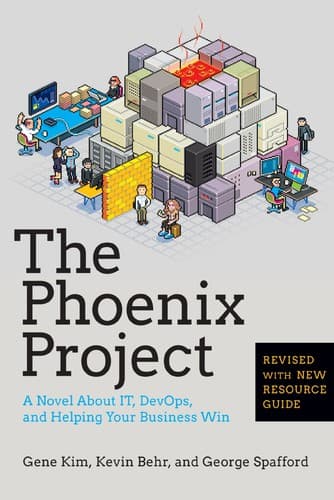
The Phoenix Project
Gene Kim, Kevin Behr & George Spafford·2013
A novel that teaches operations, and the operations lessons transfer directly to any founder building a company: how unplanned work kills planned work, how single points of failure (usually a person) create organizational fragility, how the constraint governs the whole system. Read before you hire your tenth employee and encounter the problems this book diagnoses.