Book list · Editor's pick·Fiction
The Best Books for a Long Flight
Seven books substantial enough to disappear into for ten hours in a metal tube.
- Books
- 7
- long-reads
- travel-reading
- flight
- long-form-fiction
Updated 2026-05-25
— Why read this list —
A long flight is one of the few situations modern life still hands you where the only sensible response is a very long book.
What a long flight asks of a book
The constraints are specific. You cannot easily put it down and pick up another. You cannot easily look something up. The lighting is bad, the seat is bad, the air is dry, and there is a low constant noise that no noise-canceling headphone fully removes. You have hours of uninterrupted attention with nothing to do with them. The book that works in these conditions is not the book you would pick for a beach.
What works: density. Books with a thick interior — many characters, long scenes, a willingness to follow a single conversation for fifty pages — outperform books that depend on momentum or surprise. The plane already provides discontinuity. You want a book that supplies its own continuity, that builds its own atmosphere thick enough to displace the cabin's. This is why the great nineteenth century novels (Tolstoy, Hugo, Dostoevsky) work so well at altitude: they were written for readers who had time, and they reward readers who have it again.
Pick by reading time, not by mood
The most useful question is not "what do I feel like reading" but "how many hours do I actually have in seats." A six-hour domestic flight is The Road, a long story collection, a short novel. A ten-hour transatlantic is Anna Karenina, Cold Mountain, Beloved. A fourteen-hour transpacific is The Brothers Karamazov, Wind-Up Bird, the start of War and Peace. A multi-leg international with layovers is 1Q84 or Infinite Jest — the books long enough that they shape your trip rather than the other way around.
The other useful question is whether you want to land changed. Several books on this list will do that. Choose accordingly.
The 7 books
In publication order
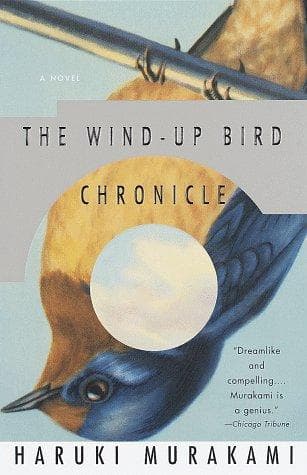
Book 1·Best for the dissolving-time long-haul
The Wind-Up Bird Chronicle
Haruki Murakami·1994
Start here if you want the flight to dissolve. Murakami's tonal register — detached, precise, slightly outside ordinary time — matches what cabin pressure does to your sense of place: you stop noticing where you are. The book is long enough to fill a transpacific leg and strange enough that the strangeness of being thirty thousand feet up stops being notable by comparison. A missing cat, a missing wife, a dry well, the historical violence Japan suppressed after 1945 — it all arrives without urgency and stays.
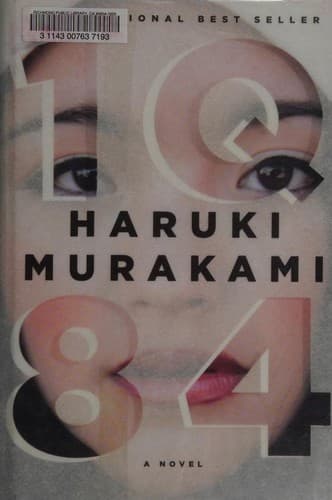
Book 2·Best for multi-leg international
1Q84
Haruki Murakami·2009
Pack this for the kind of itinerary where you have a long flight, a layover, and another long flight. At thirty-five hours of reading time it will outlast almost any route you can book commercially. Murakami runs two protagonists across parallel chapters and trusts you to wait for the convergence — which is exactly the kind of patient structural commitment that works at altitude, where you have nowhere to be and no reason to skim. Two moons, two storylines, one of his most serious love stories.
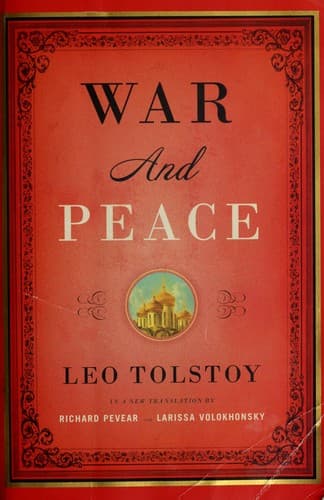
Book 3·Best for the book you've always meant to read
War and Peace
Leo Tolstoy·1869
The honest answer to the question 'what should I bring on a long flight' is that you should bring the book you have always meant to read and never have. For most people that book is this one. Sixty hours of reading time means it will cover a holiday and a return flight, but the more important quality is that Tolstoy writes scenes so densely populated and so emotionally specific that the noise of an aircraft cabin recedes within a chapter. Aerial reading rewards books that build their own weather, and this one builds entire seasons.
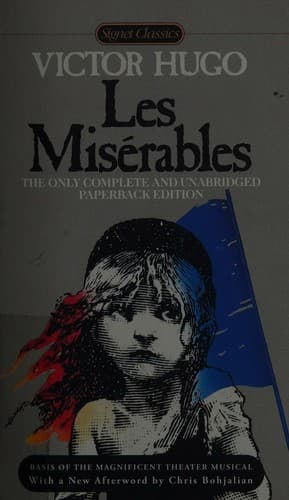
Book 4·Best for when the digressions are a feature
Les Misérables
Victor Hugo·1862
Hugo's digressions — the long essay on the Battle of Waterloo, the long essay on the Paris sewer system, the long essay on monastic life — are the reason people put this book down at home and the reason it works on a plane. You have nowhere else to be. The digressions stop being interruptions and become the actual texture of the experience. Underneath them is one of the most propulsive plots in nineteenth century fiction: a man tries to become good after prison and is hunted across decades for it. Bring it on a flight where you don't want to land.

Book 5·Best for the philosophical rearrangement
The Brothers Karamazov
Fyodor Dostoevsky·1880
Dostoevsky writes the kind of scenes that demand you stay in them — three brothers and a father arguing for fifty pages about God, justice, freedom, and whether one of them is going to commit murder. At ordinary domestic reading speed those scenes get fractured by laundry and email. At thirty thousand feet they arrive whole. The Grand Inquisitor chapter alone is worth booking a window seat for. Bring this on a flight where you want your interior life rearranged by the time you land.
Book 6·Best for one long-haul plus a connection
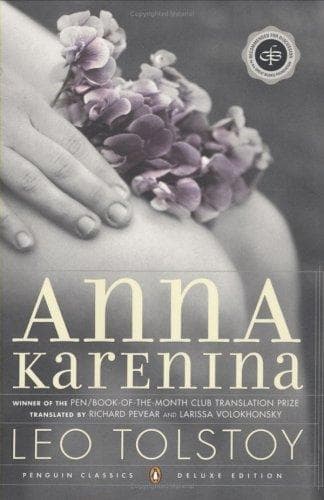
Anna Karenina
Leo Tolstoy·1878
If War and Peace is too much for the flight you have, this is the right Tolstoy at the right length. Thirty hours of reading time covers a long-haul plus the connecting leg and the wait. The book alternates between two storylines — Anna's affair and its consequences, Levin's slow construction of a workable life on his estate — and the alternation is the kind of structural rhythm that works well on a plane: you finish one strand, the plane shifts, you start the other. The famous first line is famous because it's true.
Book 7·Best for committed readers with a tray table
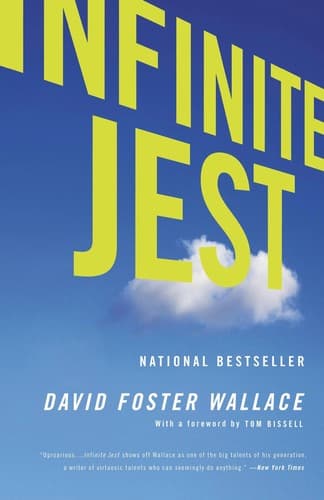
Infinite Jest
David Foster Wallace·1996
Bring this only if you are committed. Wallace's novel has footnotes that have footnotes, a chronology that scrambles itself, and a structural insistence that you stay close to the prose even when the prose is doing four things at once. None of which works on a thirty-minute commute. All of which works on a flight where you have ten uninterrupted hours and a tray table. The tennis academy plot, the addiction recovery plot, the entertainment that kills you to watch it — they will not converge in obvious ways, and the not-converging is the point.