Book list · Editor's pick·Fiction
The Best Books for 10-Year-Olds
Seven books for the year a child stops needing books to be easy.
- Books
- 7
- middle-grade
- ages-10
- ages-9-12
- kids-books
- gift-ideas
Updated 2026-05-24
— Why read this list —
Ten is the year a strong reader can sit with a six-hundred-page novel and a slower reader can finally finish the books their friends finished two years ago. The right book at ten is one that does not condescend.
How to pick from this list
Ten is the age where reading ability spreads out. Some ten-year-olds are reading at adult fluency; some are still finding their stride after a few years of frustration; most are somewhere in between. The seven books here cover the band.
For a strong reader who is already finishing chapter books on their own, the obvious gifts are Harry Potter 4, The Golden Compass, and The Hobbit — all longer books that reward sustained attention and that a ten-year-old will recall reading the way an adult recalls a long summer. For a reader who is still building stamina, A Wizard of Earthsea, A Wrinkle in Time, and The Adventures of Tom Sawyer are shorter and faster — five to seven hours each, which is roughly a week of focused after-school reading.
Little Women is the wild card. The prose is from 1868 and the cadence is older than anything else on this list. A ten-year-old who loves it will love it for life. A ten-year-old who finds it slow is not yet ready, and that is fine — it will be there at twelve. Don't push it on a reader who is resisting; do offer it to a child who has already shown that they enjoy older prose.
On the genre balance
The list is intentionally balanced. Three fantasy novels (Harry Potter, The Hobbit, The Golden Compass), one science-fantasy (A Wrinkle in Time), one quiet philosophical fantasy (A Wizard of Earthsea), and two realist novels from the nineteenth century (Little Women, Tom Sawyer).
The reason for the balance: ten is the age a reader's taste begins to form, and the best gift to a forming taste is range. A ten-year-old who has read only fantasy will assume that books need to be fantasy to be interesting; a ten-year-old who has been given a Tom Sawyer alongside their Harry Potter will know the field is wider than they thought.
The seven books together come to sixty-five hours of reading — about an hour of pleasure reading a day for two months, or a single book per month across a school year. A ten-year-old who reads all seven before turning eleven is in excellent shape. A ten-year-old who reads three of them and re-reads their favorite Harry Potter book seven times is also in excellent shape.
The 7 books
In publication order
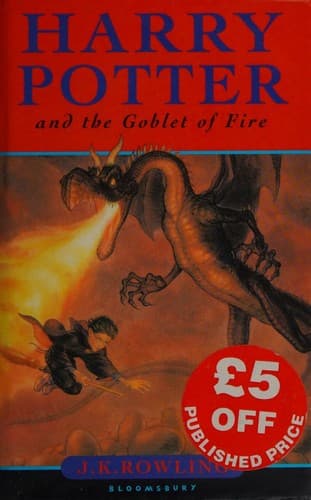
Book 1·The series-deepening one
Harry Potter and the Goblet of Fire
J.K. Rowling·2000
Book four is where the series stops being a children's book and starts being a young adult novel — and ten is roughly the age the series itself was written for at this point. Goblet of Fire is the longest entry yet (a deliberate choice on Rowling's part), the tone darkens decisively, and the ending contains a death that the reader has come to care about. A ten-year-old who has read the first three books is ready for this one. A ten-year-old starting the series here should go back and read the first three first — the emotional weight of the ending depends on knowing the world. If you are buying for a child who has been begging for the next Harry Potter book, this is probably the one they're on.
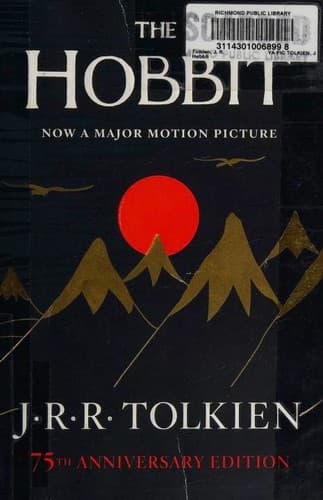
Book 2·The gateway to Tolkien
The Hobbit
J.R.R. Tolkien·1937
Tolkien wrote The Hobbit for his own children and the narrative voice is unmistakably warm — there is a grandfatherly storyteller in every chapter. Ten is the right age for this book because the prose is older than current children's books (some sentences ask for re-reading) but the structure is episodic enough that a ten-year-old can stay with it across a month of reading. The riddle contest with Gollum, Smaug's conversation with Bilbo, the Battle of Five Armies: three of the great set pieces in English-language fantasy. Reading The Hobbit at ten and Lord of the Rings at thirteen is the canonical sequence; the gap is intentional.
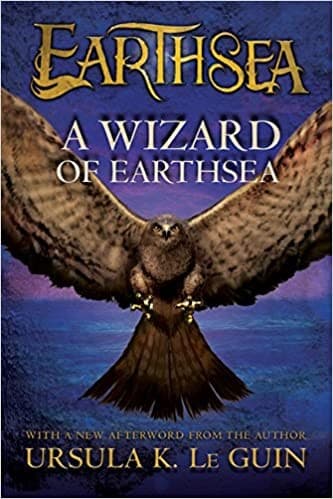
Book 3·The serious one
A Wizard of Earthsea
Ursula K. Le Guin·1968
Le Guin wrote this in deliberate opposition to the white-male-European defaults of the fantasy of her time — Ged is brown-skinned, the archipelago culture is based on Pacific Island societies, and the magic depends on knowing the true name of a thing. The novel is a quiet book about a young wizard's fatal mistake at school and the long pursuit of what he unleashed. For a ten-year-old, this is the most philosophically serious book on the list — it asks what it means to be responsible for harm you didn't intend, and it does not let Ged off easily. Best for a reader who is already comfortable with chapter books and ready to be made to think.
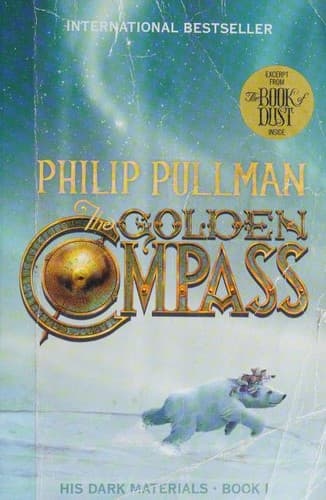
Book 4·The ambitious epic
The Golden Compass
Philip Pullman·1995
Lyra Belacqua is twelve in the book — which is roughly two years older than the reader, the right gap for a ten-year-old who wants to read about someone who is doing what they imagine doing soon. Pullman built a parallel-world Oxford in which every human has an animal companion (their dæmon) that is their soul externalized, and Lyra travels north to confront a religious authority that has been performing surgery on children's souls. This is the most intellectually ambitious children's novel of the last thirty years. The villains are adults the child is supposed to trust, which is exactly the conflict a ten-year-old is starting to think about. The theological argument is available if you want it and invisible if you don't.
Book 5·The science-fantasy classic
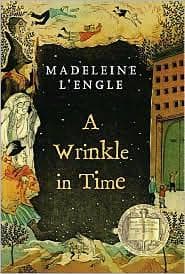
A Wrinkle in Time
Madeleine L'Engle·1962
Meg Murry is awkward, mathematically gifted, and angry at being unable to conform — which is the emotional register a lot of ten-year-olds have just started inhabiting and have not yet found a book for. L'Engle was rejected by twenty-six publishers because they thought the book was too complex for children. It is complex; it also won the Newbery Medal in 1963 and has stayed in print ever since. The novel centers a girl whose intelligence is the engine of the story rather than something she has to overcome, which is still rarer than it should be. Read alongside The Golden Compass for a pair of books about young women in worlds adults have made wrong.
Book 6·The character study that lasts a lifetime
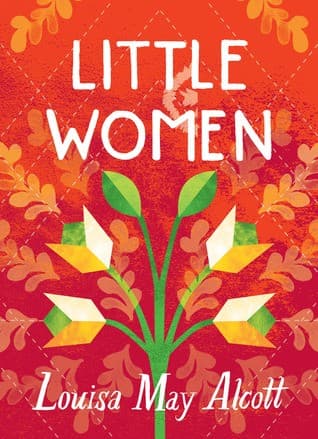
Little Women
Louisa May Alcott·1868
Four sisters growing up in Civil War-era New England. Alcott wrote this for a publisher who asked her for a 'girls' story' and she resisted writing it — which is part of why the book is sharp where it could have been sentimental. Jo March is one of the formative literary characters in American literature for a reason: she is angry, ambitious, awkward, and recognizable to ten-year-olds who feel the same way and have not yet seen themselves in a book. The prose is from 1868 and asks for some patience; the emotional content has not aged. Read this at ten and again at twenty and the book is different both times — which is one of the marks of a great novel.
Book 7·The American childhood
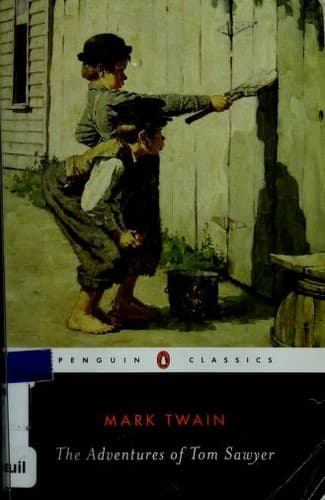
The Adventures of Tom Sawyer
Mark Twain·1876
Tom Sawyer is a boy who would rather be doing anything other than what an adult told him to do, which is the central condition of being ten. Twain wrote what is, on its surface, an adventure novel — a fence painted by trickery, a graveyard at midnight, a cave with a treasure — and underneath, a portrait of childhood as a serious moral world with its own rules. The novel is the better entry point to Twain than Huckleberry Finn (save that for later, when the reader can handle a book that argues with itself about race). Tom Sawyer is funnier, lighter, and equally honest about how children actually think when adults are not watching.