Editor-reviewed
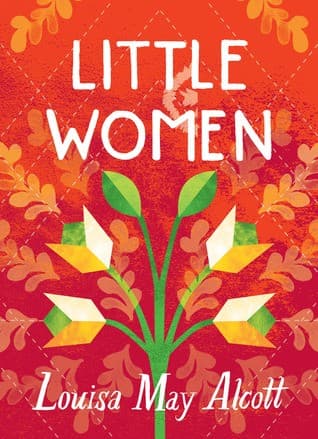
Little Women
Louisa May Alcott·1868·Roberts Brothers·Literature
Reading level: Ages 10–12 (middle grade) · 12-hour read · Beginner difficulty.
- Reading time
- 12h
- Difficulty
- Beginner
- Recommended age
- Ages 10–12
- Guide read
- 6min
- Editor's rating
- 4.3 / 5
- louisa-may-alcott
- classic
- american-literature
- 19th-century
- coming-of-age
- women
— In one sentence —
Four sisters, one year, and the most honest account of female ambition in nineteenth-century American fiction — the price Jo March pays for wanting more than the world will give her.
§ 01 · WHY READ
Why read
Little Women is often classified as children's literature, which has made it easy for adult readers to underestimate. This is a mistake. Alcott's novel is a sustained and frequently bitter account of what happens to female ambition in a society that has no sanctioned place for it. Jo March wants to be a writer. She becomes one, but the path there — what she must renounce, what she is required to want instead, the gap between the ending Alcott wrote and the ending she was contractually obligated to provide — is a story about the constraints that shaped American women's lives in the 1860s and shaped Alcott's own.
Alcott did not want to write this book. Her publisher requested a "girl's book" and she found the genre condescending. She wrote it quickly, drawing on her own childhood in Concord with her sisters, her abolitionist father Bronson, and the family's habitual genteel poverty. She was thirty-five, unmarried, the family's primary breadwinner. The novel she wrote about four girls finding their places in the world was written by a woman who had found her own place by refusing many of the options available to women of her time.
The novel's power comes from its honesty about that refusal. Jo is not a fairy tale heroine. She is ungainly, quick-tempered, and passionate about her work in a way the world finds at best charming and at worst threatening. When Laurie proposes, Jo refuses — because she does not love him the way he loves her, and she knows it. This was genuinely unusual in 1868 fiction. The ending Alcott provided — Jo's eventual marriage to Professor Bhaer, which Alcott herself considered a capitulation to publisher pressure — is one of the most discussed endings in American literature.
§ 02 · KEY CHARACTERS
Key characters
Jo March — the second sister, the writer, the novel's heart. She is Alcott's self-portrait, and the most fully realized adolescent protagonist in nineteenth-century American fiction. She is not trying to be difficult; she is simply too large for the available containers, and the novel watches her discover this in real time.
Meg March — the oldest, who wants the domestic life — husband, children, home — and gets it. Alcott does not mock her for this. Meg's choices are presented as genuine, and her later chapters are honest about what domestic life actually contains: boredom, financial strain, the difficulty of a marriage between two people who are also individuals.
Beth March — the quiet one, the musician, the still center of the family. She is the novel's sacrifice: the daughter who stays home, who dies young, whose goodness is too delicate for the world. Her arc has been read as Alcott's sentimental capitulation to Victorian ideals of feminine virtue. It is also simply what happened to Alcott's sister Lizzie.
Amy March — the youngest, frequently treated as the vain one, but the most socially sophisticated. She wants to be an artist, learns she is not a great one, and chooses a life that will allow her to support great art rather than produce mediocre work herself. This is a more interesting choice than it first appears. She also marries Laurie, which readers have never forgiven her for.
§ 03 · HIGHLIGHTS
Three highlights
No. 1 · Jo refuses Laurie. This is the scene that makes the novel matter beyond its genre. Laurie is handsome, kind, wealthy, and in love with Jo. A different novel would have married them. Alcott has Jo decline — not because she doesn't love him, but because she doesn't love him the right way, and she knows it. In 1868, a female protagonist who refuses a perfectly good proposal because it is not what she wants is a small act of radical fiction.
No. 2 · "The Valley of the Shadow" — Beth's death. Alcott handles Beth's death with a restraint that makes it more affecting than theatrical grief would. The scene is not dramatized; it is witnessed. The family is present; Beth goes quietly; Alcott does not milk it. The restraint is the technique: the death is presented as a fact, not a performance, which is what makes it feel true rather than sentimental.
No. 3 · Jo's writing. The novel's scattered scenes of Jo at her desk — writing sensational stories for the papers under a pseudonym, burning her manuscript when Meg protests, finally finding her way to honest, direct fiction — form the novel's buried spine. Alcott is writing about her own relationship to her work: the temptation to write for the market, the integrity required to write what you actually mean, the cost of both choices.
§ 04 · EDITIONS
Recommended editions
| Edition | Why pick it |
|---|---|
| Penguin Classics (complete edition) | Contains both Little Women and Good Wives (the original second volume, often published separately); the best reading edition. |
| Oxford World's Classics | Good annotation; useful introduction on the publishing history and the question of Alcott's own relationship to Jo. |
| Library of America | The authoritative edition; includes Alcott's editorial correspondence, which illuminates the pressure she was under to provide a conventional ending. |
| Audiobook (Kate Reading) | The family dynamics are rendered beautifully in audio; excellent for re-readers. |
§ 05 · FIT
Who it's for / not for
Read this if you are…
- Interested in nineteenth-century American women's writing beyond its surface. The novel is easy to read and hard to fully see; the feminist argument is present throughout but embedded in the domestic materials.
- Reading it again as an adult after having read it as a child. The second reading is a different book: Jo's refusal of Laurie, Amy's artistic honesty, the cost of Beth's goodness all land differently when you are old enough to have had to make real choices.
- Interested in the history of female authorship. Alcott's relationship to her publisher, her readers, and her own ambitions is one of the great stories of American literary history.
Skip it if you are…
- Looking for tightly plotted narrative. Little Women is episodic — a sequence of scenes from a family's domestic life rather than a building plot. The drama is internal and slow-developing.
- Expecting either a fairy tale or a feminist manifesto. It is neither; it is more honest and more ambivalent than either category allows.
§ 06 · TIPS
How to read it
Read both volumes — Little Women and Good Wives (published separately in the UK, usually combined in US editions). The second volume is where the novel's ambivalence becomes fully visible: Meg's marriage, Beth's death, Amy's choices, and Jo's ending are all in the second half.
Pay attention to what Jo does with her writing at each stage of the novel. Alcott embeds the question of artistic integrity into the domestic story; Jo's relationship to her own work is the novel's truest bildungsroman.
If you find yourself angry at the ending — Jo's marriage to Professor Bhaer — look up Alcott's letters about it. She was angry too. The letters are short and illuminating.
§ 07 · COMPARE
Read alongside
- Charlotte Brontë — Jane Eyre (1847). The British equivalent: a heroine of fierce selfhood navigating a world that does not know what to do with her. The comparison clarifies what is specifically American about Jo's situation.
- Edith Wharton — The House of Mirth (1905). What happens when a woman refuses to submit and also lacks Jo's resources and temperament. Wharton's Lily Bart is the dark answer to the question Little Women asks hopefully.
- Louisa May Alcott — Work (1873). Alcott's other novel, less famous and more directly autobiographical; the story of a woman who earns her own living by her own labor. A direct companion to Little Women.
§ 08 · DISCUSSION
Discussion questions
- Jo refuses Laurie because she doesn't love him the right way. Given their relationship in the novel, do you believe her? Do you think she is right?
- The novel ends with Jo married to Professor Bhaer, a choice Alcott made reluctantly under reader and publisher pressure. Does the ending feel organic to the character, or does it feel imposed? What ending would you have written?
- Beth's goodness — her selflessness, her quiet domesticity — leads directly to her death. Is Alcott endorsing this model of femininity, criticizing it, or simply recording it?
- Amy is often the least liked of the sisters, but she makes the most clear-eyed choices in the novel. What do you make of her decision to marry Laurie? Her decision to give up her artistic ambitions when she realizes she is not great?
- Alcott was unmarried, professionally ambitious, and the family breadwinner — in many ways more like the adult Amy than the young Jo. What does it mean that she wrote Jo as her self-portrait?
- The novel is set during the Civil War, with the girls' father away as a Union chaplain. How present is the war in the domestic world of the novel? What is Alcott saying by centering the story so completely on the home front?
One line to remember
“I am not afraid of storms, for I am learning how to sail my ship.”— Chapter 14
Appears in collections
Reading lists featuring this book
You might also like
Read next
William Faulkner · 1936
Absalom, Absalom!
Four narrators reconstruct a man who destroyed his family. The story keeps changing. That is the point.
Read · 7 min
Toni Morrison · 1987
Beloved
Toni Morrison said she wrote this novel to give voice to the sixty million. It won the Pulitzer, the Nobel, and is the greatest American novel of the second half of the twentieth century.
Read · 6 min
Giuseppe Tomasi di Lampedusa · 1958
The Leopard
The Sicilian classic behind Netflix's Italian limited series.
Read · 6 min