Editor-reviewed
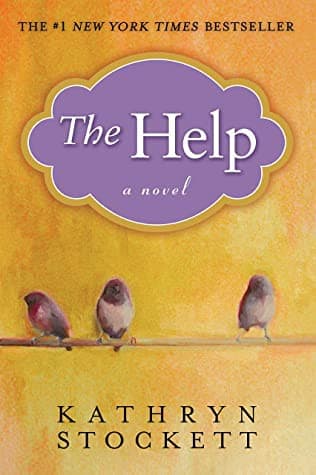
The Help
Kathryn Stockett·2009·Amy Einhorn Books / Putnam·Fiction
Reading level: Ages 14+ (adult) · 13-hour read · Beginner difficulty.
- Reading time
- 13h
- Difficulty
- Beginner
- Recommended age
- Ages 14+
- Guide read
- 4min
- Editor's rating
- 4.2 / 5
- kathryn-stockett
- civil-rights
- mississippi
- american-south
- historical-fiction
- race
- women
— In one sentence —
Jackson, Mississippi, 1962. Three women — two Black maids and a young white woman — collaborate on a book that could destroy all of them. A novel about courage, complicity, and the stories that get left out.
§ 01 · WHY READ
Why read
Kathryn Stockett published The Help in 2009 after sixty rejections from literary agents. The novel spent over 100 weeks on the New York Times bestseller list and was adapted into a major film in 2011. It is set in Jackson, Mississippi in 1962–1963 and told through three alternating first-person narrators: Aibileen Clark and Minny Jackson, both Black maids, and Eugenia "Skeeter" Phelan, a young white woman recently graduated from Ole Miss.
The premise: Skeeter, who wants to be a writer, proposes to Aibileen — and eventually to Minny and other maids — that they collaborate on a book of their experiences working in white households in Jackson. The risk is enormous: the Civil Rights movement is in the newspapers, violence against Black people is constant and legal, and the book they propose to write is the kind of thing that could get everyone involved fired, arrested, or worse.
What the novel does well: the portrait of Jackson's white social world — the Junior League, the bridge clubs, the housewives performing respectability while depending entirely on the Black women who run their homes — is observed with precision and occasional savagery. Minny's voice is the novel's best achievement: funny, angry, dignified, and exact.
The debate the novel generates: The Help has been criticized for centering a white woman's story and perspective in a narrative that should belong to its Black protagonists, and for an arguably sanitized portrait of the terror involved in civil rights work. The Association of Black Women Historians issued a statement in 2011 noting specific historical inaccuracies and objecting to the portrayal. This debate is worth knowing before reading; it doesn't resolve neatly.
§ 02 · CHARACTERS
Characters
Aibileen Clark — a maid who has raised seventeen white children over her career, including her current charge, Mae Mobley. Aibileen's grief for her son, who died in a work accident, runs beneath the narrative; her devotion to Mae Mobley is the novel's warmest relationship.
Minny Jackson — Aibileen's best friend, one of the best cooks in Jackson, and a woman with what the novel diplomatically calls a "sassy mouth" that has lost her more jobs than she can count. She is the novel's funniest and most vivid voice.
Skeeter Phelan — the white protagonist, a young woman who doesn't fit into the social world she grew up in, who initiates the book project. She is the novel's point of identification for most white readers and the most criticized element of the novel's structure.
Hilly Holbrook — the novel's antagonist, chair of the local Junior League chapter, enforcer of the social codes that keep the system in place. Her cruelty is specific and social rather than theatrical.
§ 03 · HIGHLIGHTS
Three highlights
No. 1 · Minny's voice. Minny's sections are the novel's best writing — direct, funny, and clear-eyed about exactly how the system works and what it costs. Her narrative of her marriage, her employment history, and her arrangement with Celia Foote (a social outcast who needs a cook and doesn't care about the rules) is the novel's most original element.
No. 2 · The "Terrible Awful." Minny's revenge on Hilly Holbrook — the novel's most famous scene — operates as both comedy and justice, and was controversial for its own reasons. The scene exemplifies the novel's approach to power: it gives the characters a private victory that cannot be made public, which is both satisfying and limiting.
No. 3 · Mae Mobley. Aibileen's relationship with the small girl in her care — telling her "you is kind, you is smart, you is important" every day in an attempt to give her something the child's own mother isn't providing — is the novel's most affecting strand and its clearest statement about what is actually at stake in the daily labor of the maids.
§ 04 · EDITIONS
Recommended editions
| Edition | Why pick it |
|---|---|
| Amy Einhorn Books / Putnam (US hardcover, 2009) | The original; any paperback printing is equivalent. |
| Penguin (UK paperback) | The standard international edition. |
| Audiobook (Jenna Lamia, Bahni Turpin, Octavia Spencer, Anna Deavere Smith) | The audiobook's four-narrator cast is exceptional; Bahni Turpin as Minny is particularly fine. |
§ 05 · FIT
Who it's for / not for
Read this if you are…
- Readers interested in the civil rights era through the lens of daily life rather than historical event.
- Anyone who wants to understand the debate the novel has generated as well as the novel itself; it is a useful entry point into discussions about narrative perspective and whose stories get told.
- Readers who enjoy character-driven fiction with strong voices.
Skip it if you are…
- Looking for a more rigorous historical treatment of civil rights Mississippi. For that: Taylor Branch's Parting the Waters (1988) or John Lewis's Walking with the Wind (1998).
- Concerned about the structural issues raised by critics — they are real and the novel doesn't resolve them.
§ 06 · TIPS
Reading tips
- Read the ABWH statement (available online) alongside the novel. The critique is specific and substantive, and reading both gives a fuller picture than either alone.
- Minny's sections are the best. If the novel loses you elsewhere, Minny will pull you back.
- The audiobook is exceptional. The four-narrator format was designed for audio; this is one of the cases where the audio adaptation genuinely surpasses the reading experience.
§ 07 · COMPARE
Read alongside
- Toni Morrison — Beloved (1987). The more demanding and more profound treatment of the aftermath of slavery and the experience of Black women in America. No comforting resolutions.
- Taylor Branch — Parting the Waters (1988). The historical account of the civil rights movement in America, 1954–1963; the non-fiction context for the world The Help portrays.
- Flannery O'Connor — Everything That Rises Must Converge (1965). O'Connor's short stories about the white South and race, written in the same period; much darker, much stranger, and in many ways more honest.
§ 08 · DISCUSSION
Discussion questions
- The novel is narrated partly by Aibileen and Minny but initiated and structured around Skeeter's project. What is the effect of this framing? Whose story is it?
- The ABWH critique argues the novel sanitizes the danger and terror of civil rights Mississippi and misrepresents Black women's experience. Is the critique fair? Can it be both fair and compatible with enjoying the novel?
- Minny's "Terrible Awful" — revenge that works privately but cannot be made public. What does this limitation reveal about the kinds of justice available to the novel's Black characters?
- Aibileen tells Mae Mobley "you is kind, you is smart, you is important" every day. What is she doing? What is she hoping will happen?
- Hilly Holbrook is the novel's primary antagonist. Is she a villain in a way that exculpates the system, or does the novel hold the system itself responsible?
- The novel was rejected sixty times before publication and became one of the best-selling novels of the 2000s. What does this say about what readers were looking for? What does it say about the publishing industry?
One line to remember
“You is kind, you is smart, you is important.”— Aibileen Clark — The Help
Appears in collections
Reading lists featuring this book
7 books
Best Book Club Books for Discussion
Seven books that generate real conversation — not just summaries.
Open list →
10 books
Books About the American South
Ten books, ten Souths — some in direct contradiction.
Open list →
5 books
Books Like Beloved
Five novels for readers who want that combination of historical weight, lyric prose, and the refusal to look away.
Open list →
6 books
Books to Understand Race in America
From slavery to the near future — six novels that cover what history textbooks flatten.
Open list →
10 books
Ten Novels to Understand the American South
A literature that carries the full weight of American history — grace and violence together.
Open list →
You might also like
Read next
J. K. Rowling · 1999
Harry Potter and the Prisoner of Azkaban
The Harry Potter book built as a closed-loop mystery: no Voldemort duel, one escaped godfather, dementors as depression, and a time-turner ending that rewards rereading.
Read · 5 min
Kazuo Ishiguro · 2005
Never Let Me Go
A science-fiction novel so quiet about being science fiction that most readers finish it before they realize what they've agreed to.
Read · 5 min
J. K. Rowling · 2007
Harry Potter and the Deathly Hallows
Read for six books as a story about good defeating evil — actually a story about a seventeen-year-old learning to die. The subject was hidden in plain sight for six books before this one named it.
Read · 5 min