Book list · Editor's pick·nonfiction
The Best Books About Risk and Uncertainty
Six books on the one problem every decision shares — that the future is unknown and you have to act anyway — from how the mind misjudges odds to how institutions, founders, and strategists operate when the answer can't be known in advance.
- Books
- 6
- risk
- uncertainty
- decision-making
- strategy
- nonfiction
Updated 2026-05-28
— Why read this list —
Most books about risk are really books about prediction. These six are about the harder thing: deciding well when prediction fails.
You make decisions before you have the information you'd want
Whether you're running a company, making an investment, choosing a career move, or just trying to think clearly about a world that keeps surprising you, the structure of the problem is always the same: you have to act now, and the information that would tell you what to do won't arrive until after you've acted. That gap — between the decision you have to make and the certainty you'd need to make it well — is what "risk" and "uncertainty" actually name. Most books that promise to help treat it as a forecasting problem: get better data, build a better model, predict harder. The six here start from the opposite premise — that the future is genuinely unknowable in the ways that matter, and the real skill is deciding well anyway.
They span an unusual range on purpose. A 2,500-year-old military treatise sits beside a Nobel economist's psychology, a business-school study of corporate failure, and a startup playbook. What unites them is that none is really about prediction. Each is about how to position yourself, structure your bets, and read your own judgment when the answer can't be known in advance.
Why these six
Read together, they form a layered account of the same problem. Taleb sets the frame: stop trying to forecast volatility and instead arrange your exposures so disorder helps you. Kahneman supplies the diagnostic underneath — the mind weighing those exposures is systematically miscalibrated, and you have to correct for it deliberately. Sun Tzu offers the oldest strategic answer: the surest way through a risky engagement is to shape conditions so you've already won, or to decline the engagement entirely.
Then the scale widens. Christensen shows the same problem at the level of the institution, where competent, prudent risk management is itself the fatal risk. Ries brings it down to daily practice — a concrete loop for shrinking the cost of being wrong when you cannot know in advance whether you're right. And Kuhn supplies the floor beneath all of it: even knowledge itself is provisional, and the deepest uncertainty is the one baked into the framework you're using to measure uncertainty. No single book gives you all six layers — the psychological, the strategic, the institutional, the operational, and the epistemic. The collection does. Together they replace the fantasy of prediction with something more durable: a way of acting well inside the unknown.
The 6 books
In publication order
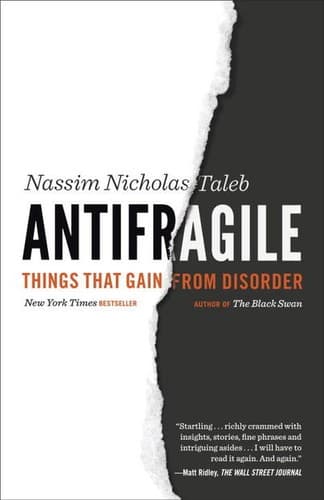
Book 1·The reframe: gain from disorder, don't predict it
Antifragile
Nassim Nicholas Taleb·2012
Start here because Taleb reframes the entire subject. Most thinking about risk is about reducing exposure to bad outcomes; Taleb's contribution is the idea that some things actively gain from disorder, and that the goal is not to predict the volatile future but to position yourself to benefit from it — bounded downside, open-ended upside. He is combative, digressive, and frequently overstates, but the core insight is genuinely new and it changes how you read every other book on this list. The foundation of the modern conversation about uncertainty.
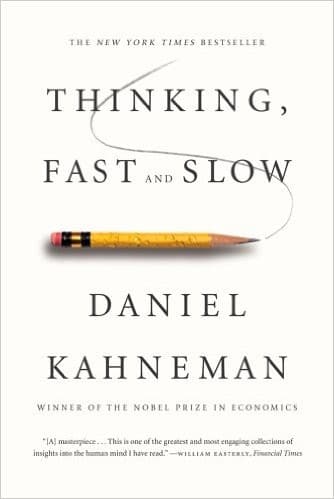
Book 2·Why your own judgment misreads odds
Thinking, Fast and Slow
Daniel Kahneman·2011
Before you can manage risk you have to understand the instrument doing the managing — your own judgment — and Kahneman's life work is the definitive account of how badly that instrument handles uncertainty. A Nobel laureate in economics shows that we don't misjudge odds at random; we misjudge them systematically and predictably, overweighting the vivid, the recent, and the available. Read it as the diagnostic that explains why every intuition in the rest of these books needs checking against the math.
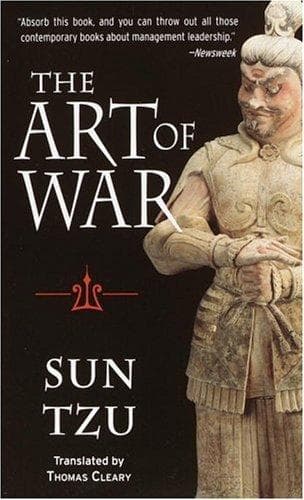
Book 3·The ancient case for avoiding the bet
The Art of War
Sun Tzu·-500
The oldest treatment of decision-making under uncertainty we have, and the shortest book here — two hours, twenty-five centuries old. Sun Tzu's whole subject is acting against an opponent whose moves you cannot see, and his answer is almost the opposite of prediction: shape the conditions so that you have already won before the engagement, and refuse battles whose outcome you can't control. Read it as the original argument that the best risk is the one you arrange never to take.
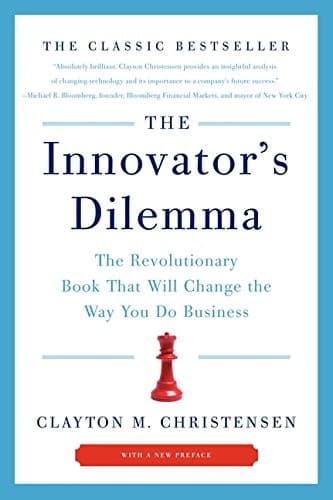
Book 4·How prudent institutions get killed by prudence
The Innovator's Dilemma
Clayton M. Christensen·1997
This is risk at the scale of the institution, and Christensen's finding is deeply uncomfortable: well-run companies fail precisely because they manage risk competently. Serving your best customers, protecting your highest margins, and rationally declining small uncertain markets is exactly the behavior that lets a disruptive entrant eat you alive. Read it for the structural lesson — that good risk management inside the current paradigm is itself the largest risk to surviving the next one.
Book 5·A working method for acting when you can't know
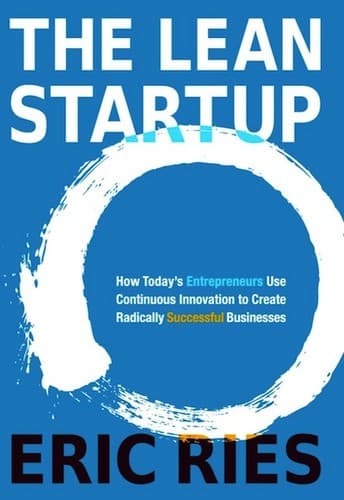
The Lean Startup
Eric Ries·2011
The operational counterpart to everything above: a practice for acting when you genuinely cannot know whether the thing you're building should exist. Ries's build-measure-learn loop is, at bottom, a method for shrinking the cost of being wrong — ship a deliberately incomplete version, watch what real people do, and let reality reduce your uncertainty instead of your planning. The book has aged unevenly and the industry overcorrected on it, but the core loop is the clearest tool here for operating under uncertainty rather than theorizing about it.
Book 6·The uncertainty built into knowing itself
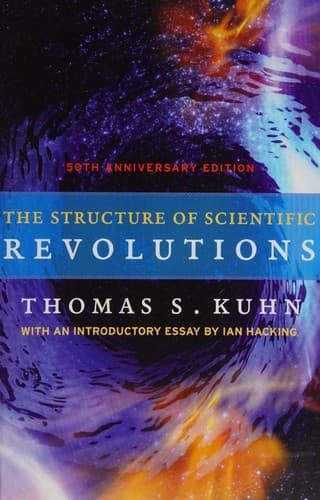
The Structure of Scientific Revolutions
Thomas S. Kuhn·1962
End here, with the deepest layer: uncertainty in knowledge itself. Kuhn's argument — that even science doesn't accumulate truth smoothly but lurches between paradigms, each of which both enables and blinds the people working inside it — is the most fundamental form of the problem. The risk you cannot see is the one built into the framework you're using to assess risk. Read it last, as the book that explains why certainty is always provisional and why the person most sure they've eliminated uncertainty is usually the one about to be surprised.