Book list · Editor's pick·Vol. 001·Sci-Fi & Fantasy
Science Fiction for People Who Don't Read Science Fiction
Nine novels that will change what you think the genre is allowed to do.
- Books
- 9
- Total reading
- 85h
- Authors
- 7
- Time span
- 1969–2014
- sci-fi-gateway
- literary-sf
- first-contact
- near-future
- beginners
- recommended-reading-order
Updated 2026-05-21
— Why read this list —
Most people who 'don't like science fiction' have been handed the wrong books. Here are nine that start somewhere more human.
Why this list exists
Almost everyone who says they don't like science fiction has been handed the wrong book.
The canonical gateway for new SF readers used to be Asimov or Clarke or Heinlein — writers who built astonishing conceptual architecture and are not particularly interested in people. These are important books. They are not, for most contemporary readers, the books that turn you into a science-fiction reader.
The nine books on this list were chosen for a different entry point: they start with something human and work outward into the strange. Ishiguro starts with a boarding school. Butler starts with a girl's diary. Mandel starts with the night a famous actor dies on stage. McCarthy starts with a man and his son. The science fiction comes later — sometimes much later — and when it does, it's already earned its place because you're already inside a consciousness you care about.
This is not a "soft SF" list. Cixin Liu's physics is as hard as SF gets. Le Guin's anthropological worldbuilding is as rigorous as any work in the genre. Chiang's ideas are philosophy with narrative attached. What these books share is not the absence of ideas but a different point of entry: they ask you to feel before they ask you to think.
A note on what qualifies
McCarthy's The Road won the Pulitzer Prize for Fiction. Ishiguro's Never Let Me Go was shortlisted for the Booker. Le Guin won both the Hugo and Nebula in the same year, which happens roughly once a generation. Chiang's stories have won more awards per word than any collection in the genre's history.
These are not SF books that "transcend the genre." That framing implies that good SF is good despite being SF, which is wrong. These books are good because they are SF — because the genre's toolkit (the premise, the altered world, the thought experiment run to its conclusion) is the only toolkit that lets them do what they do. Ishiguro's premise is only legible because the reader brings genre conventions; McCarthy's apocalypse only works because we're not shown its cause. The tools matter.
Read them with full genre permission.
How to use this guide
The reading paths above offer three routes through the nine books. Each is complete: you can follow one path start-to-finish or bounce between them.
For most readers new to SF, we recommend the Literary First path: Ishiguro to Butler to Le Guin. By the time you've finished those three books, you will understand why SF readers often claim the genre is more honest about the human condition than contemporary literary fiction. Then you can read anything.
A practical note: these books can be read in any order. Unlike a series, they don't compound each other structurally. The reading paths suggest sequences that build on each other emotionally — introducing you to one mode of SF before complicating it with another. But if you've already read one and loved it, start there and work outward.
The nine books and their collection-internal descriptions follow, in recommended-for-most-readers order.
Reading paths
Three orders. Pick one before you start.
If you care about prose and character above all
Start with Ishiguro, then Butler's Kindred, then Le Guin's The Dispossessed. These three books represent SF written entirely on literary fiction's terms — interiority, language, moral weight — without sacrificing the genre's core move of making the familiar strange.
Book 1›Book 6›Book 5
If you came for the big ideas
Three-Body Problem → Ted Chiang's stories → The Left Hand of Darkness. This path runs through the genre's most formally ambitious work: SF that builds ideas with the rigor of philosophy and tests them with the force of fiction.
Book 4›Book 7›Book 8
If you want the most relevant-to-right-now reading
Parable of the Sower → Station Eleven → Never Let Me Go. Three books written between 1993 and 2005 that describe conditions — climate collapse, pandemic, the bureaucratic management of human lives — that feel more contemporary than most 2024 fiction.
Book 3›Book 2›Book 1
The 9 books
In publication order
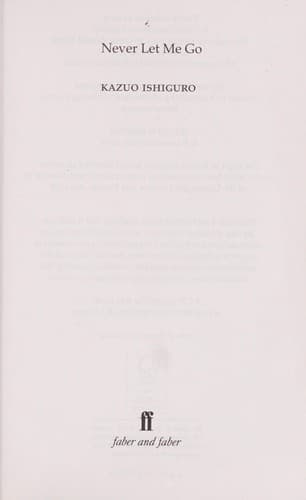
Book 1·The literary gateway
Never Let Me Go
Kazuo Ishiguro·2005
Ishiguro's most disturbing novel — and the one most literary readers claim isn't science fiction while describing exactly why it is. Three friends grow up in a sheltered English boarding school. The science-fictional premise is revealed slowly, and the novel never explains it, because Ishiguro is interested in how people live inside what they cannot change. If you've ever dismissed SF as plot over character, start here: this book has almost no plot and is entirely about interiority. The most humane argument the genre has made.
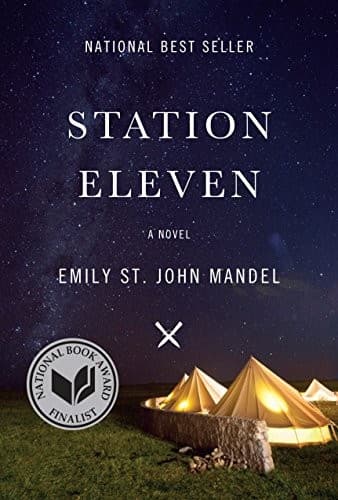
Book 2·Post-apocalypse without the grimness
Station Eleven
Emily St. John Mandel·2014
A flu pandemic kills most of humanity in weeks. Twenty years later, a traveling Shakespeare company performs for survivor settlements across the Great Lakes region. Mandel is not interested in the collapse — she's interested in what survives and why. 'Survival is insufficient' is the novel's through-line, taken from a Star Trek episode. The structure is nonlinear, the writing is literary, and the central question is one any novel would be proud of: what does art do for us when civilization falls? One of the best-reviewed SF novels of the decade.
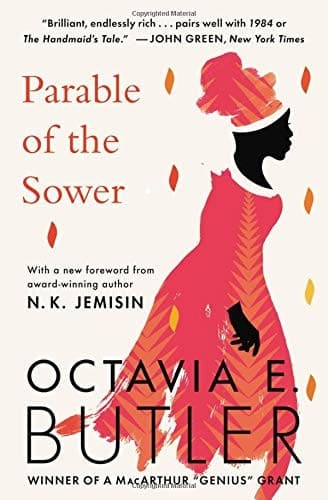
Book 3·The political argument
Parable of the Sower
Octavia E. Butler·1993
The most politically useful novel on this list. A Black teenage girl survives the collapse of Southern California by founding a new religion. Butler wrote this in 1993 and the social conditions she describes — climate collapse, private security replacing police, gated communities while the poor burn — are sharper reading now than they were then. Not a comfortable book. A necessary one. Butler is the writer who proves that SF has always been the genre best equipped to tell truths that realism finds too large.
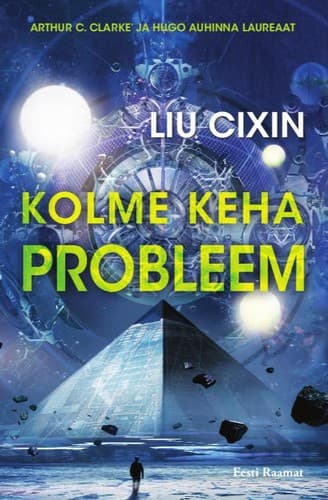
Book 4·The one that changes the conversation
The Three-Body Problem
Cixin Liu·2008·trans. Ken Liu (2014)
The opening chapter — a Cultural Revolution struggle session in which a physicist watches his father beaten to death — is not science fiction. It is twentieth-century Chinese history, and it is one of the best-written opening chapters in any recent novel in any genre. The science fiction comes later, and when it does, it is genuinely strange: a planet with three suns and no predictable orbital pattern, a video game that is actually a recruitment tool, and a character who makes one decision that sets the next 22 billion years in motion. Liu Cixin is the proof that 'hard SF' and 'literary fiction' are not opposites.
Book 5·The political philosopher
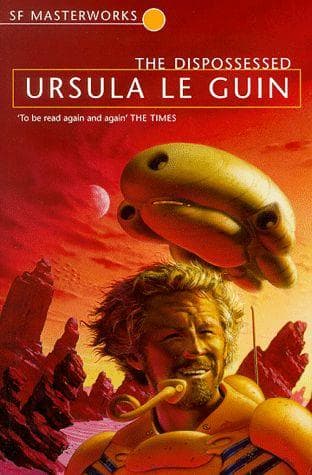
The Dispossessed
Ursula K. Le Guin·1974
An anarchist physicist travels from a moon-colony that practices collective ownership to the wealthy planet it orbits. Le Guin is doing two things simultaneously: building two convincingly different civilizations from the ground up, and writing a character study of a man who can see both systems clearly and belongs to neither. This is the most important political novel in SF's history — and one of the few that earns that description by refusing to declare a winner. The physics at the center of the plot is an actual open problem in theoretical physics that Le Guin invented and physicists later named after her.
Book 6·The time-travel that changes what you think time-travel is for
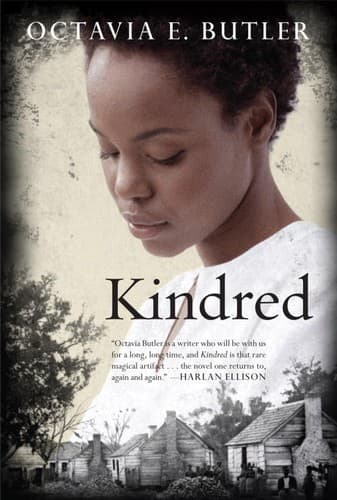
Kindred
Octavia E. Butler·1979
A Black woman in 1976 Los Angeles is pulled back in time to antebellum Maryland whenever her white ancestor's life is in danger — and she must save him to save herself. Butler calls it 'a kind of grim fantasy' rather than science fiction; it doesn't matter. This is one of the most argued-about novels in American literature, and it achieves something that historical realism cannot: it makes you feel the physical and psychological weight of slavery through a contemporary consciousness that cannot acclimatize to it. Short. Dense. Required.
Book 7·The proof that SF can be short and beautiful
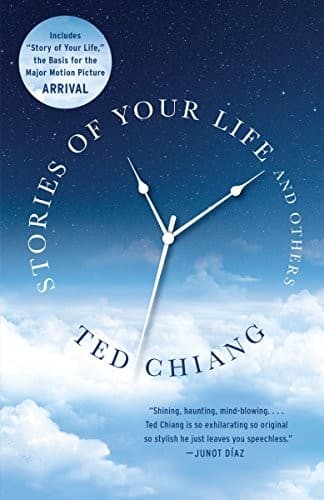
Stories of Your Life and Others
Ted Chiang·2002
The story collection that contains 'Story of Your Life' — adapted into the film Arrival. Chiang writes short SF that treats ideas with the precision of philosophy and the emotional weight of literary fiction. Eight stories, each structurally distinct, each turning on a genuine conceptual problem: what would it mean to know the future? What would we owe a conscious being we created? What is the relationship between language and thought? Chiang has won more Hugo and Nebula awards per word written than anyone in the genre. Start with 'Story of Your Life.' Read the collection in any order.
Book 8·The thought experiment
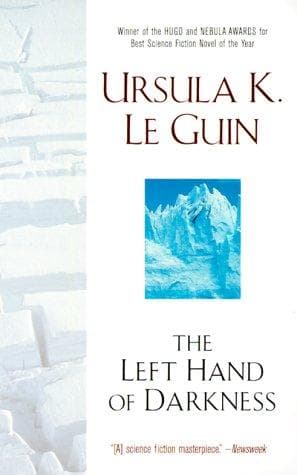
The Left Hand of Darkness
Ursula K. Le Guin·1969
A human envoy attempts to bring a planet into a galactic alliance. The planet's inhabitants are ambisexual — they have no fixed gender, becoming male or female for one week per month during a cycle called kemmer. Le Guin isn't writing allegory; she's running a genuine thought experiment about what gender actually is versus what we assume it is. The result is an adventure novel, a political thriller, and a philosophical argument, set on a frozen planet. Won the Hugo and Nebula in the same year. Still the most formally inventive novel the genre has produced.
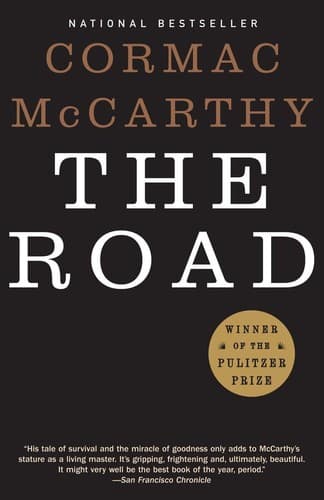
Book 9·The one that wins the Pulitzer
The Road
Cormac McCarthy·2006
McCarthy would reject the label 'science fiction.' His novel about a man and his son walking south through the ash of an unnamed apocalypse toward a coast they hope is warmer is one of the best American novels of the century, and it is indisputably post-apocalyptic SF by any structural definition of those words. There is no explanation of what happened. There is no hope. There is love of a specific kind — the kind that keeps you moving — and McCarthy describes it with a prose style so stripped and exact that the absence of punctuation feels like the right choice. The only book on this list that may break you.