Book list · Editor's pick·Fiction
The Best Books for Teens
What high schoolers actually want to read — not what they're assigned.
- Books
- 8
- young-adult
- teens
- high-school
- ages-13-18
bibliotecas editorial
Updated 2026-05-24
— Why read this list —
The reading lists handed to teenagers in school are sometimes great and sometimes the books a committee compromised on. These are the books teenagers pick up on their own and finish in a weekend.
How to pick for the teenager you know
Teenagers read for two reasons: because school made them, and because something on the cover or in a friend's recommendation made them curious. The books here are picked for the second category — books a teenager will read voluntarily and finish.
For a teenager who has not been a strong reader and needs a book that does not feel like homework, the gateway is The Great Gatsby (five hours, page-turning prose, ends before you want it to) or The Old Man and the Sea (not on this list but worth knowing). For a teenager who is already reading on their own and ready for something that will reorient them, Lord of the Flies or The Catcher in the Rye are the canonical picks — both short enough to finish in a weekend, both written in voices teenagers respond to without prompting.
The two dystopias here — Brave New World and The Handmaid's Tale — are the books a teenager will want to talk about after finishing, which is often the marker of a real reading experience at this age. Pair them. They argue with each other in productive ways. Frankenstein is the wild card: the prose is older than anything else on the list, but it is the book a teenager who likes ideas will likely fall hardest for, especially if they are already thinking about AI, ethics, or science.
On the books they're assigned
There is a real argument that the most damaging thing a high-school English class can do to a teenager's reading life is to make them write a five-paragraph essay about a book they were going to love. Several of these books — Gatsby, Mockingbird, Lord of the Flies — are commonly assigned, and a teenager who has been required to annotate Gatsby for class may need a few years before they can return to it.
If that is the situation, the books on this list that are less commonly assigned — Parable of the Sower, Station Eleven, Frankenstein, The Handmaid's Tale — are the better gifts. They give a teenager the experience of reading a serious book without the residue of having had it taught to them. Catcher in the Rye has slipped off most school reading lists in the last decade and is now experienced almost entirely outside the classroom, which is probably for the best.
The eight books together are sixty-two hours of reading — a book a month for a high-school year, with two months for re-reading the one that mattered most. That is a reasonable, undramatic pace, and a teenager who finishes the list has read more serious literature in four years than most adults will in twenty.
The 8 books
In publication order
Book 1·The argument about human nature
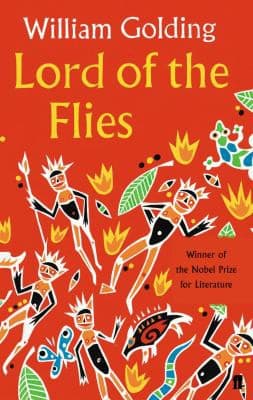
Lord of the Flies
William Golding·1954
A group of British schoolboys are stranded on an island after a plane crash and slowly construct, then dismantle, a society. Golding wrote this in deliberate argument with the cheerful Victorian adventure novels he was made to read as a boy — his answer to the question of what children would actually do without adults is genuinely dark. The reason this works at the high-school age specifically: teenagers are the readers most willing to take the book seriously as a thesis about human nature rather than dismissing it as cynical. The novel is also short, structurally clean, and the symbolism rewards the kind of close reading high-school English classes train. Six hours.
Book 2·The voice in your head
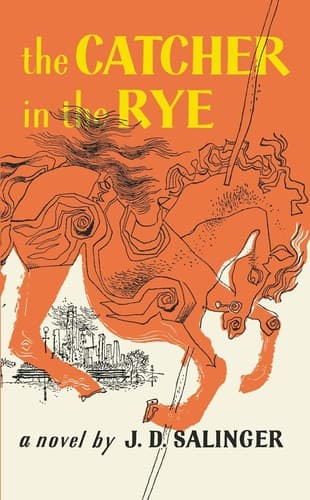
The Catcher in the Rye
J.D. Salinger·1951
Holden Caulfield is sixteen, has just been expelled from his fourth boarding school, and spends three days wandering New York City in a state of disgusted grief. Catcher is the book that adult readers either remember as the most honest book they read in high school or look back on with embarrassment — and which response a teenager has the first time around is itself diagnostic. The novel's voice is the achievement: Salinger figured out how to write the inside of a teenage boy's head without sentimentalizing it or making fun of it. Read it at sixteen; re-read it at thirty. The two experiences are almost completely different books, which is part of the point.
Book 3·The book you'll quote at twenty-five
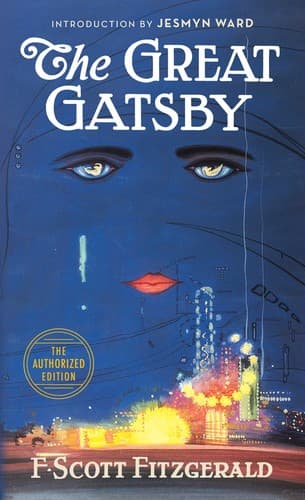
The Great Gatsby
F. Scott Fitzgerald·1925
Five hours, two hundred pages, the great American novel about wanting things. Fitzgerald wrote a book a teenager can read in a weekend that contains everything that makes adult literary fiction worth reading: prose that is conscious of itself as prose, characters whose flaws are the source of their interest, an ending that does not give the reader the version they wanted. Most teenagers encounter this in school and many resist it because it has been pre-loaded with the expectation that it is Important. Read alone, outside the classroom, it works better — the romance is operatically sad, the social observation is sharp, and Nick Carraway is the right narrator for a teenager who is starting to notice that the adults around them are not as together as they pretend.
Book 4·The dystopia that's actually about us
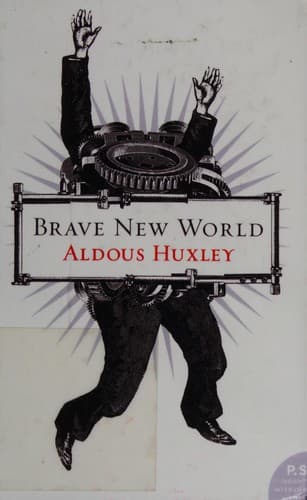
Brave New World
Aldous Huxley·1932
Huxley imagined a future society stabilized through engineered happiness — designer drugs, designer babies, casual sex, and the complete elimination of suffering, art, family, and meaning. The book pairs naturally with 1984 (which most teenagers are also reading) and is the more uncomfortable of the two for a generation that has grown up with social media, recommender systems, and pharmaceuticals that work. The argument: a society does not need to oppress its citizens to control them — it can simply give them everything they think they want. Teenagers are the right audience for this book because they have not yet committed to the trade-offs and can still see the question clearly.
Book 5·The horror novel that's actually philosophy
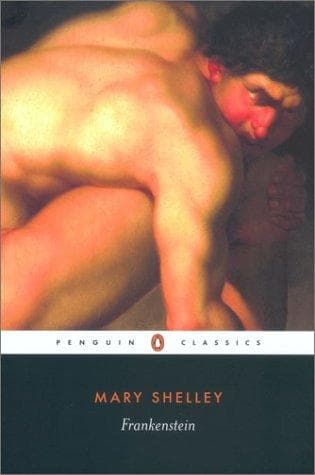
Frankenstein
Mary Shelley·1818
Mary Shelley wrote Frankenstein when she was eighteen — younger than many readers picking the book up. The novel is a horror story on the surface and a serious meditation on parental abandonment, the responsibilities of creators to their creations, and the question of who is the actual monster underneath. The prose is from 1818 and asks for some patience, but the structure (a frame narrative with three nested narrators) and the emotional stakes (a creature begging its maker to love it) are not dated. Read it alongside any contemporary discussion of artificial intelligence and the questions are exactly the same questions. Also: Mary Shelley wrote it at eighteen, which is the kind of fact a teenager benefits from knowing.
Book 6·The book about coming of age in a collapsing world
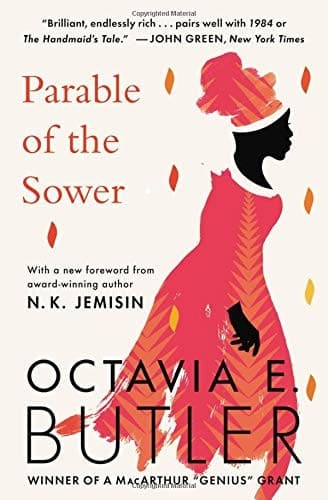
Parable of the Sower
Octavia E. Butler·1993
Set in a near-future California collapsing under climate change, inequality, and the breakdown of public services — Butler started the book in 2024 and wrote it in 1993, which makes the predictive accuracy uncomfortable. The protagonist, Lauren Olamina, is fifteen, Black, and developing a religion of her own as her community disintegrates. The book is one of the most honest novels a teenager can read about what it actually feels like to come of age in a world that is getting worse, and Butler refuses both nihilism and false hope. For a teenage reader who feels the contemporary moment as urgent, this is the book that takes the urgency seriously without sentimentalizing it.
Book 7·The hopeful end-of-the-world novel
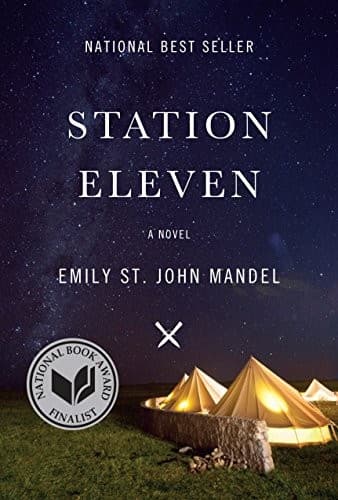
Station Eleven
Emily St. John Mandel·2014
A pandemic kills most of the world's population, and a traveling Shakespeare company performs in the surviving settlements of the Great Lakes region. Mandel's novel is a post-apocalyptic story that refuses the genre's usual moves — there are no zombies, no warlord arcs, no nihilism — and instead asks what people would actually do, and what art would mean, in the years after the world we know ends. The structure (parallel timelines, before and after) rewards a teenage reader who is willing to be patient with a non-linear narrative. The book is also unexpectedly hopeful, which is a quality contemporary post-apocalyptic fiction rarely manages. Nine hours.
Book 8·The dystopia that aged in the wrong direction
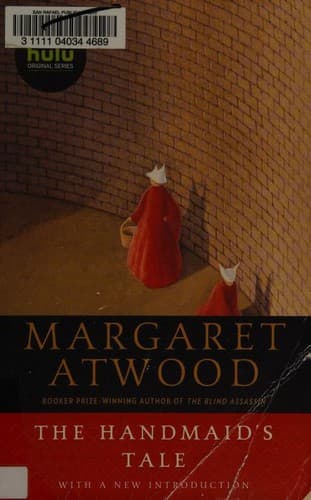
The Handmaid's Tale
Margaret Atwood·1985
Atwood imagined a near-future America in which a Christian theocracy has taken power and women are stripped of property, work, and reproductive rights. The novel is told from inside the head of a woman assigned as a 'handmaid' — a forced surrogate — and the achievement is the voice: Offred is alive, ironic, exhausted, and refuses to be reduced to her circumstance. Atwood famously included nothing in the book that had not happened somewhere on earth at some point in history, which is the right thing for a teenage reader to know going in. The book is read differently after 2016 than before; teenagers reading it now are reading it in a different political moment than the one it was first received in, and that doubles the weight.