Book list · Editor's pick·Vol. 001·Sci-Fi & Fantasy
Best Mind-Bending Sci-Fi Books
Eight books that destabilize reality, consciousness, time, or the self — and know exactly what that destabilization is for.
- Books
- 8
- Total reading
- 114h
- Authors
- 6
- Time span
- 1924–2009
- mind-bending-sci-fi
- psychological-sci-fi
- reality-bending
- consciousness
- speculative-fiction
- literary-sf
Updated 2026-06-02
— Why read this list —
The best mind-bending science fiction doesn't confuse you for sport. It changes the rules of reality so something human becomes impossible to ignore.
What "mind-bending" should mean
Most lists with this label confuse two different pleasures.
The first is plot surprise: twists, reveals, puzzle-box structure, information withheld until the last possible second. That can be fun, but it is not what the best books on this list are doing.
The second is perceptual reorientation: a book changes the terms on which you understand consciousness, time, social reality, identity, memory, or human scale. When it works, you do not just learn a secret about the plot. You leave the book thinking differently.
That is the standard here.
Le Guin changes what gender looks like when it stops organizing society. Ishiguro changes what acceptance looks like when people have been raised inside an unjust system they barely know how to name. Ted Chiang changes what narrative time can do by making grammar itself part of the argument. Liu changes the scale at which you feel intellectually comfortable. Murakami changes the felt boundary between the ordinary world and the deeper one beneath it.
Not all eight books are equally "scientific" in the narrow sense. Some are closer to speculative philosophy, some to literary SF, some to magical-realist atmosphere operating inside science-fictional structures. That range is deliberate. Readers asking for mind-bending books usually do not want one subgenre. They want the experience of reality becoming newly unstable for a good reason.
Start here
If you want the safest first pick, start with Never Let Me Go. It is accessible, emotionally clear, and devastating without asking you to learn a new science-fiction vocabulary.
If you want the purest "my brain feels rewired" version, start with Stories of Your Life and Others. Ted Chiang gives you the cleanest bridge between idea and emotion.
If you want the biggest speculative scale, start with The Three-Body Problem. It is the most likely book here to make human problems feel suddenly small.
Fit and skip guide
| Book | Best fit | Reading burden | Pace | Skip if |
|---|---|---|---|---|
| Never Let Me Go | Literary readers who want quiet horror and delayed recognition | Medium-light | Slow, but clear | You need overt action or technical SF |
| Stories of Your Life and Others | Readers who like precise concepts with emotional payoff | Medium | Varies by story | You dislike short-story collections |
| The Left Hand of Darkness | Readers who want social assumptions challenged | Medium | Slow burn | You need fast plotting |
| The Dispossessed | Readers who want political/philosophical SF | Heavy | Deliberate | You do not want theory in your fiction |
| The Three-Body Problem | Readers who want cosmic scale and big ideas | Medium-heavy | Builds toward scale shock | You need intimate character work first |
| We | Readers interested in the roots of dystopian SF | Medium | Fragmented | You dislike stylized early modernist prose |
| 1Q84 | Readers who want dreamlike immersion | Heavy | Very slow burn | You do not want a long, looping novel |
| The Wind-Up Bird Chronicle | Readers who want uncanny descent rather than puzzle logic | Heavy | Slow, hypnotic | You need clean answers or tight genre structure |
How to choose the right kind of disorientation
If you want the cleanest and most accessible starting point, read Never Let Me Go. It asks the least of your genre tolerance and still delivers one of the most profound reality shifts on the list.
If you want the purest idea-driven version, read Stories of Your Life and Others. Chiang is the writer here least interested in excess and most interested in following a premise to its exact emotional limit.
If you want the largest sense of intellectual expansion, read The Three-Body Problem. It is the book most likely to make your personal scale feel suddenly too small.
If you want the books that feel like dreams you inhabit rather than arguments you evaluate, go to Murakami. Start with The Wind-Up Bird Chronicle if you want the darker and more coherent novel; start with 1Q84 if you want the more sweeping and romantic one.
And if what you really mean by mind-bending is that you want fiction that makes your social assumptions feel contingent rather than natural, read Le Guin first. She is the writer on this list most likely to rearrange your categories without making a show of it.
Why these eight belong together
What connects the books is not genre furniture but the pressure they put on ordinary cognition.
Zamyatin shows a rational mind beginning to fracture under the return of imagination. Ishiguro shows characters living inside a morally impossible system so calmly that the reader's own calm becomes suspect. Le Guin makes apparently stable categories — sex, politics, social order — stop behaving like nature and start behaving like design. Chiang turns abstract premises into emotional inevitabilities. Liu builds a ladder from individual trauma to species-level consequence. Murakami keeps asking whether the world is actually as sealed and singular as we pretend it is.
Each book destabilizes a different layer of experience. Read together, they form a useful taxonomy of what speculative fiction can do when it aims above plot and toward altered understanding.
That is why "mind-bending" is not a gimmick label here. It is a claim about the kind of reading experience these books produce when they are working at full strength.
Reading paths
Three orders. Pick one before you start.
If you want the least genre-forward entry point
Start with Never Let Me Go, then move to Ted Chiang, then The Left Hand of Darkness. This path begins with emotional recognition, then adds conceptual difficulty once you've accepted the collection's core premise: that mind-bending fiction is not about twists, but altered ways of seeing.
Book 1›Book 2›Book 3
If you want the strongest conceptual escalation
Read Ted Chiang, then The Dispossessed, then The Three-Body Problem. Each book enlarges the scale of the thought experiment: individual perception, political system, then civilization itself.
Book 2›Book 4›Book 5
If you want the uncanny and dreamlike version
Go from The Wind-Up Bird Chronicle to 1Q84, then back to Never Let Me Go. This is the path for readers who want unstable reality as atmosphere first and philosophical argument second.
Book 8›Book 7›Book 1
The 8 books
In publication order
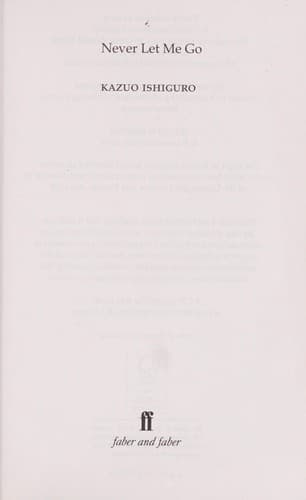
Book 1·The quiet reality shift
Never Let Me Go
Kazuo Ishiguro·2005
The most quietly devastating book on this list. Ishiguro bends your mind not with spectacle but with delayed recognition: you understand the horror of the characters' situation gradually, in the same compromised rhythm that they do. The result is a book that makes acceptance itself feel uncanny. If what you mean by 'mind-bending' is a story that changes the moral temperature of ordinary reality, start here.
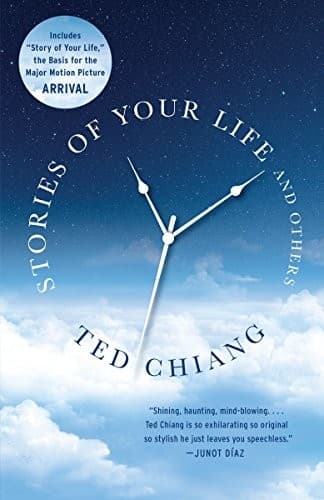
Book 2·The conceptual precision machine
Stories of Your Life and Others
Ted Chiang·2002
Ted Chiang's stories do the cleanest conceptual work in contemporary science fiction. 'Story of Your Life' alone earns this collection: a linguist learns an alien language whose grammar changes her experience of time, and the story's own structure changes with her. The mind-bending pleasure here is precise rather than chaotic. Chiang doesn't blur reality; he rewires it and then follows the consequences all the way down.
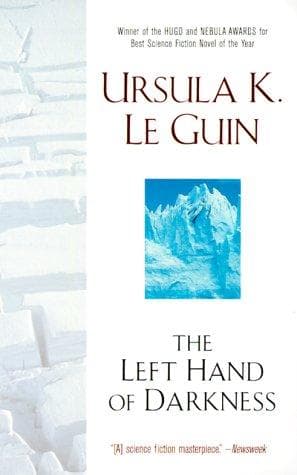
Book 3·The social assumption breaker
The Left Hand of Darkness
Ursula K. Le Guin·1969
Le Guin uses one of SF's greatest thought experiments to destabilize something most readers do not experience as contingent: gender. A human envoy arrives on a planet where no one is permanently male or female, and discovers that his own categories are far narrower than he realized. The novel bends the mind by making perception itself the unstable object. You finish it less certain that your default social assumptions were ever neutral.
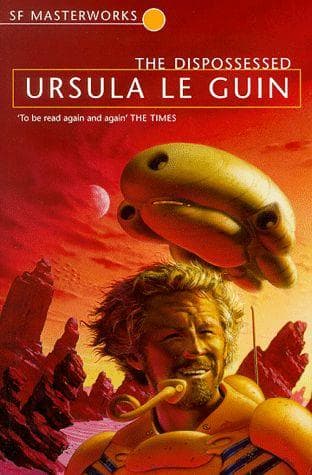
Book 4·The political worldview shift
The Dispossessed
Ursula K. Le Guin·1974
This is the most intellectually ambitious book here. Le Guin splits her novel across two worlds — one anarchist, one capitalist — and asks not which system is good, but what each system makes thinkable. The mind-bending effect is political and philosophical: you begin to notice how much of what feels like common sense is just a local habit of one social order. A book that changes the angle from which you look at freedom.
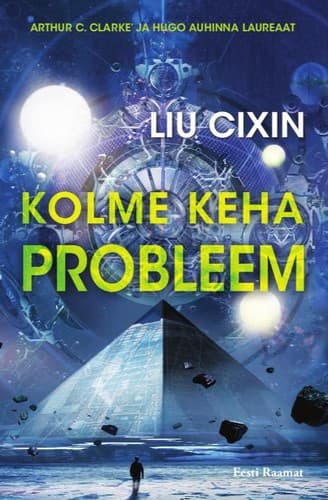
Book 5·The cosmic scale shock
The Three-Body Problem
Liu Cixin·2008·trans. Ken Liu (2014)
Liu bends the mind by scale. What starts as historical trauma and scientific sabotage opens into civilizational thinking, alien physics, and a reclassification of humanity's place in the universe. The famous game sections are not detours; they are the mechanism by which the novel trains your imagination to operate on a larger frame. Read this when you want the sensation of the floor dropping away beneath the category 'human-sized problem.'
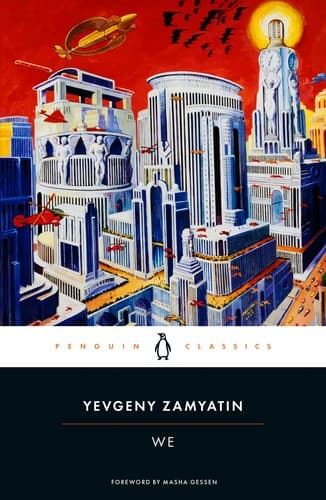
Book 6·The mind under system pressure
We
Yevgeny Zamyatin·1924
The original dystopian mind-bender remains one of the strangest. Zamyatin writes from inside a consciousness that has been engineered for rational obedience, then shows that consciousness deform as imagination returns. The glass city, the numbered citizens, the surgical removal of imagination — all of it is conceptually startling. But the deepest disturbance is formal: the prose itself begins to fracture as the narrator becomes less governable.
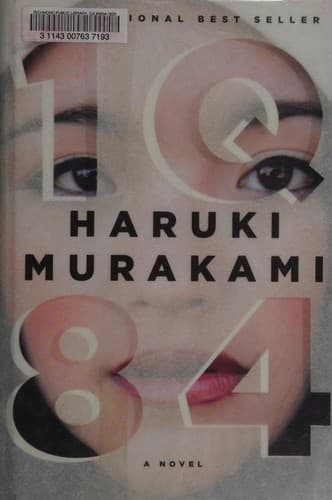
Book 7·The dream-state immersion
1Q84
Haruki Murakami·2009
Two moons in the sky is only the beginning. Murakami bends reality with his usual calm authority: a woman notices that the world is slightly wrong, a writer rewrites a manuscript that may be rewriting the world back, and the novel asks you to inhabit that wrongness for nearly a thousand pages. This is less rigorous than Le Guin or Chiang and more atmospheric than Liu. Read it when you want the disorientation to feel dreamlike, romantic, and slightly haunted.
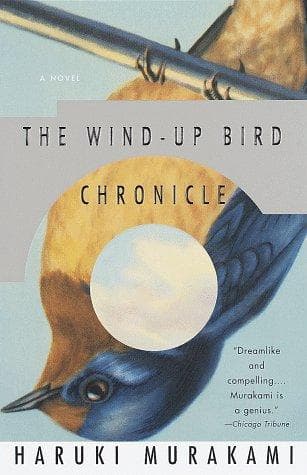
Book 8·The descent into the underlayer
The Wind-Up Bird Chronicle
Haruki Murakami·1994
Murakami's deepest descent novel. A missing cat becomes a missing wife becomes a network of wells, war memory, psychic pressure, and historical violence. What makes it mind-bending is not puzzle logic but permeability: the sense that ordinary consciousness is only a thin layer above older, darker structures. The well scenes are among the strongest examples in modern fiction of altered states rendered as fully lived spaces rather than metaphors.