Book list · Editor's pick·nonfiction
The Best Books About Innovation
Six books about how new things actually come into being — the patterns of invention, the mechanics of disruption, and the people who see what others miss.
- Books
- 6
- innovation
- business
- technology
- ideas
- nonfiction
Updated 2026-05-25
— Why read this list —
Innovation is the most overused word in business and the least examined. These books are the few that actually look at the mechanism.
How these books fit together
Read in order, the six form an argument. Kuhn supplies the deepest layer: knowledge advances by paradigm shifts, not by smooth accumulation. Christensen applies that insight to business: the institutions that excel within a paradigm are structurally unable to lead the shift to the next one. Ries gives the operational practice for the entrants who do lead the shift: build, measure, learn, and discover what to build by shipping. Taleb provides the philosophical correction: optimization narrows you, and the entrants succeed because they are exposed to enough chaos that the right idea has room to surface. Kim shows what the work actually looks like inside an organization trying to do this. Chiang dramatizes what the moment of insight feels like.
You can read any one of them on its own, but the collection coheres as a single argument about how new things come into being and why the institutions designed to produce them so often fail to.
What innovation actually is, after these books
The composite picture is unsentimental. Innovation is not creativity, not vision, not the founder myth, not the brainstorming session. It is the conjunction of: a working paradigm that has accumulated structural blind spots (Kuhn, Christensen); a small group of people with low stakes in defending the existing paradigm (Christensen, Ries); a practice of probing reality cheaply and frequently to discover what works (Ries, Kim); enough exposure to disorder that the new idea has somewhere to come from (Taleb); and, occasionally, a moment of actual insight in which the shape of the problem reorganizes itself (Chiang, Kuhn). The books worth reading on this subject are the ones that take all five seriously. These are them.
The 6 books
In publication order
Book 1·Why incumbents lose, mechanically
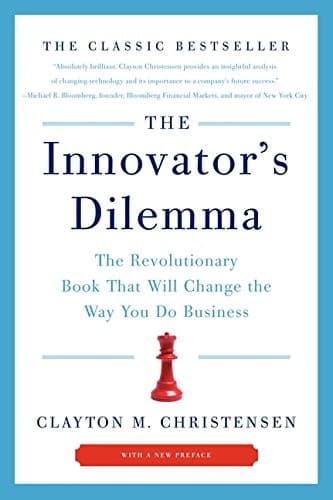
The Innovator's Dilemma
Clayton M. Christensen·1997
Start here because every subsequent book on innovation is in conversation with this one. Christensen's argument: well-run companies fail not because they are badly run but precisely because they are well-run — they correctly serve their best customers, correctly optimize their highest margins, and correctly ignore the small, low-margin market where the disruptive entrant is learning to do something good enough to eventually take their main business too. The innovation insight is structural: the same management practices that produce excellence in the current paradigm prevent the company from entering the next one. The original case studies (disk drives, steel mini-mills) still teach better than most contemporary examples.
Book 2·The operational practice of discovering what to build
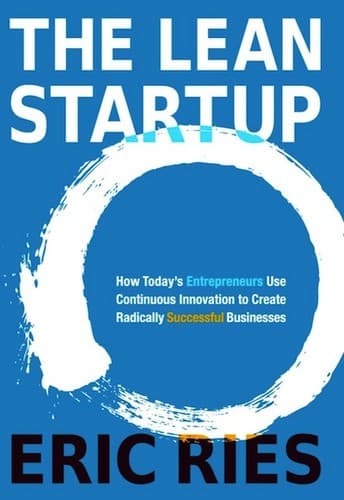
The Lean Startup
Eric Ries·2011
If Christensen explains why incumbents lose, Ries explains the practice the new entrants use to win. The innovation insight: building the right thing matters more than building the thing right, and the only honest way to discover what the right thing is involves shipping a deliberately incomplete version and watching what real users actually do with it. The book is uneven (some chapters have aged poorly, and the startup industry has overcorrected on the methodology) but the central loop — build, measure, learn — is the operational core of what 'innovation' means in practice. Read it as method, not theology.
Book 3·Why innovation requires bounded chaos
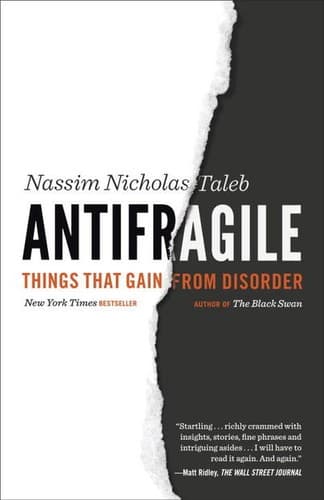
Antifragile
Nassim Nicholas Taleb·2012
Taleb's contribution to the innovation conversation is the concept that names what makes invention possible at all: antifragility, the property of systems that gain from disorder. The innovation insight: most genuine new things come not from prediction and planning but from many small bets in conditions where the downside is bounded and the upside is open-ended. Taleb is abrasive on the page and frequently overstates his case (this is his usual posture), but the underlying idea — that you cannot innovate by trying not to fail — is the necessary counterweight to the lean-startup over-optimization that Ries inadvertently encouraged.
Book 4·Innovation as removing constraints to flow
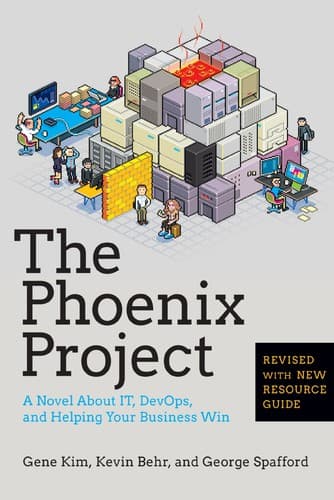
The Phoenix Project
Gene Kim·2013
Innovation in a large organization is mostly the work of removing the things preventing innovation, and The Phoenix Project is the best book on that work. Written as a novel about an IT manager taking over a failing project, it dramatizes the DevOps insight — that the flow of work through an organization is a real, measurable thing, and that most companies have organized themselves to constrain flow in ways no one designed deliberately. The innovation insight: the bottleneck is almost always somewhere other than where you are looking. Read it for the theory of constraints applied to knowledge work.
Book 5·What scientific insight feels like from inside
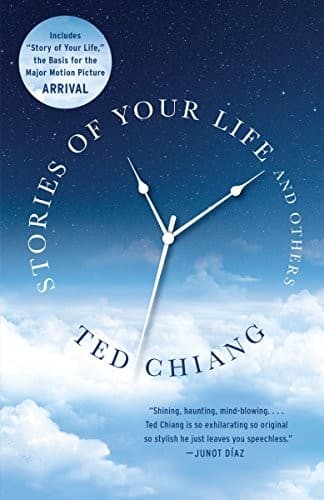
Stories of Your Life and Others
Ted Chiang·2002
An unusual entry but the right one. Chiang's stories — particularly 'Story of Your Life,' the basis for the film Arrival, and 'Understand' — are the best fictional treatment we have of what scientific insight actually feels like from inside. The innovation insight: a real new idea is not a faster version of an existing idea, it is a different shape of thinking that reorganizes everything around it. Chiang dramatizes this experience with a rigor most nonfiction misses. Read the title story for what it feels like when the world is being seen differently for the first time. That is what innovation, when it is real, is.
Book 6·Why real innovation is paradigmatic, not incremental
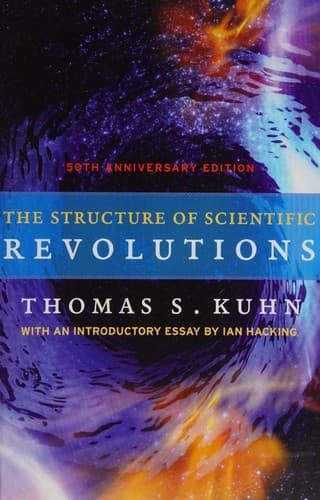
The Structure of Scientific Revolutions
Thomas S. Kuhn·1962
End here because Kuhn is the most important. The book gave the world the word 'paradigm shift' and the underlying argument is the deep version of everything Christensen later applied to business: that knowledge does not advance smoothly, that the working paradigm both enables and prevents particular kinds of discovery, and that the transition from one paradigm to the next is not a calm rational process but a rupture that the holders of the old paradigm resist because their professional lives are built on it. The innovation insight: the paradigm you are working inside is the thing you cannot see, and seeing it is what innovation actually requires.