Book list · Editor's pick·Fiction
The Best Books for 8-Year-Olds
Seven books an eight-year-old can actually finish — and remember the rest of their life.
- Books
- 7
- middle-grade
- ages-8
- ages-8-12
- kids-books
- gift-ideas
Updated 2026-05-24
— Why read this list —
Eight is the age where a child stops reading because someone hands them a book and starts reading because they want to know what happens next. These are the books that flip that switch.
How to pick from this list
Eight is a wide band. An eight-year-old who has been read to since birth is a different reader from an eight-year-old who has just discovered that books can be interesting, and the books here meet both children where they are.
If you are buying for a child who is already reading independently and finishing chapter books, start with Harry Potter or The Phantom Tollbooth. Both reward independent reading and give the child the experience of finishing a real book on their own. If the child is still reading aloud with a parent — or somewhere between the two — Charlotte's Web and The Lion, the Witch and the Wardrobe are the obvious choices: short enough to finish in a week of bedtimes, rich enough to deserve the attention.
The Secret Garden and The Jungle Book are the slower entries here. Both are over a century old, both ask the reader to adjust to an older prose rhythm, and both are best for a child who is willing to be patient. They reward patience disproportionately. Save Inkheart for the end of the year — at twelve hours it is the longest book on this list, and it lands hardest on a child who has already learned to love reading from the other six.
On the ordering
The books are not in difficulty order — they are in the order I would hand them to a child over the course of a year. Harry Potter first because it is the most likely to make a reader. Charlotte's Web second because three hours of perfect prose is the right reward for finishing a longer book. The Phantom Tollbooth third because by then the child is reading for fun, and Juster's wordplay is best appreciated by a reader who is no longer working at the basic level of the sentence.
Narnia and The Secret Garden follow as the classic British children's tradition — both Edwardian or post-war, both written when children were expected to handle real difficulty in their reading. The Jungle Book is the oldest entry and the most episodic, which makes it good for the dog days of summer when an eight-year-old wants something they can pick up and put down. Inkheart is the graduation: the book that says, you are no longer a beginning reader.
The seven together are roughly forty-four hours of reading. A motivated eight-year-old will finish them in a year. A more deliberate reader will take longer. Neither pace is wrong.
The 7 books
In publication order
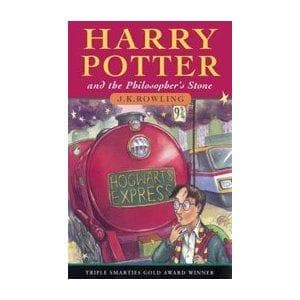
Book 1·The book that makes them a reader
Harry Potter and the Philosopher's Stone
J.K. Rowling·1997
Eight is the age the first Harry Potter book was written for, and it shows in every chapter. The vocabulary is reachable but not condescending, the chapters are short enough to finish in one sitting, and Harry himself is almost exactly the age of the reader. What an eight-year-old needs from a first long book is the experience of finishing one — and Rowling engineered this one to be finishable. The mystery is actually solvable if a child pays attention, which rewards the kind of careful reading you want to encourage. Start here, but be honest with yourself: Books 5–7 are dark, and an eight-year-old should not read ahead without an adult reading alongside.
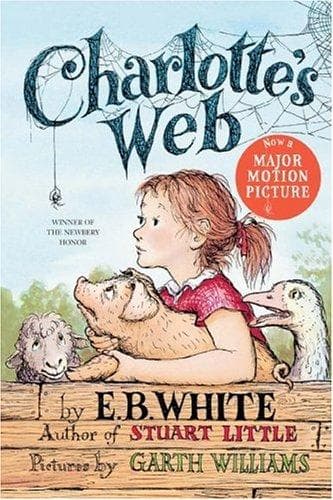
Book 2·The one that teaches them about loss
Charlotte's Web
E.B. White·1952
Three hours of reading, an entire emotional education. White wrote a book that is honest about death without being cruel about it — Wilbur's grief at the end is real, and the book does not flinch from it. Eight is around the age children become genuinely curious about mortality and want adults to take their questions seriously. Charlotte's Web does that without ever sounding like a lesson. The prose is also among the most elegant in American children's literature, so it rewards reading aloud as much as reading alone. If a child finishes only one book this year, this is the one that will stay with them.
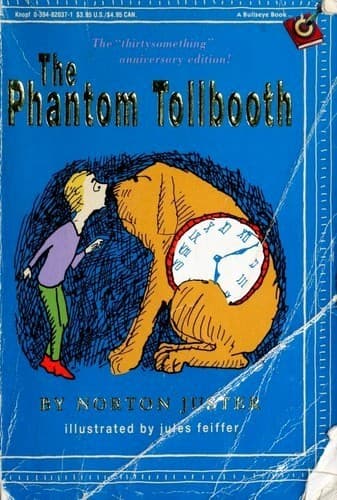
Book 3·The one that wakes up their brain
The Phantom Tollbooth
Norton Juster·1961
Milo is bored. Then a tollbooth appears in his bedroom and he drives through it into a kingdom where words and numbers are at war. Juster wrote this for eight-year-olds in the specific developmental moment when they are starting to notice that language is strange — that puns are possible, that idioms are literal, that 'jumping to conclusions' could mean something else entirely. The book teaches a child to pay attention to words by making attention the actual subject. Best for a child who is already reading on their own and ready to laugh at the kind of joke they can only get because they've started to understand how language works.
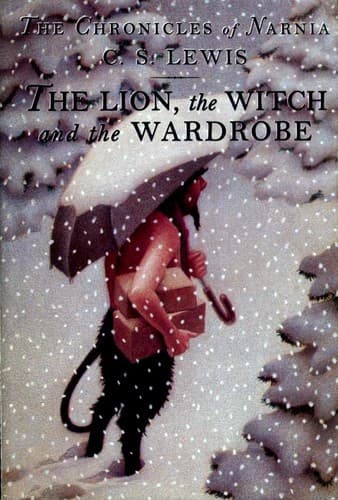
Book 4·The classic adventure
The Lion, the Witch and the Wardrobe
C.S. Lewis·1950
Four children, a wardrobe, a country in eternal winter. Lewis wrote in a register that eight-year-olds particularly respond to: serious without being heavy, magical without being arbitrary, morally clear without being preachy. The White Witch is one of the great villains in children's literature precisely because she is genuinely scary — Lewis trusts the reader to handle real menace. Aslan's death and return is the emotional center of the book and works for children who know nothing about its Christian source. The shortest and most self-contained entry into Narnia; an eight-year-old does not need to commit to the whole series to get the whole experience.
Book 5·The one about getting better
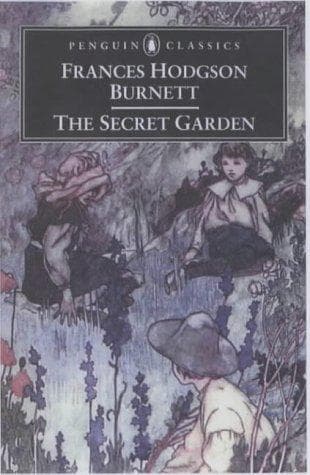
The Secret Garden
Frances Hodgson Burnett·1911
Mary Lennox is spoiled, sickly, and unlikable when the book begins — and Burnett refuses to fix her quickly. This is the book's gift to an eight-year-old: the assurance that being difficult is not a permanent condition, that healing takes seasons, that nature and friendship can do the work no adult had managed. The prose is older and slower than the contemporary entries on this list, which is part of why it's valuable; an eight-year-old who can stay with this book is being stretched into a different kind of attention. The colonial-era attitudes in the early chapters are dated and worth a conversation with an adult.
Book 6·The episodic adventure
The Jungle Book
Rudyard Kipling·1894
Mowgli is a boy raised by wolves in the Indian jungle, taught the Law of the Jungle by Baloo the bear and Bagheera the panther. Kipling wrote these stories for his own daughter and they retain the rhythm of bedtime — each chapter is a complete tale, episodic enough that an eight-year-old can pick the book up and put it down without losing the thread. The animal characters have distinct moral personalities, which is the kind of clarity eight-year-olds appreciate without being patronized by. Like Burnett, Kipling carries his era's colonial assumptions; reading him with a parent who can name that context is the right approach.
Book 7·The reach book for confident readers
Inkheart
Cornelia Funke·2003
Meggie's father can read characters out of books — literally pull them onto the physical plane — and a villain he once read out of a story has come for them. Funke wrote a book for children who have already discovered that reading can be more vivid than the room they're sitting in. At twelve hours, it is the longest book on this list and the right reach for an eight-year-old who has demonstrated reading stamina with shorter books. Save this one for late in the year, or for a strong reader who has already finished Harry Potter and is asking what's next. The book is also, at heart, an argument for the worth of the act they are performing while reading it.