Book list · Editor's pick·Fiction
Books Like Infinite Jest
For readers who finished Wallace and want more — long, demanding, formally ambitious novels with footnotes and the kitchen sink.
- Books
- 5
- infinite-jest
- david-foster-wallace
- long-reads
- maximalist-fiction
- what-to-read-next
Updated 2026-05-25
— Why read this list —
Infinite Jest is not a one-off. It belongs to a tradition of encyclopedic novels that try to fit an entire civilization between two covers. Here are five other entries in that tradition.
What "books like Infinite Jest" actually means
It does not mean books about tennis academies or substance recovery, and it does not mean books that share Wallace's specific voice — that voice is unrepeatable and most attempts to imitate it produce embarrassing results. What the books on this list share with Infinite Jest is a commitment to the encyclopedic novel as a form: the conviction that a single book can and should try to contain a culture, that digression is part of the argument rather than a defect, and that the reader is being asked to live inside the book for a long time rather than visit it for an evening.
This is a particular tradition with a particular history. Proust opens it in the modern era; Joyce takes it in a formally experimental direction; Tolstoy and Dostoevsky do the philosophical and historical versions in nineteenth-century Russian; Murakami carries it forward in a different cultural register. Wallace is the most recent canonical entry. Books like Pynchon's Gravity's Rainbow and Bolaño's 2666 also belong on the longer version of this list — they are not in our catalog yet but worth knowing the names of if this is the kind of book you are looking for.
How to choose your next one
If you want the closest stylistic match to Wallace, start with Ulysses — the shifting registers and structural play are the most direct ancestor of what Infinite Jest does formally. If you want the closest match in patience and attention, start with Proust — the willingness to spend forty pages on one party or one walk is the same quality of attention Wallace asked of you. If you want the closest match in philosophical ambition, start with Karamazov. If you want the world-sized scope without the formal difficulty, War and Peace is the most readable of the long books here. If you want the most contemporary entry — written in the same century as Wallace, in conversation with similar anxieties about loneliness and consciousness — Murakami is the place to go.
Budget time. The shortest book here is fifteen hours; the longest is sixty. These are not books you finish in a weekend, and they are not supposed to be.
The 5 books
In publication order
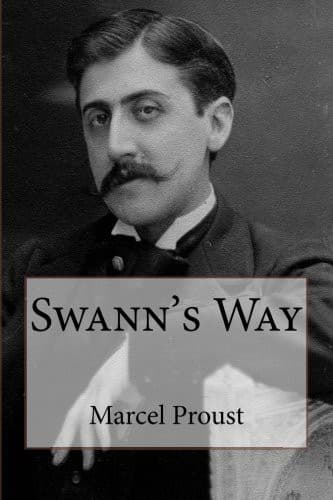
Book 1·The origin of the encyclopedic novel
Swann's Way
Marcel Proust·1913
The original encyclopedic novel and the one Wallace himself returned to. Proust is doing at the level of a single consciousness what Wallace does at the level of a culture: trying to register everything, follow every digression to its end, refuse to choose between the trivial and the profound because the whole point is that the distinction is a mistake. The famous madeleine is a stand-in for the entire project — that an entire world can be unfolded from any sufficiently attended-to detail. Volume one of seven, but the seven volumes are the point. Start here if you finished Infinite Jest and want to know where the form came from.
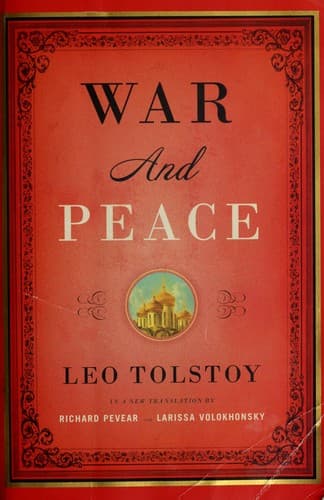
Book 2·The world-sized novel without the formal tricks
War and Peace
Leo Tolstoy·1869
The Infinite Jest quality here is the absolute confidence that a novel can contain everything: battlefields, ballrooms, philosophy of history, theology, marriage, hunting, statecraft, the inner life of a wounded man looking at the sky at Austerlitz. Tolstoy is less formally experimental than Wallace but more committed to the kitchen-sink ambition — he interrupts the novel for full essays on his theory of history because the essays are part of the argument. If what you loved about Infinite Jest was the sense that a book could be the size of a world, War and Peace is the version of that ambition that does not need footnotes to achieve it.
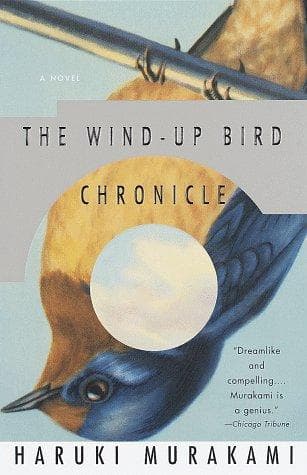
Book 3·Interior maximalism without the formal tricks
The Wind-Up Bird Chronicle
Haruki Murakami·1994
The Infinite Jest quality Murakami carries: interior maximalism, the willingness to follow a digression about a dry well or a Mongolian POW camp for as long as the digression demands, the conviction that the novel's structure is allowed to drift because consciousness itself drifts. Toru Okada's search for his missing cat becomes a search for his missing wife becomes a search for Japan's unprocessed twentieth century, and Murakami refuses to tidy up any of these threads. The most Wallace-like aspect: a recursive, footnote-shaped attention to detail without the actual footnotes. Read for the patience the book asks of you, which is the patience Wallace also asked.
Book 4·Formal experimentation as ancestor
Ulysses
James Joyce·1922
The formal-experimentation ancestor. Joyce changes prose style every chapter, parodies the entire history of English literature in one section, writes another as a play, ends the book with a forty-page unpunctuated monologue. Wallace's footnotes and shifting registers are doing the descendant version of what Joyce did first. The Infinite Jest quality is the same insistence that the form of the book can be part of its argument — that a single day in Dublin requires the entire toolkit of prose to render honestly. Use a guide on the first read (Gifford's annotations or the Blamires book); this is one of the few cases where reading help is genuinely useful rather than a crutch.
Book 5·Philosophical maximalism at full weight
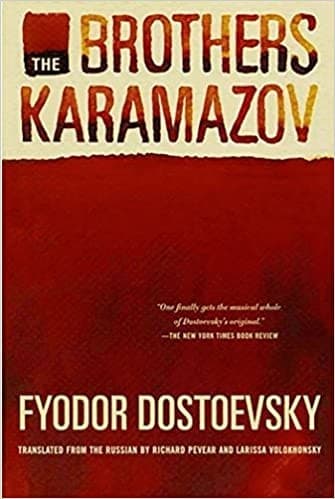
The Brothers Karamazov
Fyodor Dostoevsky·1880
The philosophical-maximalism entry. Dostoevsky stops the novel in the middle for a full chapter of theological argument (the Grand Inquisitor), spends another chapter on a saint's biography, and lets characters deliver speeches that would be unbearable from a lesser writer because every position is taken seriously. The Infinite Jest quality is the conviction that a novel is the right form for thinking through the largest questions — addiction, free will, the existence of God, what fathers owe sons — at full philosophical weight rather than as background coloring. If Infinite Jest's interest in AA, depression, and the structure of want made it your kind of book, Karamazov is the great-grandfather of that interest.