Book list · Editor's pick·Vol. 001·literary-fiction
Novels Where the City Feels Like a Psychological Maze
Five novels where streets, neighborhoods, weather, and architecture do not just hold the plot — they alter the mind moving through them.
- Books
- 5
- Total reading
- 122h
- Authors
- 4
- Time span
- 1922–2009
- city-novels
- urban-fiction
- psychological-fiction
- labyrinths
- literary-fiction
- atmospheric-books
Updated 2026-06-02
— Why read this list —
Some cities in fiction are settings. These cities are systems of pressure, memory, seduction, and disorientation.
What makes a city feel like a psychological maze
There is a difference between a novel set in a city and a novel in which the city changes the mind moving through it.
In the second kind, streets do not simply connect locations. They create uncertainty. Architecture stores memory. Repetition matters. Weather closes systems. Transportation routes become metaphysical routes. Neighborhoods feel less like districts and more like states of consciousness.
That is the standard for this list.
Murakami's Tokyo keeps opening hidden passageways between the domestic and the uncanny. Joyce's Dublin is consciousness made geographic. Zafón's Barcelona turns literary obsession into urban architecture. Pamuk's Kars becomes a sealed political chamber in which every movement has ideological consequence. These are not backdrop cities. They are active structures of experience.
The books also show that "maze" does not have to mean thriller plotting. Sometimes the maze is spatial. Sometimes it is emotional. Sometimes it is political. Sometimes it is simply the experience of realizing that the city is thinking through you while you think you are moving through it.
Start here
If you want the most accessible doorway, start with The Shadow of the Wind. It gives you the clearest pleasures of the premise: hidden books, old Barcelona, gothic atmosphere, pursuit, and secrets stored in architecture.
If you want the uncanny literary version, start with The Wind-Up Bird Chronicle. It is less immediately propulsive, but it turns ordinary streets and domestic spaces into thresholds.
If you want the most ambitious version, save Ulysses for when you want the city and the mind to become the same problem.
Fit and skip guide
| Book | Best fit | Reading burden | Pace | Skip if |
|---|---|---|---|---|
| The Shadow of the Wind | Readers who want gothic atmosphere and literary mystery | Medium | Page-turning | You want realism without melodrama |
| The Wind-Up Bird Chronicle | Readers who want uncanny Tokyo and psychic depth | Heavy | Slow, hypnotic | You need a tight plot or clear answers |
| 1Q84 | Readers who want a long parallel-city dream | Heavy | Very slow burn | You do not want a sprawling commitment |
| Ulysses | Readers who want the city as consciousness itself | Very heavy | Difficult, episodic | You want ordinary narrative momentum |
| Snow | Readers who want political enclosure and ideological pressure | Heavy | Deliberate | You want the maze to be gothic or fantastical |
How to choose your version of urban disorientation
If you want the most atmospheric and accessible entry, start with The Shadow of the Wind. It gives you the pleasures most readers associate with the idea immediately: hidden libraries, secret histories, alleys, staircases, old buildings, pursuit.
If you want the most uncannily modern version, go to Murakami. Both The Wind-Up Bird Chronicle and 1Q84 understand the city as something slightly misaligned with itself. The unease comes from how calmly the novels treat that misalignment.
If you want the highest literary ambition, read Ulysses. No book on this list is more committed to the idea that the city outside and the mind inside are structurally the same problem.
And if you want the city as a trap built from politics rather than dream logic, read Snow. Pamuk shows how quickly urban space can become claustrophobic when weather, ideology, and surveillance close around it at once.
Why these five belong together
All five novels make movement through a city feel interpretive.
You are not just trying to get from one place to another. You are trying to understand what the space is doing to the person inside it.
That is obvious in Zafón, where Barcelona is openly labyrinthine, and in Joyce, where Dublin is rendered with totalizing specificity. But it is equally true in Murakami, where side streets, wells, and expressways are emotional and metaphysical thresholds, and in Pamuk, where the city becomes a closed field of belief, desire, and state pressure.
Together the books suggest that the deepest city novels are not about urban scale. They are about urban recursion: the way a place sends you back through memory, ideology, obsession, or dream until orientation itself becomes unstable.
That is what makes these cities feel like psychological mazes rather than just impressive settings.
Reading paths
Three orders. Pick one before you start.
If you want uncanny urban atmosphere first
Start with The Wind-Up Bird Chronicle, then 1Q84, then The Shadow of the Wind. This path emphasizes atmosphere, hidden structures, and the sensation that the city's ordinary surfaces are unreliable.
Book 1›Book 2›Book 4
If you want the most intellectually demanding version
Read Ulysses, then Snow, then The Wind-Up Bird Chronicle. These three books treat urban navigation as a problem of perception, politics, and interiority rather than simply plot.
Book 3›Book 5›Book 1
If you want architecture first and ideology second
Go from The Shadow of the Wind to 1Q84 to Snow. This path moves from gothic labyrinth to parallel-city unease to political enclosure.
Book 4›Book 2›Book 5
The 5 books
In publication order
Book 1·The underworld beneath the neighborhood
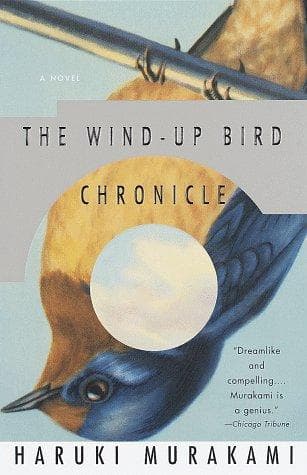
The Wind-Up Bird Chronicle
Haruki Murakami·1994
Murakami turns suburban Tokyo into a layered maze of wells, side streets, empty houses, phone calls, and buried wartime memory. What begins as a domestic search narrative becomes a descent through invisible passages connecting private life to historical violence. The city feels maze-like not because it is large, but because ordinary space keeps revealing concealed depth.
Book 2·The parallel-city hallucination
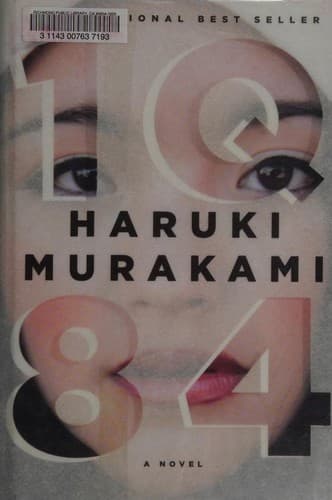
1Q84
Haruki Murakami·2009
Tokyo becomes a parallel system the moment Aomame notices that the world has shifted and there are two moons overhead. Expressways, apartments, safe houses, taxis, and anonymous office blocks all become part of a navigational problem that is also a metaphysical one. Murakami makes the city feel like a map with one layer too many.

Book 3·The city as consciousness
Ulysses
James Joyce·1922
No novel has rendered a city and consciousness as inseparable more completely than Joyce renders Dublin. Streets, pubs, newspaper offices, brothels, and shorelines become the external form of mental life itself. The maze here is not suspenseful or gothic; it is cognitive. You move through Dublin exactly as Bloom and Stephen think through it: by association, interruption, recurrence, and drift.
Book 4·The gothic book-labyrinth
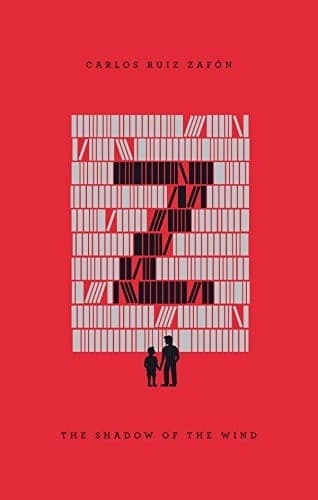
The Shadow of the Wind
Carlos Ruiz Zafón·2001
Barcelona is all alleys, archives, stairwells, ruined mansions, police shadows, and hidden literary passageways. Zafón's city is overtly labyrinthine: a place where books lead to lives, lives lead to secrets, and secrets lead back into architecture. The psychological effect comes from atmosphere and repetition — the city keeps folding Daniel back into older lives he barely understands.
Book 5·The politically enclosed city
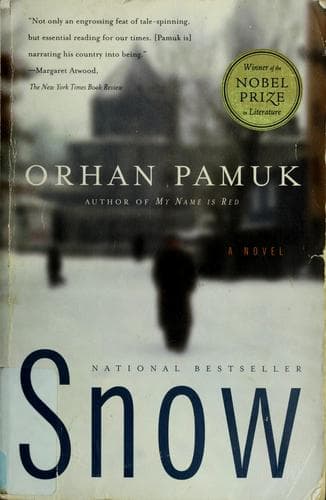
Snow
Orhan Pamuk·2002
Pamuk's Kars is not sprawling, but it is mentally inescapable. Snow cuts the city off from the rest of the country, and every street, hotel room, tea house, and theatre becomes part of a political and emotional enclosure. The maze here is ideological: Ka cannot move through the city without being pulled into incompatible stories about faith, love, modernity, and power.