Book list · Editor's pick·Vol. 001·Fiction
Books Like The Road by Cormac McCarthy
Five novels with the same stripped intensity — and something The Road doesn't have.
- Books
- 5
- post-apocalyptic
- dystopian
- literary-fiction
- survival
Updated 2026-05-23
— Why read this list —
The Road is about what remains when everything is stripped away. These books ask the same question and come up with different answers.
What The Road actually does
McCarthy's novel works through two interacting techniques. The first is the language: stripped of punctuation, of quotation marks, of all but the minimum necessary to convey action and thought, it creates a reading experience that feels like reading under duress. The second is the emotional anchor: the relationship between the father and the boy is the only warmth in the book, which means McCarthy controls the reader's temperature almost completely by controlling how much of that warmth he allows at any given moment.
What you're looking for in The Road's wake is usually one of these things: the same stripped, minimal prose style; the same apocalyptic setting with its question of what survives; or the same emotional compression — the feeling that the stakes are total and the resources for meeting them are almost nothing. The five books here each offer at least one of these qualities, plus something the original doesn't attempt.
What each book adds
The pattern in these selections is additive, not substitutive. Station Eleven adds hope and beauty where McCarthy has none. Butler adds race, class, and the project of building rather than just surviving. Ishiguro adds a different kind of dread — the quiet acceptance of diminishment rather than the violent imposition of it. Le Guin adds political rigor. Zamyatin adds historical depth, reminding you that the impulse behind dystopian fiction is old and was responding to real systems, not imagined ones.
None of these books is The Road. The Road has a specific quality of relentlessness that is probably unrepeatable — McCarthy wrote it in a particular phase of his career and it shows. But each of these books offers a genuine experience of its own that readers of The Road tend to recognize and respond to.
The 5 books
In publication order
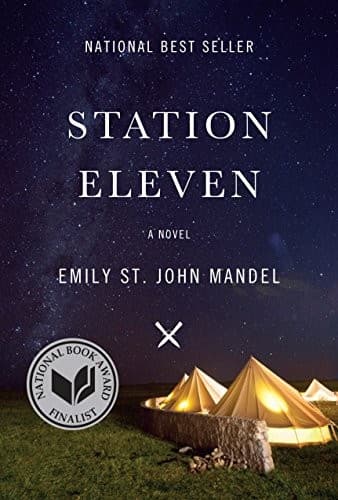
Book 1·Art as survival
Station Eleven
Emily St. John Mandel·2014
Like The Road: a pandemic wipes out most of civilization, and the novel asks what survives. What it adds: Mandel is interested in beauty and art as survival necessities, not just food and warmth. The Road is relentlessly present-tense; Station Eleven moves between before and after, building the argument that what we lose when civilization falls is the specific accumulated texture of ordinary life. It's the more hopeful of the two books, and its hope feels earned rather than sentimental.
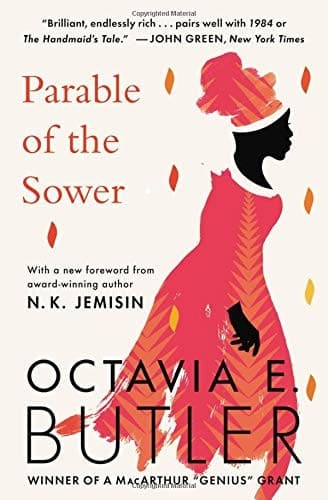
Book 2·Building something new
Parable of the Sower
Octavia E. Butler·1993
Like The Road: civilization is collapsing and a small group moves through a dangerous landscape, and the novel is fundamentally about what it takes to survive with your humanity intact. What it adds: Butler's protagonist Lauren is an architect of new community, not just a survivor. She builds a belief system as she walks. The Road shows what you'd protect; Parable shows what you'd build. Butler also writes about race and class in the collapse in ways McCarthy doesn't engage.
Book 3·Dread without drama
Never Let Me Go
Kazuo Ishiguro·2005
Like The Road: the novel generates dread through what characters accept rather than what they resist, and the writing is spare enough that the horror accumulates without melodrama. What it adds: Never Let Me Go is a quieter catastrophe — no ash, no violence, just the steady revelation of what the characters' lives actually mean and what they will not be allowed to have. The Road's boy might escape; Ishiguro's characters have no equivalent possibility. It's a different, slower kind of terror.
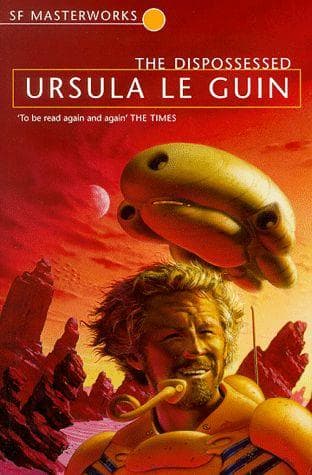
Book 4·Scarcity as argument
The Dispossessed
Ursula K. Le Guin·1974
Like The Road: a man moves through a harsh, resource-scarce world carrying his values against resistance, and the novel is fundamentally about what makes human life worth living under constraint. What it adds: Le Guin is doing political philosophy inside the story in a way McCarthy isn't — her world is scarce by design, as a social experiment, not by catastrophe. The questions The Road raises intuitively about civilization and survival, The Dispossessed examines deliberately.
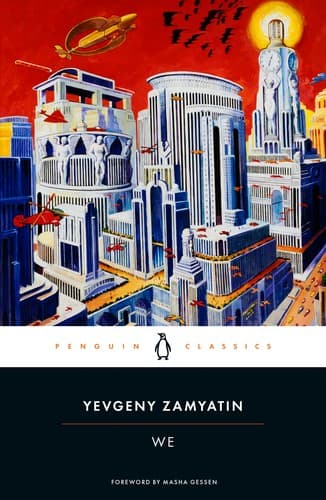
Book 5·The tidy horror
We
Yevgeny Zamyatin·1924
Like The Road: a world in which the structures meant to sustain human life have become the primary threat to it, and the novel follows a single consciousness trying to locate something authentic inside a system that wants to eliminate authentic experience. What it adds: We is the formal ancestor of Orwell and Huxley, which means reading it gives you the blueprint of the entire dystopian genre. The Road strips everything away violently; We shows a world that has stripped everything away tidily, which is in some ways more frightening.