Book list · Editor's pick·Vol. 001·Fiction
Books Like Harry Potter for Adults
From the closest match to the most literary departure — each preserves something specific from Rowling.
- Books
- 5
- fantasy
- coming-of-age
- magic
- world-building
- harry-potter
Updated 2026-05-23
— Why read this list —
The question isn't 'is it like Harry Potter' — it's which part of Harry Potter you're actually looking for.
Which Part of Harry Potter Are You Looking For?
The answer to "give me something like Harry Potter" depends on which part of that experience you're actually chasing. If it's world-logic — the pleasure of a parallel reality with its own consistent rules — The Golden Compass is your answer. If it's the school setting as a lens on identity and belonging, A Wizard of Earthsea came first and goes deeper. If it's the warmth, the sense that what matters is people and art and the small human things, Station Eleven will give you that in a completely different register.
We've ordered this list from closest structural match to most literary departure, because that's the most useful way to navigate it. Pullman gives you the most immediately similar experience: a child protagonist with a destiny, institutional evil, an expanding world. Le Guin's Left Hand of Darkness is the most distant — it requires more of the reader, and it doesn't look much like Harry Potter on the surface — but it's asking the same underlying questions about what it means to belong somewhere and to someone.
Why These Books and Not the Obvious Fantasy Alternatives
The question "books like Harry Potter for adults" usually generates a list of epic fantasy series: Sanderson, Jordan, Martin. Those are fine books, but they're not what adults who grew up on Harry Potter are usually looking for. They tend to be longer, more plot-driven, less interested in character interiority, and less emotionally warm.
The books on this list share Rowling's interest in young people becoming themselves, in institutions (schools, governments, religious authorities) as forces that can nurture or destroy, and in friendship as something earned and specific rather than assumed. They're all shorter than the average fantasy doorstopper. And they're all books that have survived critical scrutiny across decades — not because they're difficult, but because they have something real to say.
If you read only one: The Golden Compass. It's the most immediately satisfying match, and it leads into a trilogy that goes places Harry Potter doesn't.
The 5 books
In publication order
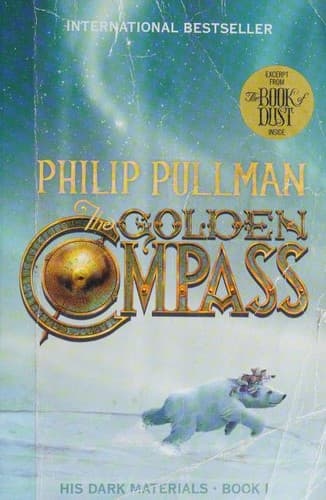
Book 1·Closest structural match, higher darkness
The Golden Compass
Philip Pullman·1995
The closest structural match to Harry Potter in literary fiction: a child protagonist with a special destiny, an intricate alternate world with its own rules, institutional evil in a recognizable form, and stakes that keep escalating. Pullman writes with more moral complexity than Rowling — the villains aren't obviously villains until they are — and the world he builds is more philosophically ambitious.
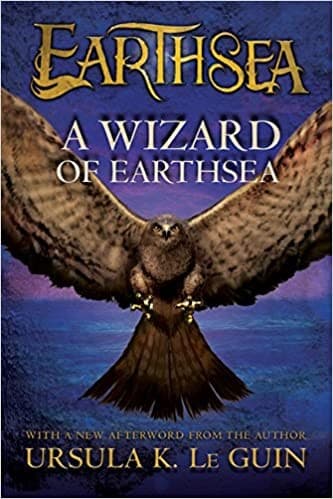
Book 2·The grammar Rowling inherited
A Wizard of Earthsea
Ursula K. Le Guin·1968
A young boy with exceptional magical ability goes to a wizard school — Le Guin wrote this in 1968, establishing much of the grammar Rowling would later use. What Earthsea shares with Harry Potter is the sense that magic has a real cost and a real logic. What it adds is a psychological depth Rowling's series reaches for but rarely achieves: the shadow Ged chases is himself.
Book 3·The school-story turned inside out
Never Let Me Go
Kazuo Ishiguro·2005
What it shares with Harry Potter: a special school, children who are different from the ordinary world, and a slow revelation of what that difference actually means. What it doesn't share: any comfort. Ishiguro uses the school-story scaffolding to build something deeply unsettling about what society does to people it has decided are not fully human.
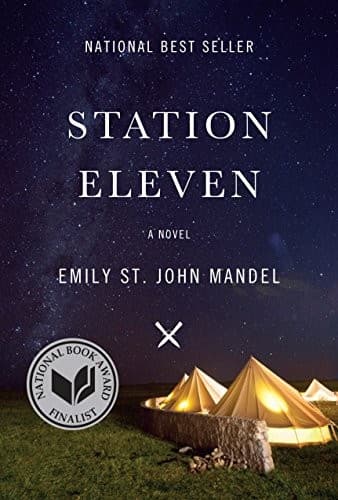
Book 4·The same warmth, a different world
Station Eleven
Emily St. John Mandel·2014
What Mandel shares with Rowling is a conviction that art and culture and the small pleasures of civilization are worth protecting — that what makes life worth living is irreducible to survival. Her post-collapse world preserves Shakespeare not because it's useful but because it's beautiful. It's a very different book, but it carries the same underlying warmth.
Book 5·The adult version of what HP is about
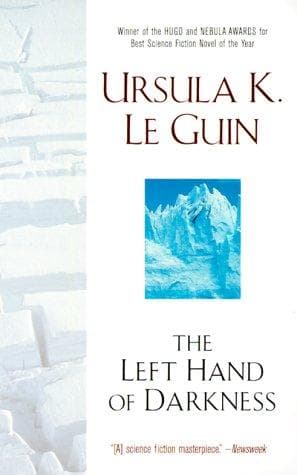
The Left Hand of Darkness
Ursula K. Le Guin·1969
The most literary departure on this list, but it shares the quality that makes Harry Potter stay with readers: Le Guin builds a world with such internal consistency and such care for its inhabitants that you grieve leaving it. Her themes — identity, loyalty, what we owe each other across difference — are the grown-up version of what Rowling is trying to say about friendship and belonging.