Book list · Editor's pick·Fiction
The Best Books About Colonialism
Five novels that look at empire as a mechanism — what it does to colonizers and colonized, and what it costs to refuse to look away.
- Books
- 5
- colonialism
- empire
- post-colonial
- history-fiction
bibliotecas editorial
Updated 2026-05-25
— Why read this list —
Colonialism is not a backdrop or a moral lesson. It is a system that produced specific people, specific ruined lives, and specific literature that refuses to let any of it dissolve into history.
Reading these together, in this order
The order matters. Conrad first because he is the European witness from inside the system, and his moral failure of imagination — the inability to see African characters as fully people — is itself part of what colonialism produced. Morrison and Butler next because they are the necessary inversion: the system experienced by the people the system was designed to destroy, written by Black American novelists working in the long shadow of slavery as the American case of colonial logic. Le Guin fourth because she abstracts the question and lets you see the mechanism in a setting that is not loaded with the specific historical claims of the others. Kipling last because by the time you reach him, the question of how empire described itself to itself is one you are equipped to answer.
What these books are not
They are not balanced. Colonialism was not a debate between two positions of equal merit, and a novel that pretends otherwise is doing apologetics. The books here range across that fact. Conrad sees the void but cannot quite see the people. Morrison and Butler see the people without compromise. Le Guin builds the alternative. Kipling believed in the project. The collection is honest about this range because pretending otherwise — treating empire as a closed historical question with a settled meaning — is itself a colonial habit. The question is still live, the inheritance is still operating, and these books are the literature that takes both seriously.
The 5 books
In publication order

Book 1·Empire as moral void, with the limits of the colonial witness
Heart of Darkness
Joseph Conrad·1899
Begin with Conrad and read him uneasily. The novel is short, the prose dense, and the central insight — that European empire in the Congo was a moral void dressed in commercial language — was unusual to put into print in 1899. The colonialism question Conrad isolates: the system requires Kurtz, and Kurtz is what the system reveals about itself when no one is watching. The book has been correctly criticized (most famously by Chinua Achebe) for using Africa as the setting for a European crisis of conscience rather than as a place with its own people. Read it alongside that criticism, not instead of it.
Book 2·The system from the inside, with no way out of memory
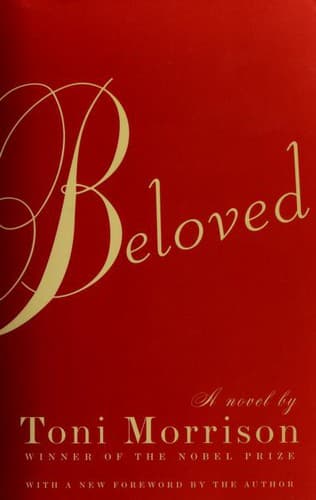
Beloved
Toni Morrison·1987
Morrison is the necessary correction to Conrad: where Conrad observes the system from the European side, Morrison stays inside the consciousness of people the system was designed to destroy. Beloved is about slavery — the American extension of the same colonial logic — and about the impossibility of leaving it behind once it has been done to you. The colonialism insight here is that the past does not pass. It returns as a child at the door. Morrison wrote this book to make the ghost literal, because the historical accounting had not been done.
Book 3·Empire's ordinariness and its inheritance
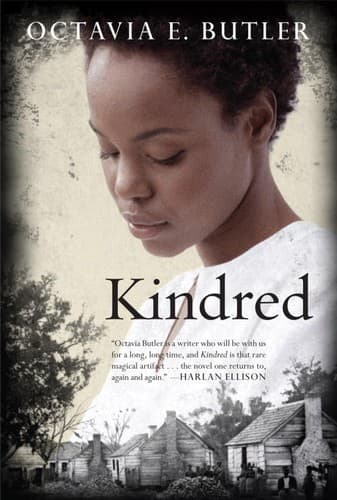
Kindred
Octavia E. Butler·1979
Butler does what no historical novel can: she sends a Black woman from 1976 Los Angeles back to a Maryland plantation in 1815 and lets her experience the system as a person who knows what it eventually becomes. The colonialism insight Kindred adds: the system was not exceptional, it was made of ordinary people doing the small things required to maintain it. The white slaveowner Rufus is a person Dana would have liked under different circumstances. That is the horror the novel is interested in — not the cartoon villain, but the system that turns liking people into a survival strategy.

Book 4·What the colonized build when they leave
The Dispossessed
Ursula K. Le Guin·1974
Le Guin moves the question off Earth and into a binary planetary system: a wealthy capitalist world and the anarchist moon settled by its exiles. The colonialism question she examines is what happens when the colonized build the alternative — the moon is a society organized around the explicit refusal of property and hierarchy, and Le Guin is honest about both what that achieves and what it costs. The physicist protagonist crossing between the two worlds is the device for examining each from the other's perspective. The most analytically clear book on this list.
Book 5·Empire describing itself to itself
The Jungle Book
Rudyard Kipling·1894
Read Kipling as a primary document. He believed in the colonial project with full sincerity, and he was one of its great prose stylists, and the combination is uniquely useful for understanding how empire described itself to the people running it. The colonialism question The Jungle Book raises is what kind of imagination empire required — the law of the jungle as a model for the British administrative order, the boy raised by wolves who can speak to both worlds. Read it not to admire and not to condemn but to see what an intelligent man who fully believed in colonialism produced when he wrote his best.