Book list · Editor's pick·Vol. 001·Fiction
Books to Understand Democracy
Five novels that name what goes wrong before it does.
- Books
- 5
- political-fiction
- democracy
- dystopia
- classics
Updated 2026-05-23
— Why read this list —
Fiction clarifies democratic failure modes more precisely than political theory because it shows you how people actually behave inside them.
Why fiction for democratic theory
The academic literature on democratic backsliding is extensive and largely confirms what these five novels describe. What the novels add is phenomenology: what it feels like to be inside a democratic failure, how ordinary people participate in it without intending to, and how each failure mode generates its own logic that makes the next step seem inevitable.
Political science can tell you that demagoguery follows certain patterns. All the King's Men shows you what it feels like to be Willie Stark's speechwriter and believe in him and also know, on some level, what you are participating in. That combination — clear description plus experiential texture — is what fiction offers that theory cannot.
Five failure modes, not one story
What makes this list analytically useful is that each book names a distinct failure mode, and the five are not the same story told differently.
Demagoguery (Warren) can happen inside a functioning democracy with regular elections. Mob rule and collective inattention (Orwell) can happen in a democracy with good institutions. Ideology replacing law (Zamyatin) is a different mechanism — it dismantles the legitimacy of procedure itself. Constitutional suspension (Atwood) operates through existing legal frameworks rather than around them. Governance breakdown (Golding) is the failure that happens when there is no existing structure to subvert — only the attempt to build one.
Reading all five produces a map of how democracies fail rather than a single cautionary tale. The map is more useful than any one story, and the five books together take about 45 hours — less than a week of serious reading.
The 5 books
In publication order

Book 1·The demagoguery mechanism
All the King's Men
Robert Penn Warren·1946
Warren dramatizes demagoguery from the inside: Willie Stark begins as a genuine reformer and becomes a machine politician through a sequence of rational-seeming choices that are also corruptions. The democratic failure mode is not the sudden tyrant but the gradual substitution of power for purpose. This is the most psychologically detailed account of how a demagogue happens — not what they are, but what they become and why followers follow.
Book 2·The consent-based backsliding
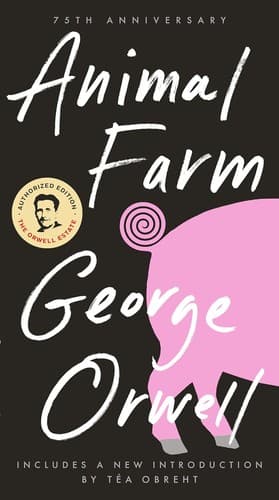
Animal Farm
George Orwell·1945
Orwell dramatizes mob rule as a democratic failure mode: the majority collectively failing to notice or name what is happening to them until the capacity to contest it is gone. The pigs do not seize power through a coup — the other animals give it away in increments, each transfer seeming reasonable in isolation. Three hours that explain how democratic backsliding works through consent rather than force.

Book 3·The ideology-over-law failure
We
Yevgeny Zamyatin·1924
Zamyatin dramatizes the democratic failure mode where ideology replaces law — where the state derives its legitimacy not from procedure or consent but from being the expression of a correct historical truth. In the One State, there are no laws because the leadership's decisions are by definition right. This is the failure mode that precedes all the others: once legality is subordinated to ideology, the other mechanisms of democratic protection dissolve.
Book 4·The constitutional suspension
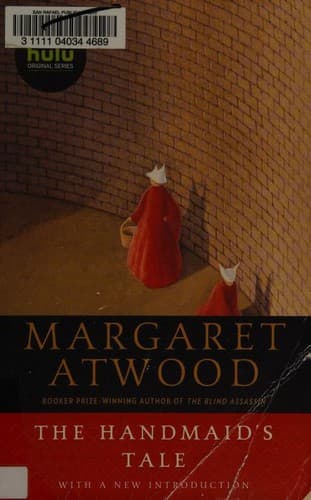
The Handmaid's Tale
Margaret Atwood·1985
Atwood dramatizes the use of bodily autonomy — specifically reproductive rights — as the mechanism through which political control is established and maintained. The democratic failure mode is the constitutional suspension: Gilead does not emerge through long accumulation but through a single crisis moment that is then made permanent. Atwood's specific contribution is showing how quickly normalization follows suspension, and who benefits from each stage.

Book 5·The legitimacy-without-enforcement gap
Lord of the Flies
William Golding·1954
Golding dramatizes governance breakdown: what happens when the structures that make democratic order possible — elections, rules, appointed roles — lose their authority because no one with force behind them is enforcing them. The democratic failure mode is the gap between formal governance and actual power. Ralph is elected; Jack has the hunters. Legitimacy without enforcement is not enough.