Book list · Editor's pick·nonfiction
Books That Changed History
Seven books whose ideas or accounts reshaped how the world thought, organized, or fought.
- Books
- 7
- influential-books
- books-that-changed-history
- must-read
- world-changing
- ideas-that-shaped-the-world
Updated 2026-05-26
— Why read this list —
These aren't books people called influential. These are books that broke things.
What makes a book "historically important"
The standard applied here is narrower than the usual one. A historically important book is not a book that sold well, won prizes, or got translated into many languages — those are markers of reach, not impact. The books on this list changed how decisions actually got made: how revolutions framed themselves, how generals planned campaigns, how scientists understood what they were doing, how courts and ministries argued about power. The test is whether the world after the book was meaningfully different from the world before it, and whether that difference can be traced specifically to the book rather than to the conditions that produced it.
By that test, most famous books fail — they are evidence of their time rather than causes of what came next. The seven here are causes: Sun Tzu shows up in operational planning two and a half millennia after he wrote, Machiavelli's vocabulary is still how diplomats describe what they do, Kuhn's framework is how every industry now talks about disruption, Frankl's theory is in active clinical practice.
A caveat: this list is biased toward the Western canon, partly because that is what our catalog emphasizes and partly because those are the books that dominated the global English-language "what should I read" conversation for centuries. A genuinely global version would include the Analects, the Quran, the Tao Te Ching, and the Bhagavad Gita. Those will come as the catalog grows.
Where to start
If you have an afternoon, start with The Art of War. Two hours, no preparation required, and you will recognize phrases you have been hearing your whole life. If you have a weekend, read Animal Farm and then The Prince back-to-back — they are a matched pair on how power actually behaves, separated by four hundred years and almost no distance in their conclusions.
If you want one book that will change how you think about your own work, read The Structure of Scientific Revolutions. Frankl is the right book for any week that requires endurance. Frankenstein is the right book if you are working anywhere near AI, biotech, or any other field that produces things it cannot fully predict.
The Republic is the heaviest lift here and the most rewarding — twenty hours of slow reading that will give you the underlying grammar of every political argument you encounter for the rest of your life. Save it for when you have time to read it well rather than fast.
The 7 books
In publication order
Book 1·Founding text of political theory
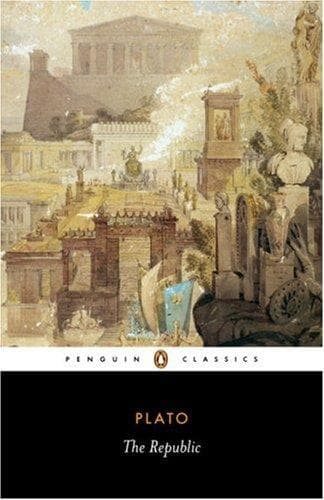
The Republic
Plato·-380
Set the agenda for Western political philosophy for 2,400 years. Every later political theorist — Hobbes, Locke, Rousseau, Marx, Rawls — is in argument with Plato's question of what justice in a polity actually requires, and most are still using his vocabulary to ask it. The allegory of the cave became the template for how educated people in the West described the difference between appearance and reality, and the philosopher-king became the recurring fantasy that every authoritarian regime since has tried to justify itself with. You cannot understand the next 2,000 years of Western thought without understanding what Plato put on the table here.
Book 2·Manual for 2,500 years of strategy
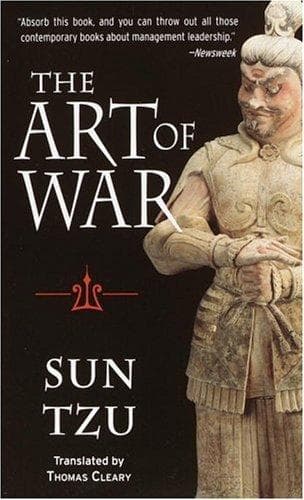
The Art of War
Sun Tzu·-500
Studied by Mao during the Long March, by Vo Nguyen Giap before Dien Bien Phu, by Norman Schwarzkopf before Desert Storm, and by every business school in the world since the 1980s. Its core proposition — that the supreme victory is the one you don't have to fight, because you've already structured the situation so the enemy cannot win — restructured how leaders across 2,500 years thought about competition, deception, and timing. The text is short enough to read in an afternoon and dense enough that military academies still teach it as a primary source. Few books this brief have shaped this many decisions.
Book 3·Invented political realism
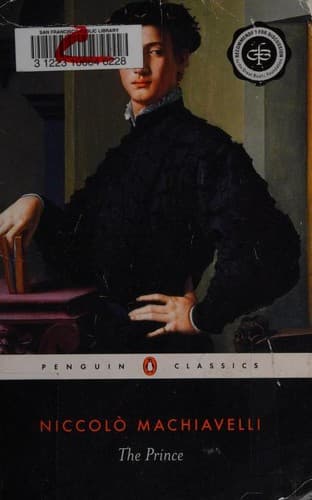
The Prince
Niccolò Machiavelli·1532
Invented modern political realism by being the first major European writer to describe how power actually worked rather than how it ought to. Before The Prince, political writing in the Christian West was largely a branch of moral philosophy — the question was how a ruler should be virtuous. Machiavelli asked instead how a ruler should be effective, and concluded that the two are often incompatible. The book was banned by the Catholic Church, plagiarized by every subsequent strategist, and gave English the word 'Machiavellian' — which is itself evidence that he named something that needed a name.
Book 4·The myth of technology turning on its maker
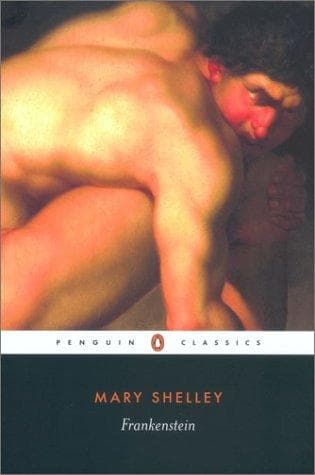
Frankenstein
Mary Shelley·1818
Invented science fiction as a genre and, more importantly, invented the modern myth of the technology that turns on its creator. Every subsequent story about AI, genetic engineering, cloning, nuclear weapons, and rogue research is descended from this one — Oppenheimer quoted it, the entire safety wing of contemporary AI research is arguing about it, and the word 'Frankenstein' became a journalistic shorthand for any technology that frightens its public. Mary Shelley was nineteen when she wrote it. The framework she put in place for thinking about created beings has outlasted the science that produced it twice over.
Book 5·How revolutions get betrayed
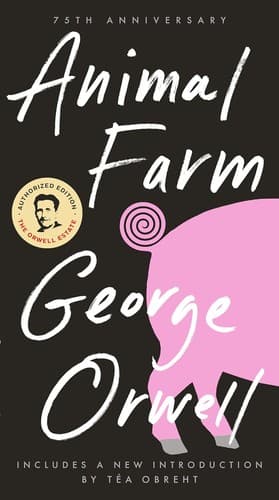
Animal Farm
George Orwell·1945
Taught two generations of readers — across the Cold War and into the present — exactly how revolutions get betrayed. The arc is so cleanly drawn that 'four legs good, two legs better' became journalistic shorthand for any movement that ends up reproducing what it overthrew. The book was banned across the Soviet bloc, smuggled by the CIA into Eastern Europe as paperbacks, and is still the first political allegory most English-speaking children read. It changed history less by changing minds about Stalin than by giving everyone, forever, a clean vocabulary for describing the pattern.
Book 6·Gave us 'paradigm shift'
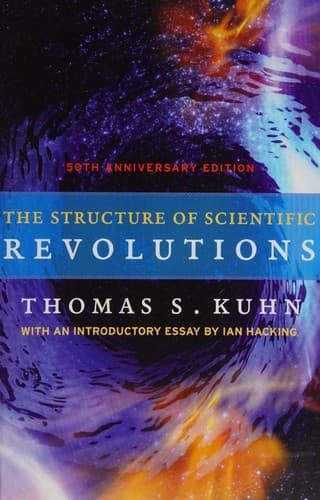
The Structure of Scientific Revolutions
Thomas S. Kuhn·1962
Put the phrase 'paradigm shift' into every language. Before Kuhn, the standard story about science was that it progressed gradually through the accumulation of facts; after Kuhn, the standard story is that it lurches between long periods of normal science and short, disorienting revolutions in which the entire framework for asking questions changes. That second story is now so embedded in how educated people talk about innovation in any field — business, technology, politics, culture — that we have forgotten it had an author. Kuhn changed how science thinks about itself, and then changed how everyone else thinks about change.
Book 7·Holocaust testimony plus a theory of survival
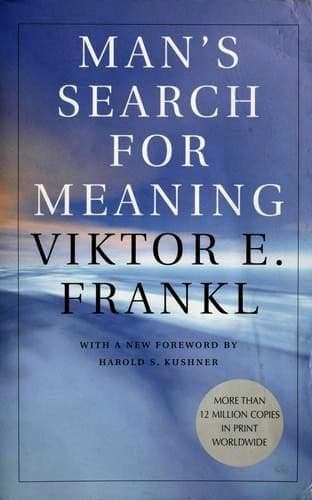
Man's Search for Meaning
Viktor Frankl·1946
The most widely read Holocaust testimony ever written, and the founding text of an entire school of psychotherapy. Frankl survived Auschwitz, then wrote — in nine days — a short book arguing that the prisoners who endured were the ones who could find a reason to. Logotherapy, the school he built around that claim, is still practiced; the book has sold over sixteen million copies in fifty languages and is on the syllabus of medical schools, military academies, and prison libraries. It changed history twice: once as evidence of what happened, and once as a working theory of how human beings survive what should not be survivable.