Editor-reviewed
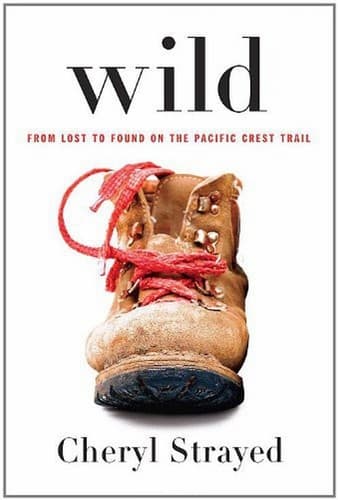
Wild: From Lost to Found on the Pacific Crest Trail
Cheryl Strayed·2012·Knopf·memoir
Reading level: Ages 16+ (adult) · 11-hour read · Intermediate difficulty.
- Reading time
- 11h
- Difficulty
- Intermediate
- Recommended age
- Ages 16+
- Guide read
- 7min
- Editor's rating
- 4.2 / 5
- memoir
- grief
- wilderness
- pct
- cheryl-strayed
- addiction-recovery
— In one sentence —
A grief memoir that happens to take place on a thousand-mile hike. Strayed is unsparing about the parts of herself that the trail didn't fix.
§ 01 · WHY READ
Why read
Cheryl Strayed was twenty-two when her mother died of lung cancer, forty-nine days after diagnosis. In the four years that followed, her marriage to a man she loved collapsed under the weight of her own infidelities, and she began using heroin with a man she'd met in Portland. By twenty-six she was, in her own description, no longer the person her mother had raised.
In June 1995 she set out, alone and almost comically underprepared, to hike a stretch of the Pacific Crest Trail from the Mojave Desert to the Bridge of the Gods on the Oregon–Washington border — roughly eleven hundred miles. Wild is the book she wrote about it, published seventeen years later, when she had become a working writer and the events had had time to settle into a shape she could see.
The book's central honesty: this is not a redemption arc, and Strayed is careful to refuse the easy version of one. The trail does not fix her. She does not arrive at the Bridge of the Gods purified. What the trail does is more limited and more believable — it gives her enough time alone with her body, her grief, and her own decisions that she can begin to assemble a life that isn't organized around her mother's death. The book's title is precise: from lost to found, not from broken to whole.
What makes Wild unusual in the wilderness-memoir genre is the prose: Strayed writes about her mother, her marriage, and her own worst behavior with the same level attention she gives to blisters and snow. The hike is the spine, but the book is built around the digressions.
§ 02 · SUBJECT / CAST
Subject / cast
The memoir centers on Strayed herself and her relationship to three absent figures: her mother, her ex-husband, and the woman she was at twenty-six.
Cheryl Strayed — the narrator, writing in her early forties about the twenty-six-year-old who took the trail. The two voices are present simultaneously; the older Strayed sees the younger one clearly, including the parts she'd prefer not to. The book's authority comes from this double perspective. The surname "Strayed" is chosen: she selected it during her divorce, and the book is partly about earning it.
Bobbi — Strayed's mother. A young mother, a survivor of an abusive marriage, a back-to-the-land idealist who built a house in rural Minnesota and made joy a discipline. Bobbi's death at forty-five organizes the entire book. Strayed's portrait of her is unsentimental — she doesn't pretend her mother was without faults — and devastating.
Paul — Strayed's first husband, who she married at nineteen and divorced at twenty-six. The book treats him with unusual generosity for an ex-husband appearing in a memoir; Strayed's account of how she destroyed the marriage is more critical of herself than of him.
The trail community — a rotating cast of fellow hikers who appear and disappear: Greg, the experienced hiker who measures her pack against his and shakes his head; Brent and Doug, the brothers; the hippies at the Kennedy Meadows ranger station; Jonathan, who she nearly sleeps with. Most pass through in chapters. The trail is described as both extremely solitary and intermittently crowded.
§ 03 · HIGHLIGHTS
Three highlights
No. 1 · The boot that fell off the cliff. Early in the hike, Strayed's boots — which she has known the entire trail are a size too small, which have already cost her several toenails — become the locus of her despair. In a moment of frustration she throws one of them off a ridge into the wilderness below. Then, having thrown one, she throws the other. The scene is funny and bleak and somehow exemplary: she has just discarded her only footwear, in the middle of nowhere, and now has to keep walking. REI ships her replacement boots to the next trail town. The book is full of moments where Strayed's lack of preparation creates a problem the trail then forces her to solve.
No. 2 · The mother chapter. Late in the book, Strayed describes her mother's death in detail she has avoided for the first two-thirds of the memoir. The chapter is structured as a series of accumulations — the forty-nine days from diagnosis, the morphine, the moment she and her brother and sister have to make the decision, the body afterward. It is one of the better-written grief passages in recent American memoir, and it earns its position in the book by having been deferred. The trail chapters that precede it have prepared the reader to be able to receive it.
No. 3 · The bridge. The book's final pages, at the Bridge of the Gods, are characteristic of Strayed's refusal of the redemption arc. She eats an ice cream cone. She does not feel transformed. She does not know yet that she will, years later, marry a documentary filmmaker named Brian, have two children, become a writer. She knows only that she has finished walking. The deliberate flatness of the ending is the book's argument: the trail did what it did, which was less than transformation and more than nothing.
§ 04 · EDITIONS
Recommended editions
| Edition | Why pick it |
|---|---|
| Knopf hardcover (2012) | The first edition; clean design, good paper. |
| Vintage paperback (2013) | The standard reading edition. |
| Audiobook (Bernadette Dunne) | Dunne's reading is steady and unsentimental, which suits the book. Strayed does not narrate it herself. |
| Tenth Anniversary Edition (Knopf, 2022) | Includes a new introduction by Strayed reflecting on the book's reception and the years since. Worth reading after the main text. |
The 2014 film (dir. Jean-Marc Vallée, with Reese Witherspoon and Laura Dern) is unusually faithful, and Dern's performance as Bobbi is the rare adaptation that finds the right note for a character the reader spent the book imagining. Witherspoon is good but more conventionally sympathetic than the Strayed of the page. The film cannot reproduce the prose, which is the book's main asset; read first, then watch.
§ 05 · FIT
Who it's for / not for
Read this if you are…
- A reader of memoir who values self-examination over self-presentation. Strayed is willing to describe herself doing things she does not want the reader to forgive.
- Anyone working through grief, particularly the death of a parent. The book does not promise that the work ends; it documents what doing some of it looks like.
- A reader interested in wilderness and solitude without the gear-fetishism of the genre. Strayed's incompetence is part of the point.
- Someone who has read Tiny Beautiful Things (Strayed's collected "Dear Sugar" advice columns) and wants the autobiographical material behind the voice.
Skip it if you are…
- Looking for a hiking guide or trail logistics. Strayed gets things wrong about gear and conditions; the book is not a useful PCT planning resource.
- Uncomfortable with detailed descriptions of drug use, sex, and a parent's death. The book does not sensationalize any of these, but it does not avoid them either.
- Hoping for a clean transformation arc. Strayed declines to provide one.
§ 06 · TIPS
Reading tips
- The chronology jumps. Strayed alternates trail chapters with flashbacks; the trail is roughly linear but the memory chapters move freely through her twenties and her childhood. Let the structure work.
- The first hundred pages are the slowest. Strayed is establishing both her present situation (the trail) and her past (the years leading up to it). The book accelerates around the midpoint and does not let up.
- Read the mother chapter without interruption. It is the book's emotional core and depends on being received in one sitting.
- Have Tiny Beautiful Things nearby afterward. Strayed's advice columns, written anonymously as "Sugar" before Wild came out, are the same voice in shorter form and clarify what kind of writer she is.
§ 07 · COMPARE
Read alongside
- Cheryl Strayed — Tiny Beautiful Things (2012). The "Dear Sugar" columns. Same voice, shorter pieces, often devastating. Read after Wild.
- Joan Didion — The Year of Magical Thinking (2005). A different grief memoir, by a colder writer. Useful as contrast: Didion observes her grief; Strayed enacts hers.
- Bill Bryson — A Walk in the Woods (1998). The comic counterpart — Bryson on the Appalachian Trail, with a friend, mostly failing. Different tone, similar admission of incompetence.
- Mary Karr — The Liars' Club (1995). The memoir that helped establish the contemporary American memoir's permission to be self-implicating. Strayed has cited Karr as an influence.
- Robert Macfarlane — The Wild Places (2007). A British wilderness book of a very different temperament — meditative, naturalist, less personal. A useful corrective to American wilderness writing's emphasis on the self.
§ 08 · DISCUSSION
Discussion questions
- Strayed is explicit that the trail does not fix her. What does it do, in the book's account? What's the difference between transformation and what actually happens?
- The flashbacks to her mother, her marriage, and the heroin period are interleaved with the trail. How does the structure affect your reading? What would the book lose if it were straightforwardly chronological?
- Strayed is unsparing about her own infidelity and her drug use. Do these admissions make her more sympathetic, less, or neither? What is she risking by including them?
- Bobbi's death is described in detail late in the book. Why does Strayed defer it? What does the deferral do for the reader?
- The boot scene is funny. The book is intermittently very funny. How does the humor function alongside the grief?
- Strayed chose her own surname during her divorce. What's the relationship between that act and the book's project?
- The book is structured around an arrival at the Bridge of the Gods. The arrival is deliberately undramatic. Does this work? What would a more dramatic ending have cost the book?
- The PCT in 1995 was less famous than it is now (partly because of this book). How does Wild's success change the experience of reading it? Is the trail in the book the same trail you'd encounter today?
One line to remember
“It had only to do with how it felt to be in the wild. With what it was like to walk for miles for no reason other than to witness the accumulation of trees and meadows, mountains and deserts, streams and rocks, rivers and grasses, sunrises and sunsets.”— Chapter 4
You might also like
Read next
Tara Westover · 2018
Educated
A memoir of building an education from nothing, by a writer who knows precisely how unreliable memory is — and refuses to pretend otherwise.
Read · 7 min
Trevor Noah · 2016
Born a Crime: Stories from a South African Childhood
A comedian's memoir that turns out to be a book about his mother. The funny parts are funny; the parts that aren't will catch you off guard.
Read · 6 min
Belle Burden · 2026
Strangers: A Memoir of Marriage
A 2026 memoir about marriage, rupture, and the shock of realizing intimacy does not guarantee knowledge.
Read · 5 min