Editor-reviewed
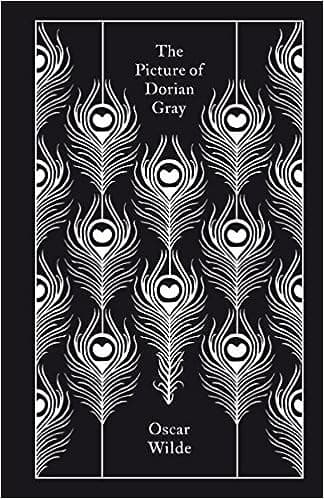
The Picture of Dorian Gray
Oscar Wilde·1890·Ward, Lock and Company·Literature
Reading level: Ages 14+ (adult) · 7-hour read · Intermediate difficulty.
- Reading time
- 7h
- Difficulty
- Intermediate
- Recommended age
- Ages 14+
- Guide read
- 5min
- Editor's rating
- 4.5 / 5
- oscar-wilde
- victorian
- classic
- gothic
- aestheticism
- decadence
- moral-philosophy
- 1890s
— In one sentence —
Wilde's only novel is about aestheticism and moral corruption — and it condemns the philosophy its most charming character espouses.
§ 01 · WHY READ
Why read
Oscar Wilde published The Picture of Dorian Gray in Lippincott's Monthly Magazine in 1890, then revised and expanded it for book publication in 1891. The magazine version was immediately attacked as immoral; Wilde added a preface to the book that is one of the best short statements of aestheticism ever written, then proceeded to write a novel that — carefully read — demolishes the philosophy the preface defends.
This is the central irony the novel rewards. Lord Henry Wotton is the most brilliant presence in the book: witty, epigram-generating, apparently free of moral anxiety. He tutors Dorian in aestheticism — the doctrine that beauty and sensation are the only values, that the soul is corrupted by morality rather than vice. The consequences of Dorian's education are murder, sycophancy, addiction, and the destruction of everyone who trusts him. Wilde is not endorsing Lord Henry; he is showing what Lord Henry's philosophy produces when actually lived.
The portrait is a Gothic device in the service of a philosophical argument. Dorian's soul externalizes onto canvas — he remains beautiful, the portrait records the damage — and the horror is precisely that he can maintain his aestheticism because he has no visible consequences. The novel's ending returns the consequences to him with interest.
Wilde himself was living elements of Dorian's world when he wrote it: the drawing rooms, the opium dens, the carefully managed double life. Three years after publication he was imprisoned for gross indecency. The novel's warnings about where aestheticism ends were, on some level, his own.
§ 02 · CHARACTERS
Characters
Dorian Gray — beautiful, passive, infinitely corruptible. He begins the novel with the kind of uncorrupted feeling that would eventually develop into moral awareness; Lord Henry redirects it. His corruption is not dramatically visible — he continues to be charming and beautiful — which is the novel's darkest structural point.
Lord Henry Wotton — the novel's most seductive and most dangerous figure. He is witty at the sentence level — nearly every paragraph he speaks is quotable — and catastrophic at the level of what his ideas produce. Wilde gives him the best lines and the worst philosophy.
Basil Hallward — the painter who loves Dorian and paints the portrait. He is the novel's moral conscience, who understands what is happening to Dorian before anyone else and is killed for saying so. His death is the pivot point of the novel.
Sibyl Vane — the actress Dorian falls in love with for her art, abandons when she falls in love with him and loses her ability to perform, and whose subsequent death he incorporates into his aestheticist worldview with disturbing ease.
§ 03 · HIGHLIGHTS
Three highlights
No. 1 · Lord Henry's first monologue. Lord Henry meets Dorian in Basil's studio and begins his tutorial. His argument — that beauty is the only form of genius, that youth is the only thing worth having, that feeling everything and regretting nothing is the proper life — is dazzling, and Wilde renders it as genuinely seductive. The reader understands why Dorian is converted. The novel then spends seventeen chapters showing what that conversion costs.
No. 2 · Sibyl Vane's failure. Dorian takes Lord Henry and Basil to see Sibyl perform. She acts badly — transformed by real love, she can no longer give the performed emotion that made her art great. Dorian, applying his aestheticist principles, immediately ends the relationship. The scene is Wilde's argument that aestheticism, when fully applied to a human relationship, produces monstrousness.
No. 3 · The opium den and James Vane. The novel's middle section — Dorian's eighteen years of corruption rendered in a single chapter — gives way to a more specific horror: Sibyl's brother James has been looking for Dorian for years. The opium den sequence is Hardy-level bleak, and it introduces the only consequence Dorian cannot aestheticize his way out of.
§ 04 · EDITIONS
Recommended editions
| Edition | Why pick it |
|---|---|
| Oxford World's Classics | Includes both the 1890 magazine text and the 1891 revised text; essential for seeing what Wilde changed. |
| Penguin Classics | Robert Mighall's edition is the most reader-friendly with a sharp introduction. |
| Dover Thrift | Affordable clean text for straightforward reading. |
§ 05 · FIT
Who it's for / not for
Read this if you are…
- Anyone interested in aestheticism and the Decadent movement of the 1890s — this is the central document.
- Readers who want a Victorian novel that is actually about ideas, not just colored by them: the book is a philosophical argument in Gothic form.
- Anyone interested in Wilde's life: the novel is autobiographical in ways that become clearer with biographical knowledge.
Skip it if you are…
- Looking for plot-driven Gothic horror: the supernatural element is minimal and the dread is philosophical. If you want Victorian horror, Dracula is the better choice for that.
- Expecting Wilde's characteristic lightness throughout: the middle of the novel is deliberately heavy with corruption and consequence.
§ 06 · TIPS
Reading tips
- Read the preface as a position to be tested, not accepted. "There is no such thing as a moral or an immoral book. Books are well written, or badly written. That is all." The novel that follows this preface is, in fact, a moral argument.
- Lord Henry never acts. He is pure influence — he does not live as he advises. This is Wilde's comment on the aestheticist position.
- The yellow book is real. The decadent French novel that corrupts Dorian is modeled on Huysmans's À rebours (1884). Knowing this adds texture.
- Count the victims. Dorian's corruption is not victimless. Wilde makes sure you know who paid for his beauty.
§ 07 · COMPARE
Read alongside
- Oscar Wilde — The Importance of Being Earnest (1895). The same society rendered in comedy rather than horror; the comparison shows how fully Wilde understood his milieu from both directions.
- Joris-Karl Huysmans — Against Nature (À Rebours) (1884). The French Decadent novel that Dorian Gray fictionalizes as the "poisonous book" that corrupts Dorian. Reading both illuminates what Wilde borrows and what he argues against.
- Robert Louis Stevenson — Strange Case of Dr Jekyll and Mr Hyde (1886). The other great Victorian duality narrative: the separation of respectable surface from hidden appetite, in a more overtly allegorical form.
§ 08 · DISCUSSION
Discussion questions
- The preface claims art has no moral dimension; the novel demonstrates one. Is Wilde contradicting himself, or is this contradiction the point?
- Lord Henry claims to influence Dorian but never act himself. What does this separation of influence from action say about his character and his philosophy?
- Dorian keeps the portrait locked away and refuses to look at it for years. What does this say about his actual relationship to the consequences of his actions?
- Basil loves Dorian and is killed for his moral honesty. Lord Henry corrupts Dorian and suffers nothing. Is Wilde making an argument about how the world actually works?
- Sibyl Vane is destroyed when she can no longer perform art because she has begun to feel life. What is Wilde arguing about the relationship between art and experience?
- The ending returns Dorian's consequences to him through the portrait. Is this ending morally satisfying, or does it let the novel's society — which enabled everything — off the hook?
One line to remember
“The books that the world calls immoral are books that show the world its own shame.”— Chapter XIX
You might also like
Read next
William Faulkner · 1936
Absalom, Absalom!
Four narrators reconstruct a man who destroyed his family. The story keeps changing. That is the point.
Read · 7 min
Toni Morrison · 1987
Beloved
Toni Morrison said she wrote this novel to give voice to the sixty million. It won the Pulitzer, the Nobel, and is the greatest American novel of the second half of the twentieth century.
Read · 6 min
Leo Tolstoy · 1878
Anna Karenina
Not just a love story. Two parallel lives — Anna's destruction, Levin's salvation — ask the same question: how should a person live?
Read · 6 min