Editor-reviewed
Looking for Alaska
John Green·2005·Dutton Books·young-adult
- Reading time
- 6h
- Difficulty
- Intermediate
- Recommended age
- Ages 14+ (YA)
- Guide read
- 6min
- Editor's rating
- 4.1 / 5
- young-adult
- coming-of-age
- boarding-school
- grief
- first-novel
- banned-books
— In one sentence —
John Green's debut: a boarding-school coming-of-age organized around a single event, written by a 28-year-old whose voice would shape the next decade of literary YA.
§ 01 · WHY READ
Why read
Looking for Alaska is John Green's first novel. He was twenty-eight when it published; he had been a hospital chaplain, a book reviewer, and (this would prove important) a young man who had attended Indian Springs School, a boarding school in Alabama whose physical and social architecture is visible behind the novel's Culver Creek. The book won the 2006 Printz Award and has been on the American Library Association's most-challenged books list more or less continuously since publication, mostly for a single scene involving teenage sexuality that critics tend to misread as titillation when it is, by Green's own account, structured to be the opposite.
The novel is organized around an event. The chapters before the event are labeled "one hundred thirty-six days before," "ninety-eight days before," "the day before." The chapters after are "one day after," "two days after," "thirty-six days after." This structural choice does two things at once: it tells you, before you start, that something is coming; and it forces the reader to live inside the not-knowing-yet of the "before" chapters with full awareness that the "after" is fixed. The form is the book's argument about how grief reorganizes time.
What Green is doing here, and would keep doing in subsequent novels, is taking adolescent experience seriously as a site of real philosophical question. The protagonists of his novels read too much, talk too much, think too much, and arrange their lives around questions that they are old enough to ask and not yet old enough to answer. The criticism is fair — teenagers don't actually talk like Green's teenagers — and so is the defense: literary fiction has always permitted characters to articulate more than its subjects could in life. The question is whether that articulation serves the book's argument. In Looking for Alaska, it does.
§ 02 · CHARACTERS
Characters
Miles "Pudge" Halter — narrator. Sixteen, from Florida, leaving public high school to attend the boarding school his father attended in Alabama. Pudge has two distinguishing features: he memorizes the last words of famous people (the novel uses this for both characterization and structure), and he is, at the novel's start, in search of what the French poet François Rabelais on his deathbed called "the Great Perhaps." Pudge wants his life to begin. The novel is the story of his learning what beginning costs.
Alaska Young — the figure the title points to. Beautiful, well-read, profane, depressive, mercurial. Alaska is the central character around whom the novel orbits and the central problem the novel sets itself: she is known by being not fully knowable. This is a deliberate craft choice and it is also the basis for one of the most-cited criticisms of the book — the "Manic Pixie Dream Girl" charge — which Green himself has, in interviews and in his subsequent fiction, repeatedly acknowledged. The acknowledgment is worth taking seriously: Green has said that the entire structure of the novel is built to make the reader feel the trap of projecting onto Alaska, and that the "after" sections are partly about Pudge having to confront the gap between the Alaska he imagined and the Alaska who actually existed. Whether the book pulls this off or whether the critique still lands depends on the reader.
The Colonel (Chip Martin) — Pudge's roommate; the novel's moral spine. Working-class kid from Alabama, scholarship student, fierce loyalty, encyclopedic knowledge of state capitals. The Colonel is the character who keeps the novel from drifting into pure interiority. His friendship with Pudge is the relationship the book is actually about, even when it pretends to be about something else.
Takumi, Lara — supporting cast. Takumi is the one who matters more by the end than he seems to early on; the third-to-last chapter belongs partly to him.
The Eagle (Mr. Starnes) — dean of students. Antagonist by function, but Green refuses to make him a caricature, and the novel is better for it.
§ 03 · HIGHLIGHTS
Three highlights
No. 1 · The Before/After structure. The first half of the novel — labeled in countdown — moves at the pace of a school year, with the lazy, distractible attention of teenagers who do not yet know that the days they are inhabiting will become the days that mattered. The structural countdown forces the reader to feel something the characters cannot: the weight of what is coming. When the count hits zero, Green executes the pivot with technical precision, and the second half — the "After" — is a different book in a different time signature. The structural choice is the most-imitated thing in literary YA from 2005 onward, and few of the imitations earn it the way Alaska does.
No. 2 · The "labyrinth of suffering" conversation. Early in the novel, Alaska gives Pudge a copy of Gabriel García Márquez's The General in His Labyrinth and asks him a question she returns to several times: how do you get out of this labyrinth of suffering? The question is the novel's spine. Pudge's answer, when he finally arrives at one in the closing chapters, is the answer the entire structure has been working toward — and it is recognizably the answer of a sixteen-year-old who has just lost someone, which is the only kind of answer this book could honestly give. Green refuses to let Pudge sound older than he is at the moment of his deepest grief. That refusal is what makes the ending earn its weight.
No. 3 · The pranks. The Culver Creek tradition of elaborate pranks against rival classes — and the all-school "Alaska Young Memorial Prank" the surviving friends design in the after-sections — is the book's most generous comic territory and its most generous emotional territory simultaneously. The prank is the way the friends grieve. Green understands that the rituals teenagers invent to handle what they cannot otherwise handle are not lesser rituals than the adult versions; they are the same ritual, in adolescent clothes. The chapter in which the prank is executed is the moment the book becomes something more than its premise.
§ 04 · EDITIONS
Recommended editions
| Edition | Why pick it |
|---|---|
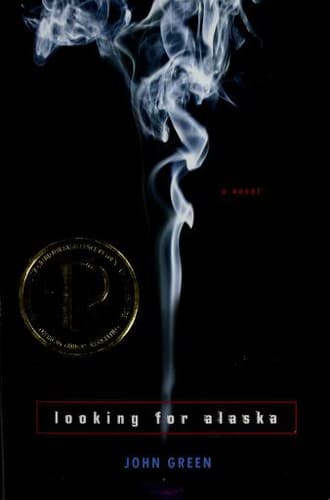
| Dutton Books hardcover (2005) | The first edition. The cover with the smoke is the recognizable one. |
| Speak / Penguin paperback | The standard YA paperback, widely available. |
| 10th Anniversary Edition (2015) | Includes an introduction by Green about the book's autobiographical sources and the controversy. Worth reading after. |
| Audiobook (Jeff Woodman) | Strong narration; Woodman handles Pudge's quiet earnestness without making him precious. |
The 2019 Hulu series (eight episodes) is the rare TV adaptation that has the time to do what the book does. Green served as executive producer; the cast — particularly Kristine Frøseth as Alaska — is well-chosen. Read the book first, then watch.
On the banning: Looking for Alaska contains a single scene of teenage sexual contact written, deliberately, to be awkward and emotionally hollow, immediately followed by a scene of emotional intimacy that the characters experience as the actually significant one. Green has spoken at length about the scene's intent — it is meant to argue, against the conventional YA romance, that physical and emotional intimacy are different things and that teenagers should be allowed to know it. The scene is what challengers most often cite. The argument the scene is making is what they most often miss.
§ 05 · FIT
Who it's for / not for
Read this if you are…
- A reader who liked the structural ambition of The Time Traveler's Wife or Atonement and wants to see a YA writer attempt something similar.
- A teenager (or someone who remembers being one) who has lost someone unexpectedly and wants to read a book that takes adolescent grief seriously.
- A reader who appreciates first novels that announce a voice. Green's subsequent books refine this voice; this is where it arrived.
- Curious about the Looking for Alaska phenomenon — the Printz, the bannings, the Manic Pixie Dream Girl debate. Read the source.
Skip it if you are…
- Looking for plot momentum. The first half of the novel is deliberately slow; the structure is the point.
- Allergic to teenagers who sound like college students. Green's dialogue is more articulate than realism would permit, on purpose.
- Hoping for a romance that resolves. The novel is partly about why this one cannot.
§ 06 · TIPS
Reading tips
- Trust the structure. The countdown can feel gimmicky for the first few chapters. Stay with it. The structural decision earns itself by about halfway.
- Read Alaska as Pudge sees her — and notice when Pudge is wrong. The novel is constructed so that the reader, by the end, has more information about Alaska than Pudge does. Pay attention to the moments where her interiority leaks through the projection he is making onto her.
- Read it in two or three sittings, not many. The book is short; the emotional architecture works best in concentrated reading.
- If you read it as a teenager and remember it fondly, reread it as an adult. The book is a different book on rereading. Some readers find the second reading sharpens it; some find their adult eyes see the seams. Either response is honest.
§ 07 · COMPARE
Read alongside
- Stephen Chbosky — The Perks of Being a Wallflower (1999). The other defining literary-YA novel of late-millennium adolescence; a useful comparison for what each book gets right about the form.
- J. D. Salinger — The Catcher in the Rye (1951). The patriarch of the "first-person adolescent who reads too much" novel. Pudge is in this lineage and would be the first to tell you.
- Donna Tartt — The Secret History (1992). The grown-up boarding-school novel that organizes itself around a single defining event. The structural ancestor.
- John Green — The Fault in Our Stars (2012). The book Green wrote when he had figured out what he was doing in Alaska. Read them in publication order to see the development.
- William Golding — Lord of the Flies (1954). The other novel about boys at a boys' school doing what adults are not watching them do.
§ 08 · DISCUSSION
Discussion questions
- The novel's countdown structure tells you, from the first page, that something is coming. How does knowing-but-not-knowing change your reading of the "before" chapters?
- Alaska is described almost entirely through Pudge's perception of her. Where in the novel does her own interiority leak through? What does Green show you about her that Pudge does not see?
- The Manic Pixie Dream Girl critique is widely applied to this novel. Does the novel's structure — particularly the "after" sections — answer the critique, or does it confirm it?
- Pudge collects famous last words. Track how the meaning of this hobby changes across the novel.
- The Colonel is, by most measures, the novel's emotionally intelligent center. Why does Pudge orient himself around Alaska rather than the Colonel? Is the novel endorsing Pudge's choice or examining it?
- The "labyrinth of suffering" question gets answered, at the end, in a specific way. Is the answer satisfying as philosophy? Is it satisfying as something a sixteen-year-old in grief would actually say?
- The banned scene is structured to argue something specific about physical and emotional intimacy. State the argument in your own words. Is it the argument adolescents need? Is it the argument adults are comfortable with adolescents encountering?
- Green has written multiple novels in the same general territory. If you have read others, where does Alaska sit? What did Green learn to do better, and what did he do here that he never quite did again?
One line to remember
“How will we ever get out of this labyrinth of suffering?”— Alaska Young — Before, 'one hundred thirty-six days before'
You might also like
Read next
Suzanne Collins · 2008
The Hunger Games
The novel that proved YA dystopia could be political, not romantic — and that a sixteen-year-old narrator could carry the weight of a real argument about what television does to war.
Read · 6 min
Stephen Chbosky · 1999
The Perks of Being a Wallflower
An epistolary novel that found its form by matching it exactly to its narrator's interior life — and gave a generation a phrase about love it has not stopped quoting.
Read · 6 min
Veronica Roth · 2011
Divergent
The most-read of the post-Katniss YA dystopias — written by a 21-year-old who delivered a propulsive initiation novel inside a world that doesn't survive close inspection.
Read · 6 min