Editor-reviewed
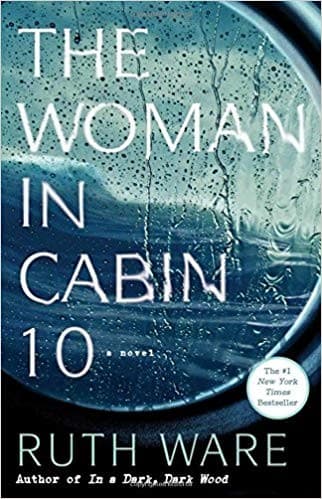
The Woman in Cabin 10
Ruth Ware·2016·Scout Press·thriller
Reading level: Ages 16+ (adult) · 7-hour read · Beginner difficulty.
- Reading time
- 7h
- Difficulty
- Beginner
- Recommended age
- Ages 16+
- Guide read
- 6min
- Editor's rating
- 3.8 / 5
- thriller
- locked-room
- psychological-thriller
- mystery
- netflix-adaptation
- ruth-ware
— In one sentence —
A locked-room cruise thriller for readers who want a fast, claustrophobic mystery before Netflix's film adaptation.
§ 01 · WHY READ
Why read
The Woman in Cabin 10 is Ruth Ware's cleanest pitch: a small luxury cruise, a journalist under stress, a late-night scream, and the impossible discovery that the woman she thinks she saw may never have existed. It is a modern locked-room thriller where the room happens to be a ship. There is nowhere to go, everyone is socially polished, and the narrator's credibility is part of the trap.
The Netflix film adaptation gives the book renewed source-reading value, but the reader job is evergreen: should you read this if you want a fast, contained thriller with an anxious narrator and a strong "did I really see that?" engine? Yes, if atmosphere and confinement matter more to you than procedural realism. Ware is very good at placing a nervous witness inside a beautiful setting that becomes hostile.
This is a useful bibliotecas thriller page because it helps readers choose among mainstream psychological thrillers. It is less bleak than the darkest domestic suspense and more claustrophobic than a standard detective story.
§ 02 · CHARACTERS
Characters
Lo Blacklock is the travel journalist whose fear and recent trauma make her both vulnerable and observant. The book depends on whether the reader trusts her enough to keep following.
The woman in Cabin 10 is first a sighting, then an absence, then a question. Her uncertainty powers the early mystery.
The cruise guests and staff create the closed social field. Their manners, money, and access to private spaces make the ship feel both luxurious and unsafe.
§ 03 · HIGHLIGHTS
Three highlights
No. 1 · The setting does real work. The ship is isolated, hierarchical, and easy to map in the reader's mind.
No. 2 · The witness problem is strong. Lo's certainty collides with everyone else's records, which keeps the premise alive.
No. 3 · It is adaptation-friendly. The book has an immediate visual hook: expensive interiors, narrow corridors, dark water, and a passenger list that will not add up.
§ 04 · EDITIONS
Recommended editions
| Edition | Why pick it |
|---|---|
| Scout Press hardcover | The original US edition and stable ISBN reference. |
| Gallery / Scout paperback | The easiest current English reading path for most readers. |
| Ebook | Good for the short-chapter, one-more-scene thriller experience. |
| Audiobook | Works well if you want Lo's anxiety close to the surface. |
§ 05 · FIT
Who it's for / not for
Read this if you are...
- Coming from Netflix adaptation news and want the source thriller first.
- Looking for a closed-setting mystery that reads quickly.
- Interested in unreliable-witness suspense.
- Choosing a vacation thriller that still has edge.
Skip it if you are...
- Frustrated by anxious narrators making risky choices.
- Looking for a formal detective puzzle with fair-play clues throughout.
- Sensitive to stalking, confinement, or gaslighting dynamics.
- Wanting a slow literary mystery rather than a commercial page-turner.
§ 06 · TIPS
Reading tips
- Do not search the plot first. The premise depends on uncertainty.
- Pay attention to logistics. Cabin access, staff movement, and passenger records matter.
- Read Lo generously but not blindly. The book wants both sympathy and doubt.
- Use it as a Ware test. If this setting works for you, try The Turn of the Key or In a Dark, Dark Wood next.
§ 07 · COMPARE
Read alongside
- Freida McFadden — The Housemaid. For a faster domestic-thriller pressure cooker.
- Colleen Hoover — Verity. For a romance-thriller crossover with a darker manuscript hook.
- Gillian Flynn — Gone Girl. For a sharper, colder unreliable-narrative benchmark.
- Daphne du Maurier — Rebecca. For social unease and a narrator under pressure.
- Richard Osman — The Thursday Murder Club. External read-alike if you want mystery with more warmth and less dread.
§ 08 · DISCUSSION
Discussion questions
- What makes a ship effective as a locked-room setting?
- How much does Lo's stress affect your trust in her?
- Does the book play fair with the reader's doubt?
- Which details make luxury feel threatening rather than comforting?
- How does public politeness hide private danger?
- What should the Netflix adaptation preserve: the ship, Lo's voice, or the impossible sighting?
- Where does the book feel most like a psychological thriller?
- Would the premise work as well in a hotel?
One line to remember
“A travel journalist on a luxury cruise believes she has seen a woman thrown overboard, but no passenger is missing.”— bibliotecas editorial summary, not a textual quotation
You might also like
Read next
Agatha Christie · 1939
And Then There Were None
Ten strangers, one isolated island, and the cleanest demonstration in mystery fiction that a simple setup can still produce unbearable tension.
Read · 6 min
Daphne du Maurier · 1938
Rebecca
A second marriage, a country house, and a dead woman who seems more alive than everyone around her: du Maurier turns jealousy into one of the great slow-burn suspense novels.
Read · 6 min
John le Carre · 1974
Tinker Tailor Soldier Spy
John le Carre's George Smiley mole hunt, the source novel behind the BBC series and 2011 film.
Read · 6 min