Editor-reviewed
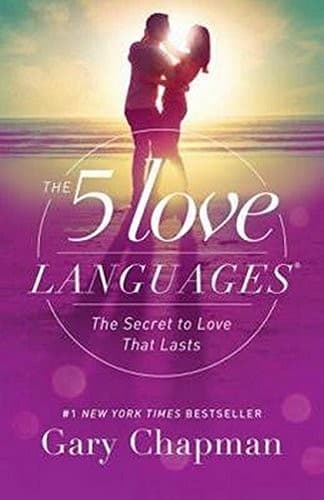
The 5 Love Languages
Gary Chapman·1992·Moody Publishers·self-help
Reading level: Ages 16+ (adult) · 5-hour read · Beginner difficulty.
- Reading time
- 5h
- Difficulty
- Beginner
- Recommended age
- Ages 16+
- Guide read
- 5min
- Editor's rating
- 3.8 / 5
- 5-love-languages
- relationships
- acts-of-service
- self-help
- marriage
— In one sentence —
The relationship self-help classic behind Words of Affirmation, Quality Time, Gifts, Acts of Service, and Physical Touch.
§ 01 · WHY READ
Why read
The 5 Love Languages is not titled Five Acts of Love, but it is the book many searchers are reaching for when they remember 'five,' 'love,' and 'acts.' Gary Chapman's framework names five love languages: Words of Affirmation, Quality Time, Receiving Gifts, Acts of Service, and Physical Touch.
Moody Publishers describes it as a relationship book for couples and notes that it has sold more than 20 million copies. Its usefulness is practical: it gives partners a simple vocabulary for why one person's effort may not register as love to another person.
§ 02 · CHARACTERS
Characters / people
There are no fictional characters. The central 'people' are the partners, spouses, family members, or close friends trying to recognize different ways of giving and receiving affection.
§ 03 · HIGHLIGHTS
Three highlights
No. 1 - Simple framework. The five categories are easy to remember and apply.
No. 2 - Acts of Service explains the keyword confusion. This is where 'acts' enters the love-language vocabulary.
No. 3 - Practical starting point. It gives couples language quickly, even when the model should not be treated as a complete science of relationships.
§ 04 · EDITIONS
Recommended editions
Choose the current Moody Publishers edition. The commonly listed ISBN for the updated paperback is 9780802412706.
§ 05 · FIT
Who it's for / not for
Read this if you want a short practical framework for talking about affection, unmet needs, and everyday relationship effort.
Skip it if you want a research-heavy psychology book, a secular-only framework, or a model that explains every relationship conflict.
§ 06 · TIPS
Reading tips
Use the five languages as conversation prompts, not labels to trap someone inside. The best use of the book is asking better questions about what makes another person feel cared for.
§ 07 · COMPARE
Read alongside
- Nur Shkembi (ed.) - Five Acts of Love. For the exact-title art catalogue.
- Daniela Krien - Love in Five Acts. For literary fiction about love's costs.
- bell hooks - All About Love. For love as ethics, care, and social practice.
§ 08 · DISCUSSION
Discussion questions
- Which love language is easiest to perform but hardest to receive?
- Does 'Acts of Service' feel like care, labor, or both?
- Where does the framework help, and where does it oversimplify?
One line to remember
“The likely answer if '5 acts of love' really means 'Acts of Service.'”— bibliotecas editorial summary, not a textual quotation
Appears in collections
Reading lists featuring this book
You might also like
Read next
Viktor Frankl · 1946
Man's Search for Meaning
A concentration-camp memoir and a clinical psychology in one short book. The memoir is unforgettable. The psychology has been thinned by misuse — read it back into context.
Read · 6 min
Daniel Kahneman · 2011
Thinking, Fast and Slow
A Nobel Prize winner's life work in one book. The two systems that govern human thought — and why we are wrong more often, and more predictably, than we believe.
Read · 5 min
Charles Duhigg · 2012
The Power of Habit
The neuroscience of how habits form and change, told through cases from Alcoholics Anonymous, Target's marketing data, and the civil rights movement.
Read · 4 min