Editor-reviewed
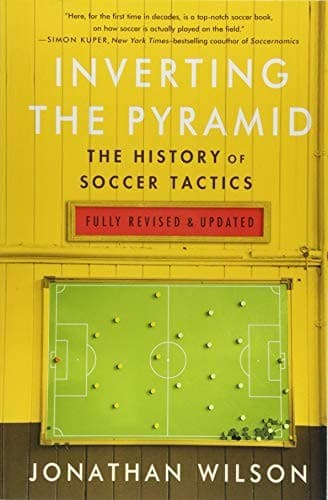
Inverting the Pyramid
Jonathan Wilson·2008·Nation Books·Sports
Reading level: Ages 15+ (adult) · 14-hour read · Intermediate difficulty.
- Reading time
- 14h
- Difficulty
- Intermediate
- Recommended age
- Ages 15+
- Guide read
- 5min
- Editor's rating
- 4.7 / 5
- soccer
- football-tactics
- world-cup
- sports-history
- coaching
— In one sentence —
The classic modern tactics history for readers who want to understand what is happening on the pitch.
§ 01 · WHY READ
Why read
Inverting the Pyramid is the best single football book for readers who keep hearing about formations, pressing, false nines, Total Football, catenaccio, and 4-3-3s but do not yet see the argument on the field.
Jonathan Wilson tells tactics as intellectual history. The book follows the movement from dribbling games to passing systems, from the WM to later formations, from defensive reactions to attacking revolutions. It will not make you a coach overnight, but it will change what you notice.
§ 02 · CHARACTERS
Characters / people
Managers and teams matter more than individual stars: Herbert Chapman, Viktor Maslov, Rinus Michels, Arrigo Sacchi, Valeriy Lobanovskyi, Brazil, Hungary, the Netherlands, Italy, Argentina, and modern European clubs.
§ 03 · HIGHLIGHTS
Three highlights
No. 1 - It explains why shapes change. Formations are presented as answers to problems, not as trivia.
No. 2 - It makes old matches relevant. Historical systems become part of current football language.
No. 3 - It improves live watching. After reading it, television graphics start to mean more.
§ 04 · EDITIONS
Recommended editions
| Edition | Why pick it |
|---|---|
| Updated paperback | Best choice because later editions account for more modern tactical shifts. |
| Ebook | Helpful if you want to search manager and formation names. |
§ 05 · FIT
Who it's for / not for
Read this if you want to watch the World Cup more intelligently. Skip it if you mainly want player biography, dressing-room gossip, or a purely emotional fan book.
§ 06 · TIPS
Reading tips
Keep a browser or video archive nearby if you like visual examples. You do not need to memorize every formation; focus on why each tactical idea emerged.
§ 07 · COMPARE
Read alongside
- David Winner - Brilliant Orange. Culture and tactics through Dutch football.
- Simon Kuper and Stefan Szymanski - Soccernomics. Economics and data instead of shapes.
- Alex Ferguson - My Autobiography. Management from inside the dressing room.
§ 08 · DISCUSSION
Discussion questions
- Are tactical changes mostly creative innovations or responses to constraints?
- Which historical system still seems most visible in modern football?
- Does the book make football feel more beautiful or more mechanical?
One line to remember
“The tactics book that gives new fans a vocabulary for watching the match unfold.”— bibliotecas editorial note
Appears in collections
Reading lists featuring this book
You might also like
Read next
David Goldblatt · 2006
The Ball Is Round
A huge global history of football: empire, class, clubs, migration, money, nationalism, and the World Cup.
Read · 5 min
Eduardo Galeano · 1995
Soccer in Sun and Shadow
A short, literary football classic for readers who want the game as memory, politics, beauty, and ache.
Read · 4 min
David Winner · 2000
Brilliant Orange
A classic study of Dutch football, Total Football, space, architecture, culture, and beautiful near-misses.
Read · 4 min