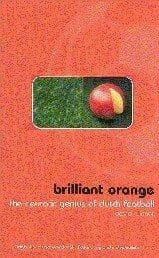
Editor-reviewed
Brilliant Orange
David Winner·2000·Bloomsbury·Sports
Reading level: Ages 15+ (adult) · 8-hour read · Intermediate difficulty.
- Reading time
- 8h
- Difficulty
- Intermediate
- Recommended age
- Ages 15+
- Guide read
- 4min
- Editor's rating
- 4.5 / 5
- soccer
- dutch-football
- total-football
- cruyff
- sports-culture
— In one sentence —
A classic study of Dutch football, Total Football, space, architecture, culture, and beautiful near-misses.
§ 01 · WHY READ
Why read
Brilliant Orange is a football culture book that became a classic because it understands style as more than tactics. David Winner connects Dutch football to space, design, architecture, improvisation, and the strange cultural afterlife of Total Football.
It is a strong World Cup companion because the Netherlands occupy a peculiar place in football imagination: fewer trophies than their influence suggests, but a style that changed how many people think the game should be played.
§ 02 · CHARACTERS
Characters / people
Johan Cruyff is the gravitational figure, but the book also moves through Dutch teams, coaches, artists, architects, supporters, and national habits of thinking about space.
§ 03 · HIGHLIGHTS
Three highlights
No. 1 - It explains style culturally. Football ideas are linked to national design and social imagination.
No. 2 - It makes losing interesting. The Dutch football myth is partly built from near-misses.
No. 3 - It pairs with tactics. Read after Wilson and the ideas gain cultural depth.
§ 04 · EDITIONS
Recommended editions
| Edition | Why pick it |
|---|---|
| Bloomsbury paperback | The standard edition and a clean recommendation. |
| Ebook | Good if you want it quickly as a companion to Netherlands matches. |
§ 05 · FIT
Who it's for / not for
Read this if you like football style, Dutch culture, Cruyff, Total Football, or sports books that wander intelligently. Skip it if you want a narrow match-by-match history.
§ 06 · TIPS
Reading tips
Let the book make associative leaps. Its charm is not just what happened on the pitch, but how Winner connects football to a broader way of seeing space.
§ 07 · COMPARE
Read alongside
- Jonathan Wilson - Inverting the Pyramid. The tactical architecture.
- Eduardo Galeano - Soccer in Sun and Shadow. Another literary football classic.
- David Goldblatt - The Ball Is Round. Wider global context.
§ 08 · DISCUSSION
Discussion questions
- Can a national team have an aesthetic identity?
- Why do some losing teams become more influential than winners?
- Does Winner overconnect football to culture, or is that the point?
One line to remember
“The national-style book for readers who want to know how a team can become an idea.”— bibliotecas editorial note
Appears in collections
Reading lists featuring this book
You might also like
Read next
Jonathan Wilson · 2008
Inverting the Pyramid
The classic modern tactics history for readers who want to understand what is happening on the pitch.
Read · 5 min
David Goldblatt · 2006
The Ball Is Round
A huge global history of football: empire, class, clubs, migration, money, nationalism, and the World Cup.
Read · 5 min
Eduardo Galeano · 1995
Soccer in Sun and Shadow
A short, literary football classic for readers who want the game as memory, politics, beauty, and ache.
Read · 4 min