Editor-reviewed
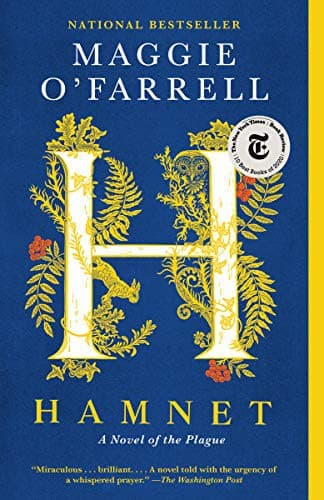
Hamnet
Maggie O'Farrell·2020·Vintage·Literature
Reading level: Ages 15+ (adult) · 8-hour read · moderate difficulty.
- Reading time
- 8h
- Difficulty
- moderate
- Recommended age
- Ages 15+
- Guide read
- 6min
- Editor's rating
- 4.5 / 5
- maggie-ofarrell
- historical-fiction
- shakespeare
- grief
- focus-features
— In one sentence —
Maggie O'Farrell's grief-haunted Shakespeare novel, now tied to the Focus Features film adaptation.
§ 01 · WHY READ
Why read
Hamnet is Maggie O'Farrell's novel about Shakespeare's family, grief, and the death of his son. Focus Features announced Chloe Zhao's film adaptation as based on O'Farrell's novel, and Penguin Random House lists the Vintage paperback with ISBN 9781984898876.
The book is not a backstage Shakespeare biography. It keeps its attention on Agnes, the children, the household, illness, touch, weather, and the ordinary work of staying alive. Shakespeare is present, but the novel resists making him the only center of the room.
Read it before the film if you want the novel's slow interior movement before the story becomes visual. Skip it if you want a conventional writer biopic or a plot-heavy Tudor court novel.
§ 02 · CHARACTERS
Characters
Agnes is the book's emotional center, a woman of practical knowledge, fierce perception, and grief.
Hamnet is the child whose death changes the family and gives the novel its title.
Judith is Hamnet's twin, bound to him by closeness, illness, and survival.
The Latin tutor and playwright is Shakespeare before and beyond the public name, seen mostly through family distance.
§ 03 · HIGHLIGHTS
Three highlights
No. 1 - Current film window. Focus Features has a high-profile adaptation route with Chloe Zhao, Jessie Buckley, and Paul Mescal.
No. 2 - Literary grief without speechmaking. The novel lets physical detail carry much of the feeling.
No. 3 - Strong book-club shape. Marriage, motherhood, art, loss, and historical uncertainty give readers several ways in.
§ 04 · EDITIONS
Recommended editions
| Edition | Why pick it |
|---|---|
| Vintage paperback | Current U.S. paperback route with ISBN 9781984898876. |
| Knopf hardcover | Original U.S. hardcover route with ISBN 9780525657606. |
| Tinder Press edition | Useful U.K. route for O'Farrell's home-market readers. |
| Audiobook | Strong if you want the prose paced slowly and carefully. |
§ 05 · FIT
Who it's for / not for
Read this if you are...
- Interested in the Focus Features adaptation.
- Looking for literary historical fiction about grief.
- Drawn to Shakespeare but tired of author-worship stories.
- Choosing a serious book-club novel with emotional force.
Skip it if you are...
- Wanting a fast plot.
- Looking for a conventional Shakespeare biography.
- Avoiding child death or plague illness.
- Frustrated by nonlinear literary structure.
§ 06 · TIPS
Reading tips
- Let Agnes lead. The book's point of view is a correction to the usual Shakespeare-centered frame.
- Notice the physical details. Touch, plants, cloth, rooms, and weather carry meaning.
- Expect grief early. The title is not coy about the book's center.
- Keep the adaptation separate. A film will likely make different choices about visibility and pacing.
§ 07 · COMPARE
Read alongside
- William Shakespeare - Hamlet. External dramatic echo, best read after the novel if spoilers matter less than resonance.
- Geraldine Brooks - Year of Wonders. External plague-era historical fiction with a domestic lens.
- Hilary Mantel - Wolf Hall. For a more political Tudor-period contrast.
- Kazuo Ishiguro - Never Let Me Go. For quiet grief and delayed emotional recognition.
- Ian McEwan - Atonement. For literary fiction where art and loss remain entangled.
§ 08 · DISCUSSION
Discussion questions
- Why does O'Farrell keep Shakespeare partly unnamed and off-center?
- How does Agnes change the usual story of literary genius?
- Which details make the household feel alive?
- Does the novel make grief private, communal, or artistic?
- How does knowing Hamlet affect the reading?
- What should a film adaptation preserve from the prose?
- Does the nonlinear structure deepen the loss or delay it?
- Is the book more about death, marriage, motherhood, or art?
One line to remember
“A child's death, a marriage, and a plague-struck household become the hidden weather behind Shakespeare's most famous tragedy.”— bibliotecas editorial summary, not a textual quotation
You might also like
Read next
Maggie O'Farrell · 2026
Land
Maggie O'Farrell's 2026 novel for readers who want family, place, history, and atmosphere.
Read · 5 min
William Faulkner · 1936
Absalom, Absalom!
Four narrators reconstruct a man who destroyed his family. The story keeps changing. That is the point.
Read · 7 min
Toni Morrison · 1987
Beloved
Toni Morrison said she wrote this novel to give voice to the sixty million. It won the Pulitzer, the Nobel, and is the greatest American novel of the second half of the twentieth century.
Read · 6 min