Editor-reviewed
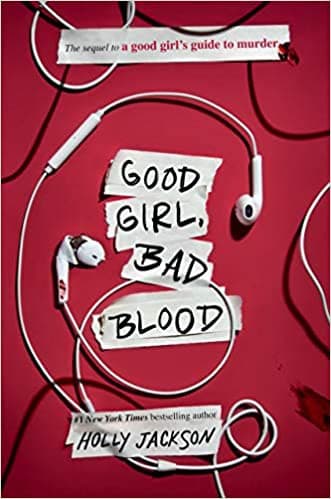
Good Girl, Bad Blood
Holly Jackson·2020·Delacorte Press·young-adult
Reading level: Ages 14+ (YA) · 8-hour read · Beginner difficulty.
- Reading time
- 8h
- Difficulty
- Beginner
- Recommended age
- Ages 14+ (YA)
- Guide read
- 6min
- Editor's rating
- 3.9 / 5
- young-adult
- ya-thriller
- mystery
- booktok
- netflix-adaptation
- series-guide
— In one sentence —
The second Pip Fitz-Amobi mystery, useful for Netflix viewers deciding whether to keep reading after A Good Girl's Guide to Murder.
§ 01 · WHY READ
Why read
Good Girl, Bad Blood is the second Pip Fitz-Amobi mystery, so the first reader decision is simple: do not start here if you have not read A Good Girl's Guide to Murder. Start with book one, then use this as the test of whether you want the series as a full YA mystery lane. The sequel keeps Pip's investigative format but changes the emotional problem. She has already learned what public attention can do. Now a new missing-person case pulls her back into the role she is trying to survive.
Netflix's adaptation of the series keeps interest around Pip current, and season-following viewers are likely to ask which book comes next. The page answer is practical: Good Girl, Bad Blood is for readers who liked Pip's evidence-board energy, podcast/document structure, and small-town secrets, but who are ready for the consequences to feel heavier.
This is a strong bibliotecas fit because it serves P0 YA/thriller readers and BookTok-style series decision-making. It is a book guide, but it also functions as a series checkpoint: continue if Pip's voice and investigation style are the appeal; pause if you only wanted the first-book case.
§ 02 · CHARACTERS
Characters
Pip Fitz-Amobi is no longer just a student with a project. She is someone whose previous investigation changed her reputation and her sense of responsibility.
Ravi Singh remains an important emotional and investigative partner. His presence ties the sequel to the first book without making it a reset.
The missing person at the center of the new case gives the book urgency while forcing Pip to decide what she owes to other people's emergencies.
§ 03 · HIGHLIGHTS
Three highlights
No. 1 · Series momentum. The sequel gives readers a clear reason to keep going after the first mystery.
No. 2 · YA investigation format. Interviews, records, podcast elements, and public attention make the case feel contemporary.
No. 3 · Screen-adaptation usefulness. It answers the Netflix-viewer question: what should I read next if I want more Pip?
§ 04 · EDITIONS
Recommended editions
| Edition | Why pick it |
|---|---|
| Delacorte Press hardcover | Stable US edition and ISBN path. |
| Paperback | The practical series-reading choice. |
| Ebook | Good if you are moving quickly through the trilogy. |
| Audiobook | Useful for podcast-like investigative material and YA pacing. |
§ 05 · FIT
Who it's for / not for
Read this if you are...
- Coming from the Netflix series and deciding whether to continue with the books.
- Already done with A Good Girl's Guide to Murder.
- Looking for YA mystery with true-crime structure and quick momentum.
- Interested in how an amateur investigator handles public attention.
Skip it if you are...
- New to the series; start with book one instead.
- Looking for adult procedural realism.
- Sensitive to missing-person cases or online harassment dynamics.
- Tired of teen investigators making high-risk choices.
§ 06 · TIPS
Reading tips
- Read book one first. This sequel depends on Pip's earlier case and relationships.
- Watch the cost of investigation. The series becomes more interested in what solving cases does to Pip.
- Treat the format as part of the story. Public evidence, audio, and social response matter.
- If the tone gets too heavy, pause before book three. The series darkens as it goes.
§ 07 · COMPARE
Read alongside
- Suzanne Collins — The Hunger Games. For YA momentum under public pressure, though in a very different genre.
- Veronica Roth — Divergent. Another fast YA series path with identity under stress.
- John Green — Looking for Alaska. For teen grief and mystery without the thriller structure.
- Karen M. McManus — One of Us Is Lying. External read-alike for YA mystery ensemble energy.
- Holly Jackson — A Good Girl's Guide to Murder. The necessary first step before this sequel.
§ 08 · DISCUSSION
Discussion questions
- Why is this a sequel rather than a simple repeat of book one?
- How does public attention change Pip's choices?
- Does the true-crime format make the mystery feel more current?
- Where does the book feel clearly YA, and is that a strength?
- How does Ravi change the emotional balance of the investigation?
- What should a Netflix continuation keep from Pip's page voice?
- Does the missing-person case justify Pip's return to investigating?
- Would the book work for someone who has only watched the show?
One line to remember
“Pip Fitz-Amobi tries to step away from true-crime investigating, until a new disappearance asks whether she can stay out.”— bibliotecas editorial summary, not a textual quotation
You might also like
Read next
Holly Jackson · 2019
A Good Girl's Guide to Murder
The first Pip Fitz-Amobi YA mystery behind Netflix and BBC's screen series.
Read · 6 min
Alice Oseman · 2018
Heartstopper Volume 1
Alice Oseman's first Heartstopper graphic novel, where Nick and Charlie's friendship begins before Netflix expands the story.
Read · 6 min
Suzanne Collins · 2008
The Hunger Games
The novel that proved YA dystopia could be political, not romantic — and that a sixteen-year-old narrator could carry the weight of a real argument about what television does to war.
Read · 6 min