Editor-reviewed
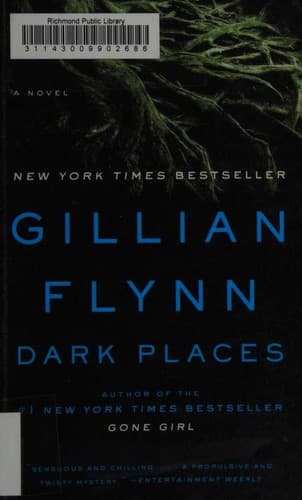
Dark Places
Gillian Flynn·2009·Crown·thriller
Reading level: Ages 17+ (adult) · 8-hour read · Intermediate difficulty.
- Reading time
- 8h
- Difficulty
- Intermediate
- Recommended age
- Ages 17+
- Guide read
- 6min
- Editor's rating
- 4.0 / 5
- thriller
- psychological-thriller
- gillian-flynn
- film-adaptation
- crime-fiction
— In one sentence —
Gillian Flynn's bleak family-murder thriller with a film route and fresh post-Gone Girl reader demand.
§ 01 · WHY READ
Why read
Dark Places is Gillian Flynn's second novel, published after Sharp Objects and before Gone Girl. Penguin Random House lists the Crown paperback with ISBN 9780307341570, and the book has a film adaptation route that keeps it useful for screen-driven thriller readers.
The premise is grim: Libby Day survived the murder of her mother and sisters as a child, and her testimony helped convict her brother. Years later, true-crime obsessives push her back into the case. Flynn uses that setup to ask a cruel question: what happens when survival depends on a story you no longer trust?
Read it if you want Flynn at her ugliest and most rural. It is less glossy than Gone Girl and less concentrated than Sharp Objects, but it has the same interest in memory, gender, class, and the stories people build around damaged women.
§ 02 · CHARACTERS
Characters
Libby Day is angry, stalled, and hard to like in ways the book refuses to soften. Her damage is part of the mystery.
Ben Day is the convicted brother whose guilt becomes less stable as Libby reopens the past.
Patty Day gives the book its economic despair. The family tragedy is tied to poverty before it becomes a crime story.
The Kill Club turns true-crime curiosity into pressure, payment, and moral discomfort.
§ 03 · HIGHLIGHTS
Three highlights
No. 1 - Flynn without polish. The book is rougher and more openly bleak than her most famous novel.
No. 2 - True-crime discomfort. It treats amateur obsession as both useful and exploitative.
No. 3 - Strong catalog bridge. It links Sharp Objects, Gone Girl, and modern domestic thriller demand.
§ 04 · EDITIONS
Recommended editions
| Edition | Why pick it |
|---|---|
| Crown paperback | Current English route with ISBN 9780307341570. |
| Ebook | Practical for a dark, twist-heavy thriller. |
| Audiobook | Useful for the split timelines and voices. |
| Film-adjacent copies | Good if you are reading through Flynn's screen shelf. |
§ 05 · FIT
Who it's for / not for
Read this if you are...
- Coming from Gone Girl or Sharp Objects and want more Flynn.
- Interested in family-crime stories with unreliable memory.
- Looking for a darker thriller about poverty, panic, and accusation.
- Comfortable with damaged narrators and ugly motives.
Skip it if you are...
- Sensitive to child murder, family violence, Satanic-panic material, or animal harm.
- Looking for a clean puzzle mystery.
- Wanting characters who become morally comforting.
- Burned out on true-crime framing.
§ 06 · TIPS
Reading tips
- Track the timelines. The present investigation and past chapters correct each other slowly.
- Read Libby's unpleasantness as evidence. Flynn uses it to show how survival can curdle.
- Notice the money. Poverty is not background decoration here.
- Compare it with the film after reading. The book has more interior bitterness than a movie can easily hold.
§ 07 · COMPARE
Read alongside
- Gillian Flynn - Sharp Objects. For a tighter family-and-place thriller.
- Gillian Flynn - Gone Girl. For Flynn's most culturally dominant unreliable-narrator book.
- A. J. Finn - The Woman in the Window. For another screen-linked psychological thriller.
- Liane Moriarty - Apples Never Fall. For a more polished family-mystery contrast.
- Patricia Highsmith - The Talented Mr. Ripley. For crime fiction built around moral discomfort.
§ 08 · DISCUSSION
Discussion questions
- What makes Libby difficult to trust?
- Does the Kill Club help the truth or exploit the tragedy?
- How does poverty shape the Day family before the murders?
- Which past chapter changes your view of Ben most?
- Does Flynn treat true-crime obsession as useful, grotesque, or both?
- How does this book differ from Gone Girl in tone?
- What does Libby gain by reopening the case?
- Is the ending satisfying, punishing, or deliberately uneasy?
One line to remember
“Libby Day survived her family's murder, then has to decide whether the story that saved her also trapped the wrong person.”— bibliotecas editorial summary, not a textual quotation
You might also like
Read next
Gillian Flynn · 2012
Gone Girl
A marriage told by two people who are each lying to you in different directions — and the rare thriller that wants both halves of its couple to be genuinely unlikable.
Read · 7 min
Gillian Flynn · 2006
Sharp Objects
Gillian Flynn's small-town psychological thriller behind HBO's limited series.
Read · 6 min
Agatha Christie · 1939
And Then There Were None
Ten strangers, one isolated island, and the cleanest demonstration in mystery fiction that a simple setup can still produce unbearable tension.
Read · 6 min