Editor-reviewed
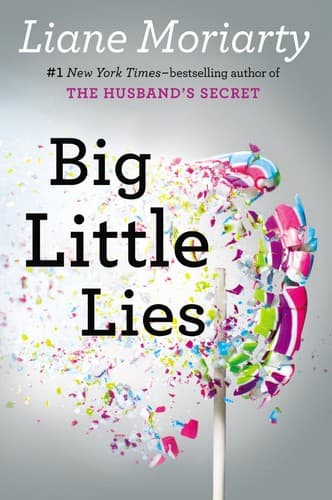
Big Little Lies
Liane Moriarty·2014·Penguin Publishing·thriller
Reading level: Ages 16+ (adult) · 10-hour read · Beginner difficulty.
- Reading time
- 10h
- Difficulty
- Beginner
- Recommended age
- Ages 16+
- Guide read
- 6min
- Editor's rating
- 4.2 / 5
- domestic-thriller
- school-gate-drama
- australia
- friendship
- domestic-violence
- multiple-viewpoints
- page-turner
— In one sentence —
A beach-read-speed novel about school-gate gossip, domestic violence, and the small performances that let adults pretend everything is fine until one body hits the ground.
§ 01 · WHY READ
Why read
Big Little Lies is what happens when a very readable suburban novel realizes it is also a thriller. Liane Moriarty starts with playground politics, divorced-parent tensions, and the sort of petty social humiliations that can seem almost comic from the outside. Then she keeps pressing until the jokes expose a much uglier private reality. The result is one of the better entry-point thrillers for readers who do not want serial-killer darkness, puzzle-box gimmicks, or a hundred pages of police procedure before the story gets moving.
The structure is simple and effective. We know from the start that someone will die at a school trivia night. We do not initially know who dies, who is responsible, or which apparently ordinary resentments will matter. Moriarty alternates between the main women at the center of the book and short snippets of witness testimony, gossip, and community speculation. That choice gives the novel two useful gears at once: a fast page-turning rhythm and a wider social view of how people misunderstand one another.
What makes the book stick is not the murder mystery by itself. It is the way Moriarty writes about domestic violence, shame, parenting performance, and female friendship without turning the novel into a lecture or misery test. If you want a beginner-safe thriller anchor for readers who liked the pace of The Silent Patient but want something warmer, more social, and less twist-dependent, this is a strong fit. It also broadens bibliotecas' thriller shelf beyond pure psychological menace into the domestic-and-community lane that many mainstream readers actually search for.
§ 02 · CHARACTERS
Characters
Madeline Mackenzie - funny, sharp, meddling, and often more perceptive than she first appears. Madeline gives the book much of its comic energy, but Moriarty also uses her to show how resentment and loyalty can coexist inside the same person for years.
Celeste Wright - glamorous, wealthy, and apparently enviable from the outside. Celeste's marriage is the novel's emotional center, and Moriarty handles her with enough sympathy that the domestic-abuse storyline feels human rather than schematic.
Jane Chapman - younger than the other two women, newer to town, and carrying the cleanest surface mystery. Jane's past trauma and her protectiveness toward her son give the novel a second major line of tension.
Bonnie Carlson - often misread by the social ecosystem around her. Bonnie matters because the novel keeps asking what private history the community cannot see.
The Pirriwee parent world - a chorus of school-gate witnesses, snobs, defenders, and rumor machines. Their commentary is not filler; it is how the novel shows the speed with which communities invent the wrong story.
§ 03 · HIGHLIGHTS
Three highlights
No. 1 - It is genuinely beginner-friendly without feeling lightweight. The prose is clear, the chapters move quickly, and the social setup is easy to grasp even for readers who do not normally read thrillers. But the book still has enough emotional weight that it does not feel disposable.
No. 2 - The witness-statement structure keeps the suspense clean. Moriarty lets the reader know a death is coming, then uses offhand testimony and neighborhood gossip to build pressure from the edges. That structure gives the book momentum without requiring a baroque twist.
No. 3 - It takes domestic violence seriously. The novel is often described as a "fun" or "gossipy" thriller, but one of its strengths is that it refuses to flatten abuse into plot seasoning. The shifts between charm, fear, denial, and practical escape are handled with more moral seriousness than many commercial thrillers manage.
§ 04 · EDITIONS
Recommended editions
| Edition | Why pick it |
|---|---|
| Penguin paperback / trade paperback | Easy to find, readable, and the edition most mainstream readers will encounter first. |
| Putnam / Penguin hardcover (US, 2014) | Useful if you want the first-edition publication frame and the cleanest original package. |
| Audiobook editions | A good fit for the multi-voice structure because the social comedy and tension both carry well aloud. |
The HBO adaptation is famous for good reason, but it relocates the setting and inevitably shifts the novel's social texture. Read the book first if you want the specifically Australian school-community dynamic that powers the original.
§ 05 · FIT
Who it's for / not for
Read this if you are...
- Looking for a thriller that is fast, accessible, and social rather than grimly procedural.
- Interested in domestic thrillers but unsure whether you want something as cold or caustic as Gone Girl.
- A reader who likes stories about friendship, parenting, status anxiety, and what communities refuse to see.
- Building toward
best-thrillers-for-beginnersand needing a broader crowd-pleasing anchor that is not too dark or too structurally tricky.
Skip it if you are...
- Wanting a classic detective puzzle where clue-solving is the central pleasure.
- Sensitive to domestic abuse, rape, and child-bullying themes.
- Looking for a relentlessly dark thriller. This book has serious material, but it also spends a lot of time in social comedy and neighborhood observation.
- Expecting the television version on the page. The book and show overlap strongly, but their atmosphere is not identical.
§ 06 · TIPS
Reading tips
- Treat the parent gossip as part of the plot. The witness snippets are not decorative; they are how Moriarty builds suspense and social texture at the same time.
- Pay attention to the differences between image and reality. Much of the book's tension comes from how convincingly adults perform stability.
- Do not reduce the novel to the body-count question. The death mystery is effective, but the book's real subject is what violence does long before the final incident.
- This is a good thriller for readers who dislike puzzles. If you want momentum without constantly tracking clues, Moriarty is working in your lane.
- If you have seen the show, notice the tonal differences. The book is often funnier, brisker, and more tightly organized around school-community dynamics.
§ 07 · COMPARE
Read alongside
- Liane Moriarty - The Husband's Secret (2013). Another high-readability domestic suspense novel built around secrets detonating inside ordinary family life.
- Gillian Flynn - Gone Girl (2012). A much sharper and more vicious domestic-thriller comparison point if you want to move from community drama into psychological warfare.
- Laura Lippman - Lady in the Lake (2019). For readers who like female-centered tension and social observation more than puzzle mechanics.
- Celeste Ng - Little Fires Everywhere (2017). Not a thriller in the strict sense, but similarly interested in mothers, social performance, and the violence hidden inside affluent communities.
- Megan Abbott - Give Me Your Hand (2018). Darker, stranger, and more poisonous, but a good next step if you want female friendship under pressure.
§ 08 · DISCUSSION
Discussion questions
- Why does the school-gate setting work so well as a suspense engine? What does it reveal about how adults perform morality in public?
- The novel withholds the exact shape of the final death for most of the book. Does that mystery matter more than the emotional truths the book uncovers along the way?
- How does Moriarty balance humor with the domestic-abuse storyline without trivializing it?
- Which character is most misread by the community around her, and why?
- What does the book suggest about the relationship between gossip and truth? Can gossip ever become a form of accidental witness?
- Big Little Lies is often marketed as a page-turner. What specific craft choices make it move so quickly?
- Does the novel see friendship as protection, performance, or both?
- Which matters more in the end: who died, or what the women finally understand about one another?
One line to remember
“Just because people are good at pretending.”— Madeline Mackenzie, mid-novel reflection
You might also like
Read next
Liane Moriarty · 2021
Apples Never Fall
Liane Moriarty's family disappearance novel behind Peacock's Annette Bening and Sam Neill limited series.
Read · 6 min
Liane Moriarty · 2018
Nine Perfect Strangers
Liane Moriarty's wellness-retreat ensemble novel behind Hulu's Nicole Kidman adaptation.
Read · 6 min
Liane Moriarty · 2005
The Last Anniversary
Liane Moriarty's island-family mystery behind the AMC+ series.
Read · 6 min